
crape myrtle [Rhapsody in Pink]
Also known as: Information to be completed
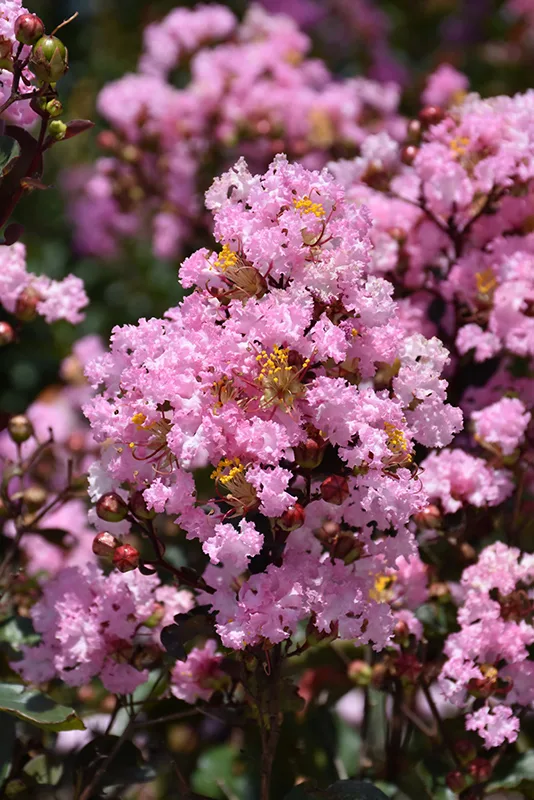
An upright, deciduous shrub or small, multi-stemmed tree to 3m tall, with peeling, grey and brown bark and glossy, dark green leaves, purple-flushed when young. In late summer, if the weather has been hot, it produces pink flowers with crinkled petals, held in conical clusters to 20cm long. Grown against a sunny, sheltered wall and protected from frost when young it will make a stunning specimen plant in mild districts
Scientific classification
- Species
- crape myrtle [Rhapsody in Pink] (Lagerstroemia indica Rhapsody in Pink ('Whit VIII'))
- Genus
- Lagerstroemia
- Family
- Lythraceae
- Order
- Myrtales
- Class
- Magnoliopsida
- Phylum
- Magnoliophyta
- Information to be completed
- Toxicity
- Shrubs · Trees
- Plant type
- 2.5-4 metres
- Height
- 1.5-2.5 metres
- Spread
- Deciduous
- Foliage
- Information to be completed
- Habit
- Autumn · Spring · Summer
- Season of interest
- Full sun
- Sunlight
- Information to be completed
- Ideal temperature









crape myrtle [Rhapsody in Pink] pictures
crape myrtle [Rhapsody in Pink] care guide
- Deep watering during dry spells, let soil partially dry between watering
- Watering
- Full sun
- Sunlight

Watering
Deep watering during dry spells, let soil partially dry between watering
Fertilizing
 Fertilizing
Fertilize with bloom booster fertilizer spring to mid summer
Pruning
 Pruning
Little pruning is needed. Remove diseased, damaged, crowded or crossing shoots and unwanted growth. Timing depends on the plant: generally late winter or early spring; plants prone to bleeding and deciduous magnolias need different timing, and deciduous azaleas and lilacs are pruned after flowering.
Propagation
 Propagation
Propagate by seed, softwood cuttings or semi-ripe cuttings
Growing
 Growing
Grow in moderately fertile, well-drained soil in full sun, with the protection of a warm wall. In cold regions grow under glass, in loam-based potting compost in full light. Water freely during the growing season and apply a balanced liquid fertiliser every 6-8 weeks; water sparingly at other times
Common pests and diseases
Diseases
May be susceptible to honey fungus (rarely)
Pests
May be susceptible to glasshouse red spider mite and glasshouse whitefly if grown indoors
Explore the plant health library →




