
Christmas berry 'Scarlet Blaze'
Also known as: Information to be completed
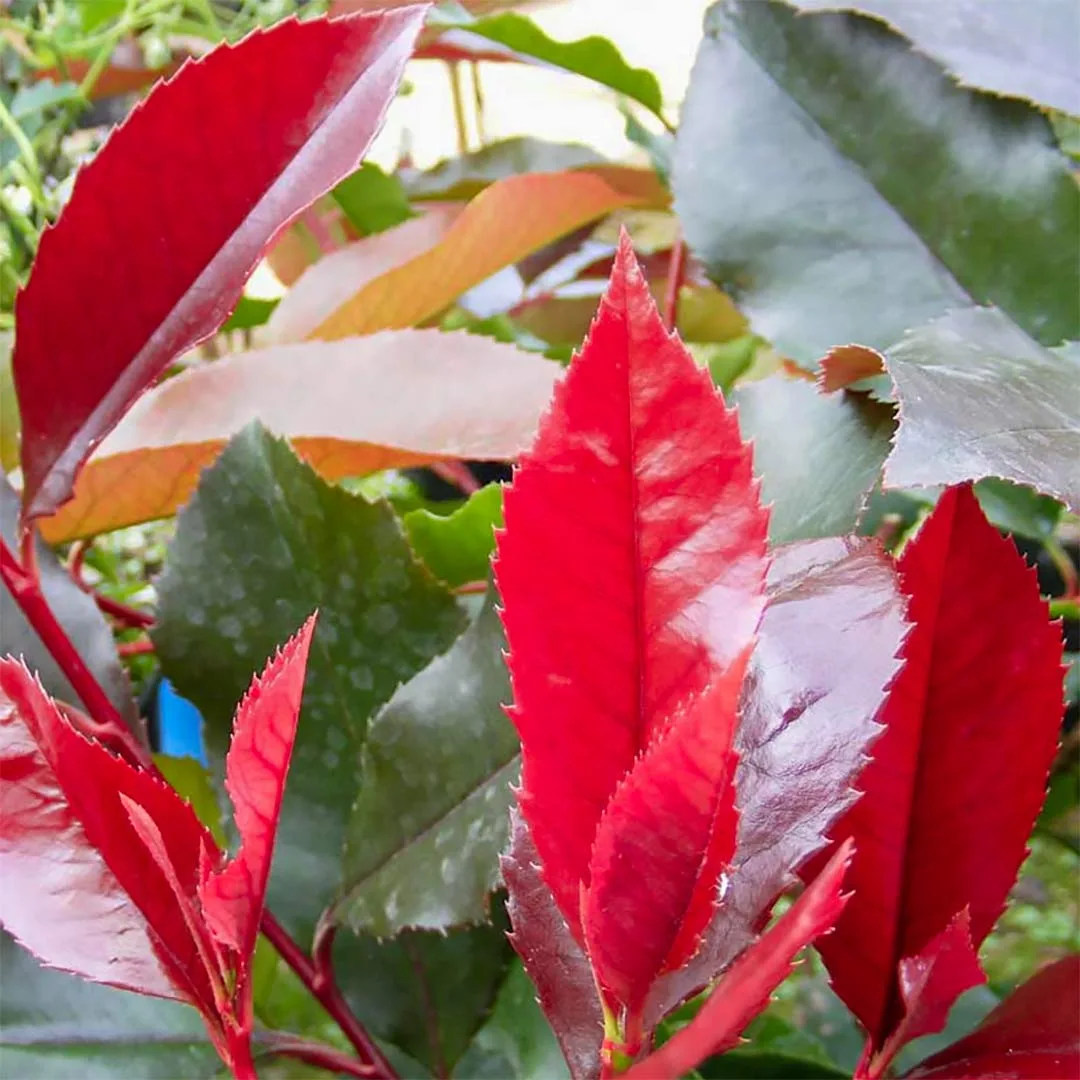
A rich evergreen shrub with bright red coppery foliage in early spring maturing to a glossy leathery green. The young bright red foliage will remain well into early summer, longer than other varieties. Ideal for general garden planting or hedging, low maintenance and easy to cultivate. Panicles of creamy-white spring flowers may be followed by red fruits. Approximate mature height of around 2 metres and a spread of 1.5 - 2 metres
Scientific classification
- Species
- Christmas berry 'Scarlet Blaze' (Photinia × fraseri 'Scarlet Blaze')
- Genus
- Photinia
- Family
- Rosaceae
- Order
- Rosales
- Class
- Magnoliopsida
- Phylum
- Magnoliophyta
- Fruit are ornamental - not to be eaten. Wear gloves and other protective equipment when handling
- Toxicity
- Shrubs
- Plant type
- 2.5-4 metres
- Height
- 1.5-2.5 metres
- Spread
- Evergreen
- Foliage
- Bushy
- Habit
- Autumn · Winter · Spring · Summer
- Season of interest
- Full sun · Partial shade
- Sunlight
- Information to be completed
- Ideal temperature









Christmas berry 'Scarlet Blaze' pictures
Distribution of Christmas berry 'Scarlet Blaze'
Distribution map
- Native
- Introduced
- Cultivated
Source:WCVP v16 · Royal Botanic Gardens, Kew · CC BY 3.0 · Boundaries:WGSRPD / TDWG
Toxicity
Fruit are ornamental - not to be eaten. Wear gloves and other protective equipment when handling
Christmas berry 'Scarlet Blaze' care guide
- Moderate regular watering, deeper irrigation during prolonged dry heat
- Watering
- Full sun · Partial shade
- Sunlight

Watering
Moderate regular watering, deeper irrigation during prolonged dry heat
Fertilizing
 Fertilizing
Slow-release shrub fertilizer once annually at early spring bud break
Pruning
 Pruning
Most cultivars may be pruned hard in spring to regenerate if necessary. If growing as a hedge trim two or three times during the growing season to main shape and encourage new red foliage. See pruning evergreen shrubs for further advice
Propagation
 Propagation
Propagate by semi-hardwood cuttings in summer
Growing
 Growing
Grow in fertile, humus-rich, acid or neutral soil in sun or partial shade. See photinia cultivation and hedges for further advice
Common pests and diseases
Diseases
May be susceptible to fireblight, a leaf spot, honey fungus and powdery mildews
Pests
May be susceptible to leaf damage by vine weevil
Explore the plant health library →




