
chrysanthemum 'Fanfare Glowing Embers'
Also known as: Information to be completed
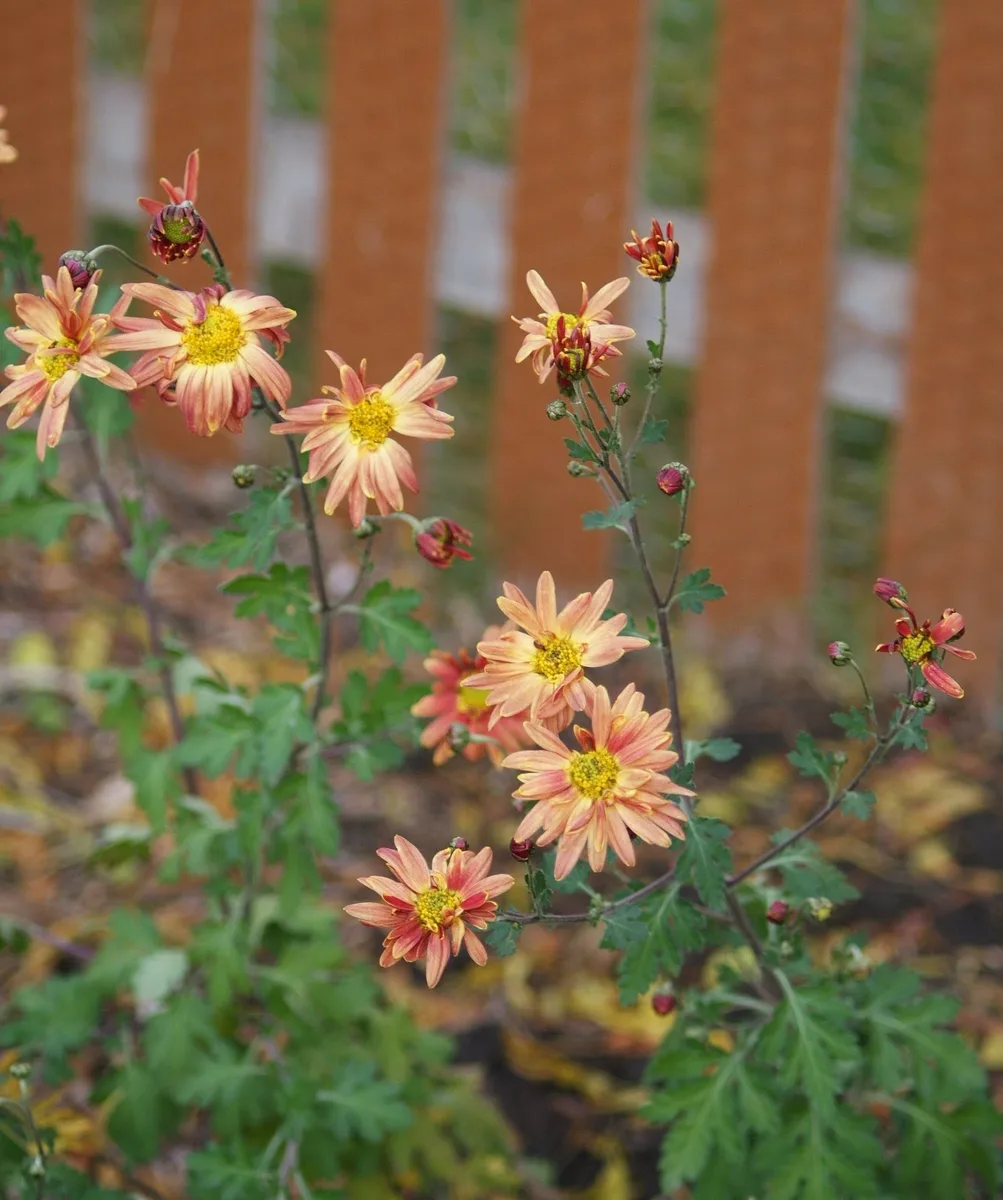
An erect, woody-based, deciduous perennial, producing stems to 90cm (3ft) high and a spread of 50cm (20in), with deeply divided, aromatic green leaves. In late summer and autumn, the plants produce sprays of fully-double, flowers, with petals that have a ruffled texture. They are dark orange on their upper surfaces and paler orange on the under-surfaces, producing a two-tone effect. They flowers are long lasting in water and are ideal to grow for cutting. The plants are winter hardy throughout most of the UK, but if grown in colder areas, are best heavily mulched over winter, or lifted after flowering and kept in cold, but frost-free conditions until spring.
Scientific classification
- Species
- chrysanthemum 'Fanfare Glowing Embers' (Chrysanthemum 'Fanfare Glowing Embers')
- Genus
- Chrysanthemum
- Family
- Asteraceae
- Order
- Asterales
- Class
- Magnoliopsida
- Phylum
- Tracheophyta
- Skin allergen. Wear gloves and other protective equipment when handling
- Toxicity
- Herbaceous Perennial
- Plant type
- 0.5-1 metres
- Height
- 0.5-1 metres
- Spread
- Deciduous
- Foliage
- Bushy · Clump forming
- Habit
- Spring · Summer · Autumn
- Season of interest
- Full sun
- Sunlight
- Information to be completed
- Ideal temperature









chrysanthemum 'Fanfare Glowing Embers' pictures
Toxicity
Skin allergen. Wear gloves and other protective equipment when handling
chrysanthemum 'Fanfare Glowing Embers' care guide
- Even moderate soil dampness, drain standing water immediately
- Watering
- Full sun
- Sunlight

Watering
Even moderate soil dampness, drain standing water immediately
Fertilizing
 Fertilizing
Flowering chrysanthemum feed biweekly from spring to autumn
Pruning
 Pruning
Once flowering is over in late autumn, cut the whole plant down to 20cm (8in) tall.
Propagation
 Propagation
Propagate by basal softwood cuttings from overwintered stools in late winter or early spring. Cuttings should be rooted in a loamless compost the surface of which is covered with dry sand and kept in a temperature of 16°C. Place in a cold frame after first rooting and protect from frost. Harden off in mid spring. Established clumps may be propagated by division in spring.
Growing
 Growing
Grow in a well-drained, fertile, moisture-retentive soil in full sun. In cool regions, lift the plants in autumn, before the first frosts and store the crowns in trays of just moist compost in frost-free conditions until spring. In areas where temperatures fall no lower than -5˚C (23˚F) in winter, plants may be left in the ground and protected by a thick mulch over winter, carefully removing this in spring, after the risk of frosts has passed.
Common pests and diseases
Diseases
May be susceptible to glasshouse grey mould, powdery mildews and chrysanthemum white rust
Pests
May be susceptible to capsid bug, earwigs, chrysanthemum eelworm, aphids, chrysanthemum leaf miner and glasshouse red spider mite
Explore the plant health library →




