
coneflower [Summerina Orange]
Also known as: Information to be completed
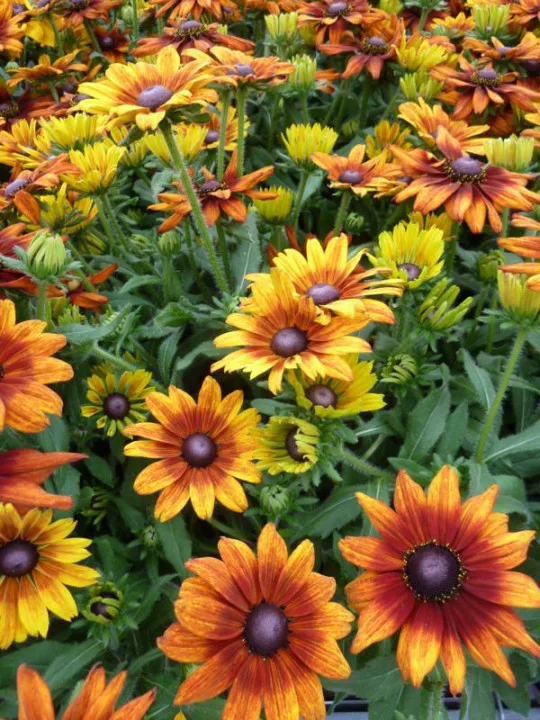
A bushy upright, clump-forming herbaceous perennial to 60cm with lance-shaped somewhat toothed dark green hairy leaves. It produces numerous large flowers with orange petals, becoming darker rusty orange towards the base around a brown central cone. This variety incorporates the appearance of a Rudbeckia and the hardiness of an Echinacea and flowers over a long period from summer into autumn.
Scientific classification
- Species
- coneflower [Summerina Orange] (Rudbeckia Summerina Orange ('Et Rdb 01'))
- Genus
- Rudbeckia
- Family
- Asteraceae
- Order
- Asterales
- Class
- Magnoliopsida
- Phylum
- Magnoliophyta
- Information to be completed
- Toxicity
- Herbaceous Perennial
- Plant type
- 0.5-1 metres
- Height
- 0.5-1 metres
- Spread
- Deciduous
- Foliage
- Columnar upright
- Habit
- Spring · Summer · Autumn
- Season of interest
- Full sun · Partial shade
- Sunlight
- Information to be completed
- Ideal temperature









coneflower [Summerina Orange] pictures
coneflower [Summerina Orange] care guide
- Deep soak planting bed when top soil dries fully to touch
- Watering
- Full sun · Partial shade
- Sunlight

Watering
Deep soak planting bed when top soil dries fully to touch
Fertilizing
 Fertilizing
Light diluted coneflower feed biweekly full blooming season
Pruning
 Pruning
Cut back stems that have flowered or leave for winter interest
Propagation
 Propagation
Propagate by division
Growing
 Growing
Grow in well-drained or moist, but well-drained, moderately fertile soil in a sunny spot or light dappled shade. Able to tolerate drought once established
Common pests and diseases
Diseases
May be susceptible to grey moulds if air circulation is poor
Pests
Generally pest-free
Explore the plant health library →




