
mint 'Strawberry Mint'
Also known as: Information to be completed
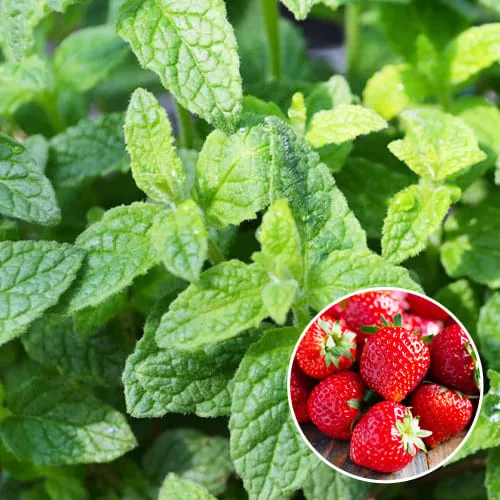
A vigorous, spreading perennial herb with small, aromatic, mid-green leaves that have a scent reminiscent of strawberries and clusters of small, pale purple flowers that appear in summer. Perfect as a garnish for desserts
Scientific classification
- Species
- mint 'Strawberry Mint' (Mentha 'Strawberry Mint')
- Genus
- Mentha
- Family
- Lamiaceae
- Information to be completed
- Toxicity
- Herbaceous Perennial · Herbs - Culinary
- Plant type
- 0.1-0.5 metres
- Height
- 1-1.5 metres
- Spread
- Deciduous
- Foliage
- Information to be completed
- Habit
- Spring · Summer · Autumn
- Season of interest
- Full sun · Partial shade
- Sunlight
- Information to be completed
- Ideal temperature









mint 'Strawberry Mint' pictures
Distribution of mint 'Strawberry Mint'
Distribution map
Information to be completed
Information to be completed
Culture
Information to be completed
Toxicity
Information to be completed
Quick identification of mint 'Strawberry Mint'
Information to be completed
mint 'Strawberry Mint' care guide
- Moderate regular watering, avoid prolonged drought and stagnant waterlogging
- Watering
- Full sun · Partial shade
- Sunlight
- Information to be completed
- Ideal temperature

Watering
Moderate regular watering, avoid prolonged drought and stagnant waterlogging
Fertilizing
 Fertilizing
Balanced perennial feed every four weeks spring through summer growth
Pruning
 Pruning
Cut back after flowering in autumn
Propagation
 Propagation
Propagate by seed or division in spring or autumn
Growing
 Growing
Grow in moist but well drained soil in full or partial sun. May have the potential to become a nuisance, restrict the root run in a deep container and plunge into the ground, or plant in a well chosen site where it can grow unrestricted. This variety does tend to be less invasive than other mints. See mint cultivation for more information
People also ask
Information to be completed
Common pests and diseases
Diseases
May be susceptible to mint rust and powdery mildews
Pests
May be susceptible to caterpillars and leafhoppers
Explore the plant health library →




