
aeonium 'Phoenix Flame'
Also known as: Information to be completed
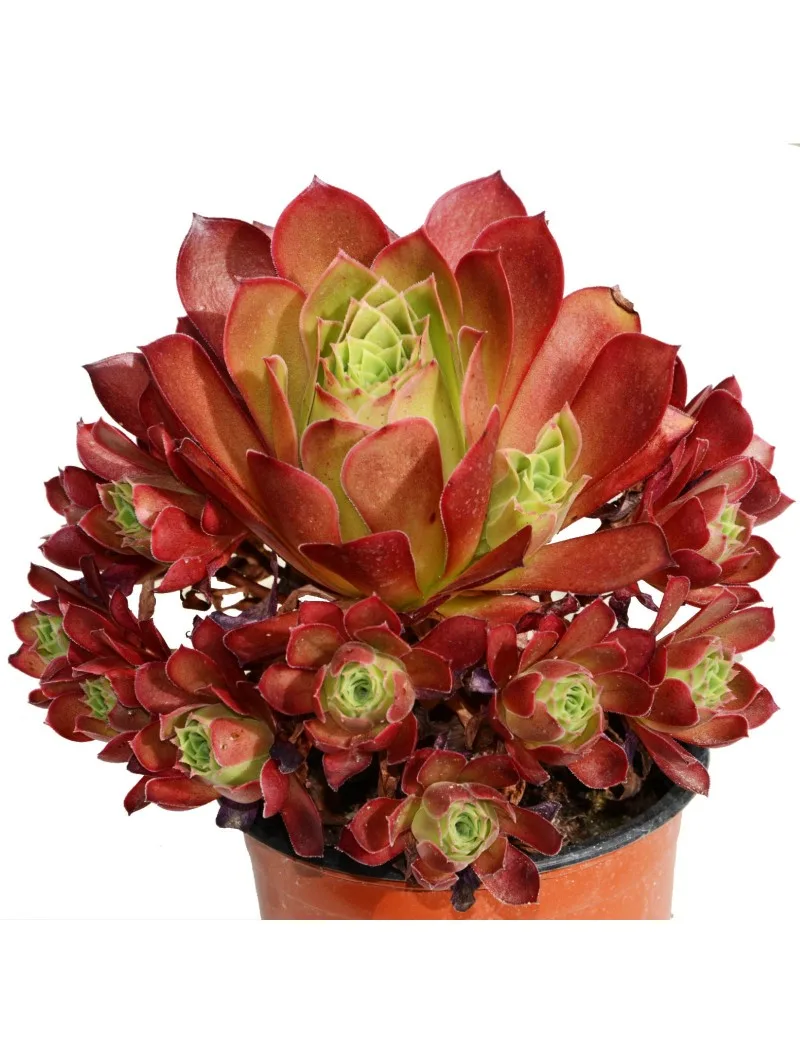
A succulent, evergreen sub-shrub forming a compact mound of closely-packed leaf rosettes. The leaves are are green at the centre of the rosette, darkening to deep purple-red on the outer whorls. Domed clusters of small, starry yellow flowers are sometimes produced in summer. A good patio plant, but is best moved under glass where winters are not reliably mild
Scientific classification
- Species
- aeonium 'Phoenix Flame' (Aeonium 'Phoenix Flame')
- Genus
- Aeonium
- Family
- Crassulaceae
- Information to be completed
- Toxicity
- Cactus Succulent · Conservatory Greenhouse
- Plant type
- 0.1-0.5 metres
- Height
- 0.1-0.5 metres
- Spread
- Evergreen
- Foliage
- Information to be completed
- Habit
- Spring · Summer · Autumn · Winter
- Season of interest
- Full sun · Partial shade
- Sunlight
- Information to be completed
- Ideal temperature









aeonium 'Phoenix Flame' pictures
Distribution of aeonium 'Phoenix Flame'
Distribution map
Information to be completed
Information to be completed
Culture
Information to be completed
Toxicity
Information to be completed
Quick identification of aeonium 'Phoenix Flame'
Information to be completed
aeonium 'Phoenix Flame' care guide
- Let gritty soil dry fully before each thorough watering cycle
- Watering
- Full sun · Partial shade
- Sunlight
- Information to be completed
- Ideal temperature

Watering
Let gritty soil dry fully before each thorough watering cycle
Fertilizing
 Fertilizing
Very dilute low-nitrogen succulent feed monthly in warm growth
Pruning
 Pruning
No pruning required
Propagation
 Propagation
Propagate by rosette cuttings taken in summer
Growing
 Growing
Grow in pots of loam-based compost with added extra grit. Position in a sunny spot for the best leaf colouration; aeonium will tolerate some shade but the leaves become green. Water moderately when in growth, not at all when dormant. Apply a balanced liquid fertiliser 2 or 3 times during the growing season. In winter move plants to a frost-free greenhouse or conservatory. See hardy cacti and succulent cultivation for further information
People also ask
Information to be completed
Common pests and diseases
Diseases
Generally disease-free
Pests
May be susceptible to aphids, vine weevil grubs and mealybugs
Explore the plant health library →




