
cherry 'Flavor King'
Also known as: Information to be completed
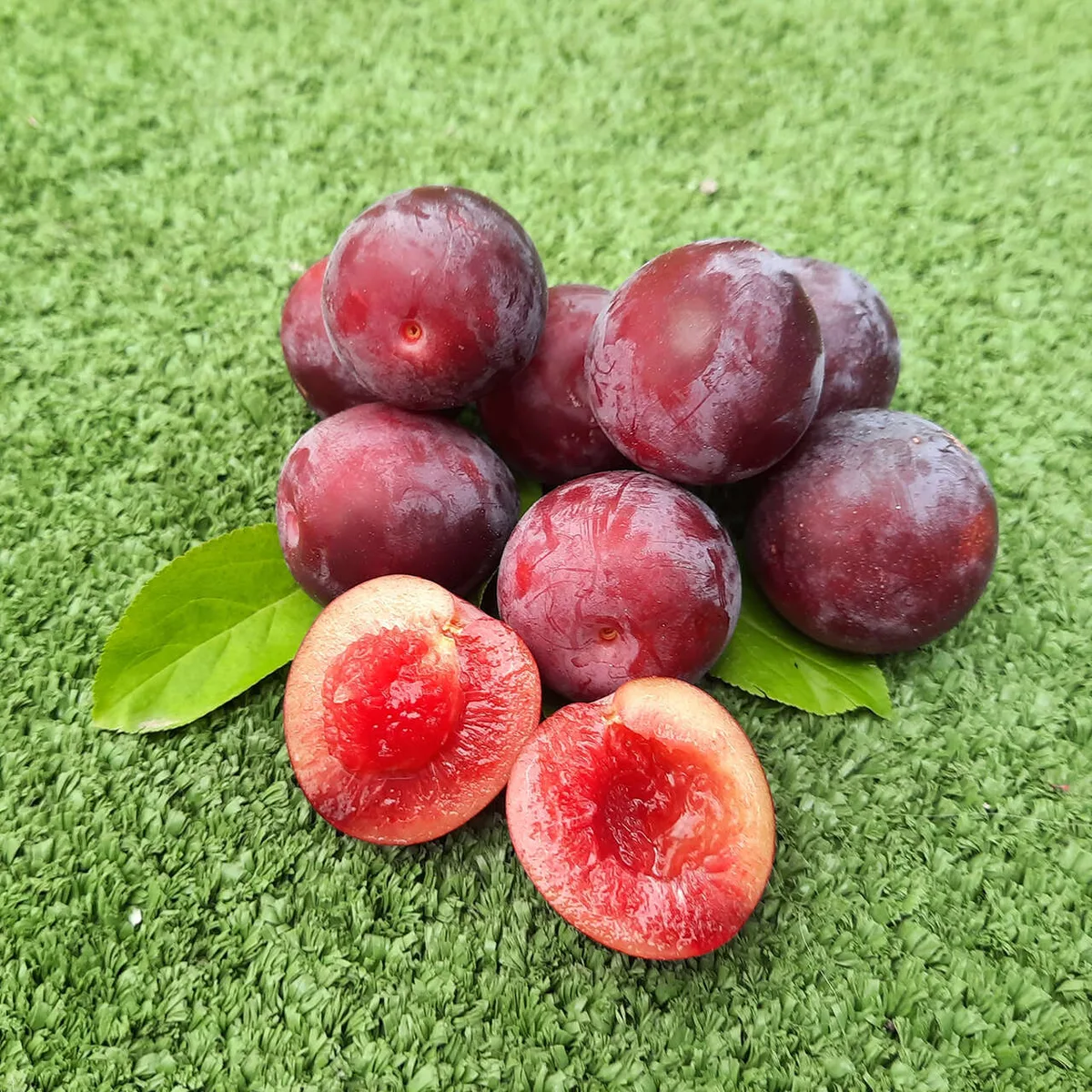
An interspecific hybrid resulting from a cross between a Japanese plum and an apricot. The plum parentage is the most dominant. The dark purple rounded fruit has deep red flesh with very sweet intense plum flavour. For warm sheltered sites only. The white, early spring blossom is prone to frost damage and protections is usually needed. Though partly self-fertile it benefits significantly from crosspollination to set good crops. It will pollinate with cherry plums (Prunus ceracifera), early flowering plums and other pluot cultivars. Pollination group 1. Cropping season: August
Scientific classification
- Species
- cherry 'Flavor King' (Prunus 'Flavor King')
- Genus
- Prunus
- Family
- Rosaceae
- Order
- Rosales
- Class
- Magnoliopsida
- Phylum
- Magnoliophyta
- Information to be completed
- Toxicity
- Fruit Edible
- Plant type
- 2.5-4 metres
- Height
- 2.5-4 metres
- Spread
- Deciduous
- Foliage
- Bushy
- Habit
- Spring · Summer
- Season of interest
- Full sun
- Sunlight
- Information to be completed
- Ideal temperature









cherry 'Flavor King' pictures
cherry 'Flavor King' care guide
- Deep water during dry spells, especially when young
- Watering
- Full sun
- Sunlight

Watering
Deep water during dry spells, especially when young
Fertilizing
 Fertilizing
Balanced fruit or tree feed in early spring
Pruning
 Pruning
Prune regularly depending on how the tree is trained – see pruning plums. Train fan-trained trees in spring. Pruning established fans is carried out in early summer and after harvest
Propagation
 Propagation
Propagate by chip budding or grafting onto a rootstock for fruit. The rootstock will largely determine the vigour of the tree
Growing
 Growing
Tolerant of a range of soils as long as well drained, but prefers loamy, ideally slightly acidic soils pH of 6 to 6.5. Plant in a sunny, sheltered site. Flowers may be susceptible to spring frosts damage. Thin fruit if necessary. Grow as for plums - see How to grow: Plums for further cultivation details
Common pests and diseases
Diseases
May be susceptible to peach leaf curl, silver leaf, bacterial canker, blossom wilt and honey fungus
Pests
May be susceptible to plum aphid, red spider mite and winter moth caterpillar. The fruit can be damaged by plum moth caterpillars, wasps and birds
Explore the plant health library →




