
Ficaria verna (Flore Pleno Group)
Also known as: Information to be completed
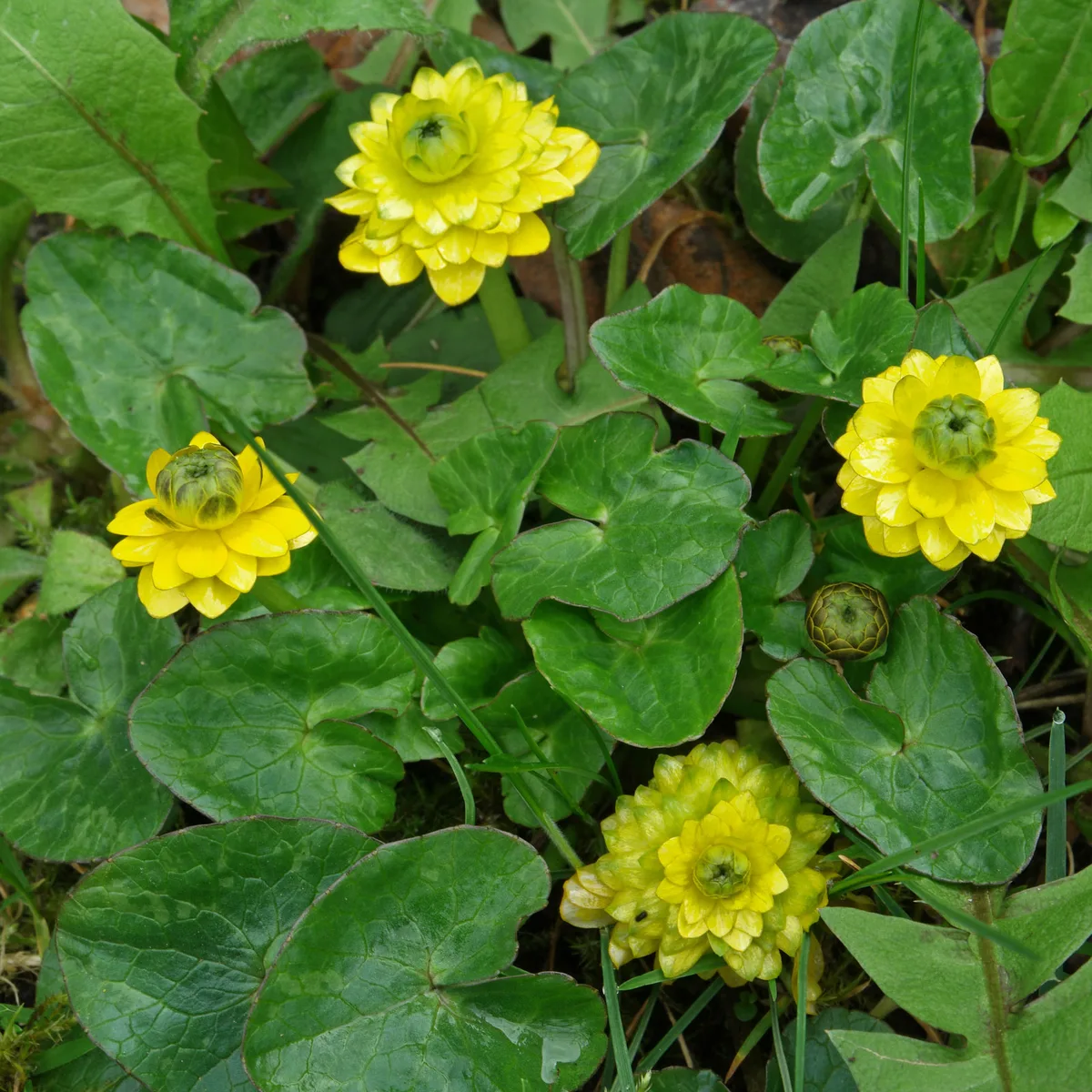
A tuberous, summer-dormant perennial to 10cm tall, with long-stalked, glossy, heart-shaped leaves with irregular, silvery markings. In early spring it produces bright yellow, double flowers with a green centre. It is useful for providing early spring colour and for underplanting trees and shrubs
Scientific classification
- Species
- Ficaria verna (Flore Pleno Group) (Ficaria verna (Flore Pleno Group))
- Genus
- Ficaria
- Family
- Ranunculaceae
- Order
- Ranunculales
- Class
- Magnoliopsida
- Phylum
- Tracheophyta
- Harmful if eaten, skin irritant. Wear gloves and other protective equipment when handling]
- Toxicity
- Herbaceous Perennial
- Plant type
- Up to 10 cm
- Height
- 0.1-0.5 metres
- Spread
- Deciduous
- Foliage
- Matforming
- Habit
- Spring · Winter
- Season of interest
- Full shade · Partial shade
- Sunlight
- Information to be completed
- Ideal temperature









Ficaria verna (Flore Pleno Group) pictures
Distribution of Ficaria verna (Flore Pleno Group)
Distribution map
- Native
- Introduced
- Cultivated
Source:WCVP v16 · Royal Botanic Gardens, Kew · CC BY 3.0 · Boundaries:WGSRPD / TDWG
Toxicity
Harmful if eaten, skin irritant. Wear gloves and other protective equipment when handling]
Ficaria verna (Flore Pleno Group) care guide
- Moderate regular watering, allowing brief slight drying between soakings
- Watering
- Full shade · Partial shade
- Sunlight

Watering
Moderate regular watering, allowing brief slight drying between soakings
Fertilizing
 Fertilizing
Balanced perennial feed every four weeks from spring through summer
Pruning
 Pruning
No pruning required
Propagation
 Propagation
Divide, or detach basal bulbils in spring or autumn. Propagate by seed as soon as it is ripe, in a cold frame; cultivars will not come true from seed
Growing
 Growing
Grow in moist, humus-rich soil in full or partial shade. A good early source of pollen and nectar for insects, though plants can spread and have potential to become a nuisance if not controlled. See celandine cultivation
Common pests and diseases
Diseases
May be susceptible to powdery mildews
Pests
May be susceptible to slugs and aphids
Explore the plant health library →




