
broccoli (purple sprouting) 'Red Fire'
Also known as: Information to be completed
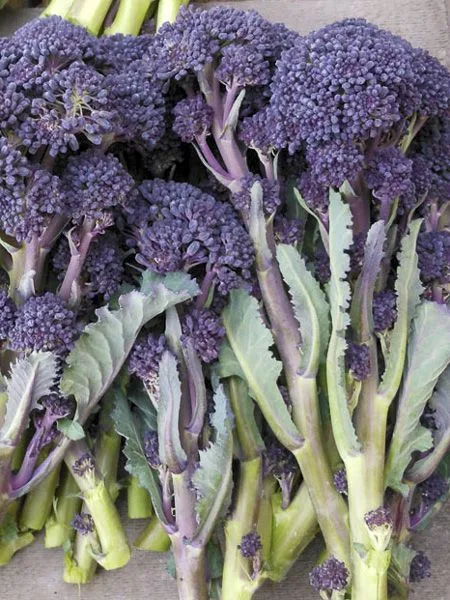
A British bred, hardy annual vegetable grown for its exceptional yields of high quality, medium sized dark purple spears with an excellent flavour and texture. Over-winters well and easy to pick
Scientific classification
- Species
- broccoli (purple sprouting) 'Red Fire' (Brassica oleracea 'Red Fire')
- Genus
- Brassica
- Family
- Brassicaceae
- Order
- Brassicales
- Class
- Magnoliopsida
- Phylum
- Tracheophyta
- Information to be completed
- Toxicity
- Annual Biennial
- Plant type
- 0.5-1 metres
- Height
- 0.1-0.5 metres
- Spread
- Deciduous
- Foliage
- Clump forming
- Habit
- Summer · Autumn · Winter
- Season of interest
- Full sun
- Sunlight
- Information to be completed
- Ideal temperature









broccoli (purple sprouting) 'Red Fire' pictures
Distribution of broccoli (purple sprouting) 'Red Fire'
Distribution map
- Native
- Introduced
- Cultivated
Source:WCVP v16 · Royal Botanic Gardens, Kew · CC BY 3.0 · Boundaries:WGSRPD / TDWG
broccoli (purple sprouting) 'Red Fire' care guide
- Keep soil consistently moist for tender leafy growth, never hard dry
- Watering
- Full sun
- Sunlight

Watering
Keep soil consistently moist for tender leafy growth, never hard dry
Fertilizing
 Fertilizing
Nitrogen-rich vegetable feed every two to three weeks active growth
Pruning
 Pruning
No pruning required
Propagation
 Propagation
Propagate by seed. See sowing vegetable seeds or sowing seeds indoors for further advice
Growing
 Growing
Grow in fertile, well compacted, non-acid soil in full sun. Sow indoors between April-June and transplant out in June. Harvest between October and March. See broccoli cultivation for more detailed advice
Common pests and diseases
Diseases
May be susceptible to black rot, clubroot, downy mildew, leaf spot
Pests
May be susceptible to birds, cabbage whitefly, cabbage root fly, cabbage caterpillar, cutworms, slugs and snails, flea beetle, swede midge
Explore the plant health library →




