
tomato 'Brandy Boy'
Also known as: Information to be completed
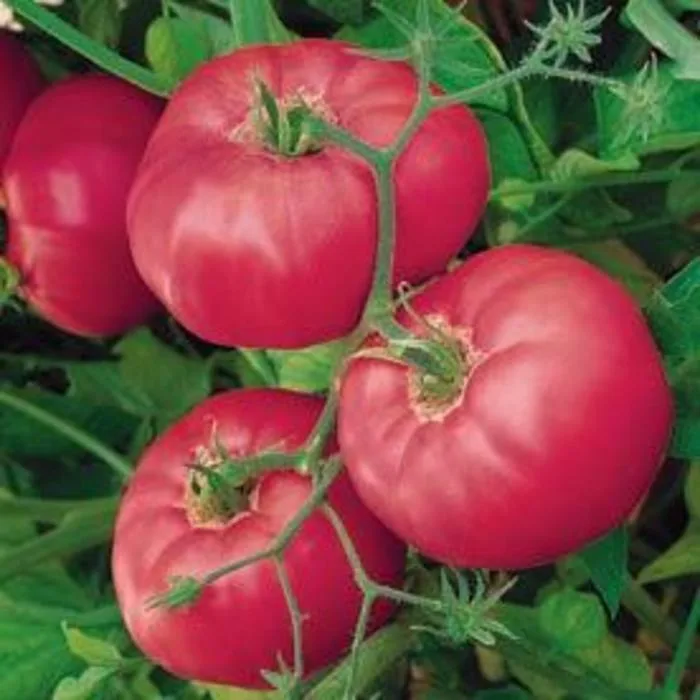
A beefsteak tomato producing deep pinkish-red fruits with a sweet and tangy flavour that are up to 12cm in diameter
Scientific classification
- Species
- tomato 'Brandy Boy' (Solanum lycopersicum 'Brandy Boy')
- Genus
- Solanum
- Family
- Solanaceae
- Order
- Solanales
- Class
- Magnoliopsida
- Phylum
- Magnoliophyta
- Information to be completed
- Toxicity
- Annual Biennial · Fruit Edible
- Plant type
- 1.5-2.5 metres
- Height
- 0.5-1 metres
- Spread
- Semi evergreen
- Foliage
- Bushy · Climbing
- Habit
- Spring · Summer · Autumn
- Season of interest
- Full sun
- Sunlight
- Information to be completed
- Ideal temperature









tomato 'Brandy Boy' pictures
Distribution of tomato 'Brandy Boy'
Distribution map
- Native
- Introduced
- Cultivated
Source:WCVP v16 · Royal Botanic Gardens, Kew · CC BY 3.0 · Boundaries:WGSRPD / TDWG
tomato 'Brandy Boy' care guide
- Even moisture throughout flowering and fruit set, avoid sharp drought swings
- Watering
- Full sun
- Sunlight

Watering
Even moisture throughout flowering and fruit set, avoid sharp drought swings
Fertilizing
 Fertilizing
Tomato or pepper feed every one to two weeks fruiting season
Pruning
 Pruning
Remove all side shoots as they appear. Pinch the growing tip when the plant has formed seven trusses under cover or four trusses outdoors
Propagation
 Propagation
Propagate by seed. See sowing vegetable seeds or sowing seeds indoors for further advice
Growing
 Growing
Start from seed or buy as small plants and grow on in a heated greenhouse or on a warm windowsill. Move to an unheated greenhouse or outside once all risk of frost has passed, and provide support for the plant to grow up. Water regularly to keep the growing media evenly moist; inconsistent watering can lead to splitting and rot. Feed every 10-14 days. See advice on cultivating tomatoes for more detail
Common pests and diseases
Diseases
May be susceptible to honey fungus (rarely), potato blight, tomato blight, tomato leaf mould, tomato viruses, magnesium deficiency and blossom end rot. See Tomatoes: leaf problems
Pests
May be susceptible to glasshouse whitefly and tomato moth
Explore the plant health library →




