
foxglove 'Purple Carousel'
Also known as: Information to be completed
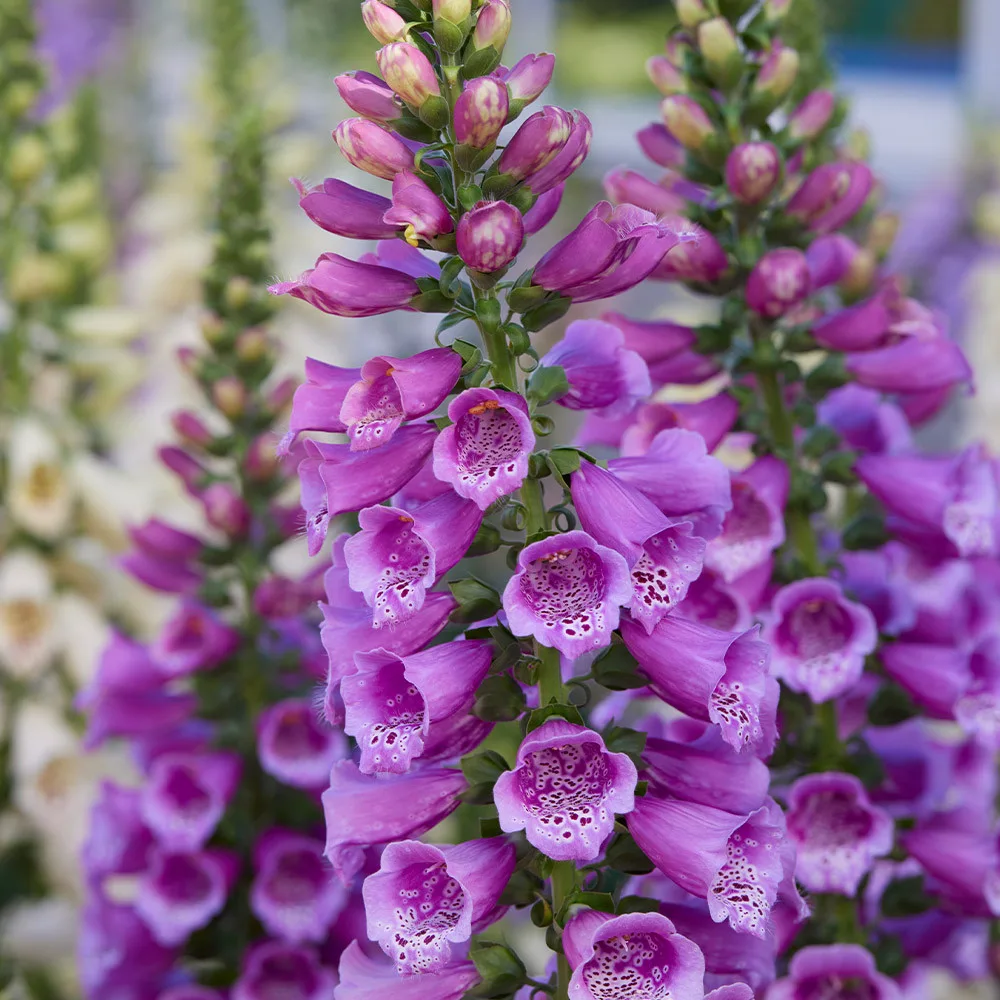
A biennial or short-lived perennial, up to 75cm high, with overwintering rosettes of green leaves and spikes of outward-facing flowers which grow all round the stems and are deep purplish pink, spotted inside with maroon outlined in white, in early summer; wild native foxgloves are a reliably good source of nectar for bumblebees, especially long-tongued bumblebees, and some but not all garden cultivars may also be good bumblebee plants
Scientific classification
- Species
- foxglove 'Purple Carousel' (Digitalis purpurea 'Purple Carousel')
- Genus
- Digitalis
- Family
- Plantaginaceae
- Order
- Lamiales
- Class
- Magnoliopsida
- Phylum
- Magnoliophyta
- TOXIC if eaten. Wear gloves and other protective equipment when handling
- Toxicity
- Annual Biennial
- Plant type
- 0.5-1 metres
- Height
- 0.1-0.5 metres
- Spread
- Semi evergreen
- Foliage
- Columnar upright
- Habit
- Spring · Summer · Autumn · Winter
- Season of interest
- Full sun · Partial shade
- Sunlight
- Information to be completed
- Ideal temperature









foxglove 'Purple Carousel' pictures
Distribution of foxglove 'Purple Carousel'
Distribution map
- Native
- Introduced
- Cultivated
Source:WCVP v16 · Royal Botanic Gardens, Kew · CC BY 3.0 · Boundaries:WGSRPD / TDWG
Toxicity
TOXIC if eaten. Wear gloves and other protective equipment when handling
foxglove 'Purple Carousel' care guide
- Moderate regular watering, allowing brief slight drying between soakings
- Watering
- Full sun · Partial shade
- Sunlight

Watering
Moderate regular watering, allowing brief slight drying between soakings
Fertilizing
 Fertilizing
Balanced perennial feed every four weeks from spring through summer
Pruning
 Pruning
No pruning required, but deadheading, cutting down the flowering stems, may encourage growth the following year
Propagation
 Propagation
Propagate by seed, sown in spring; it will self-seed, but may not come true unless plants have been grown in isolation
Growing
 Growing
Grow in moist but well-drained humus-rich soil in light dappled shade, for example in a mixed bed or an open woodland garden, or in full sun, and add organic mulch; native foxgloves are usually found in the wild on acidic soils, but they can also grow on neutral soils, and tolerate slightly alkaline soils
Common pests and diseases
Diseases
May be susceptible to powdery mildews, downy mildews and leaf spot
Pests
May be susceptible to aphids and leaf and bud eelworm
Explore the plant health library →




