
foxglove 'Martina'
Also known as: Information to be completed
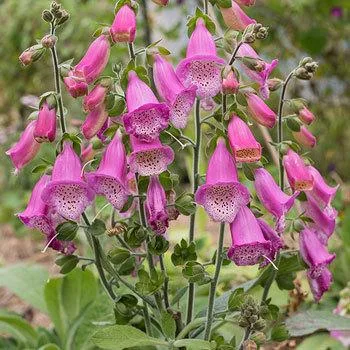
Martina' is a biennial or short-lived herbaceous perennial, up to 1.2m high, with silvery green leaves and branching stems of sterile pink flowers, spotted inside with maroon outlined in white, over a long period from early summer to early autumn; many foxglove species are a reliably good source of nectar for bumblebees, especially long-tongued bumblebees, and some but not all garden cultivars may also be good bumblebee plants
Scientific classification
- Species
- foxglove 'Martina' (Digitalis 'Martina')
- Genus
- Digitalis
- Family
- Plantaginaceae
- TOXIC if eaten. Wear gloves and other protective equipment when handling
- Toxicity
- Annual Biennial
- Plant type
- 1-1.5 metres
- Height
- 0.1-0.5 metres
- Spread
- Semi evergreen
- Foliage
- Columnar upright
- Habit
- Spring · Summer · Autumn · Winter
- Season of interest
- Full sun · Partial shade
- Sunlight
- Information to be completed
- Ideal temperature









foxglove 'Martina' pictures
Distribution of foxglove 'Martina'
Distribution map
Information to be completed
Information to be completed
Culture
Information to be completed
Toxicity
TOXIC if eaten. Wear gloves and other protective equipment when handling
Quick identification of foxglove 'Martina'
Information to be completed
foxglove 'Martina' care guide
- Moderate regular watering, allowing brief slight drying between soakings
- Watering
- Full sun · Partial shade
- Sunlight
- Information to be completed
- Ideal temperature

Watering
Moderate regular watering, allowing brief slight drying between soakings
Fertilizing
 Fertilizing
Balanced perennial feed every four weeks from spring through summer
Pruning
 Pruning
No pruning required, but deadheading, cutting down dead flowering stems, will encourage a longer flowering season and encourage growth the following year
Propagation
 Propagation
Propagate by seed, sown in spring; it is sterile so will not self-seed
Growing
 Growing
Grow in moist but well-drained humus-rich soil in light dappled shade, for example in a mixed bed or an open woodland garden, or in full sun, and add organic mulch
People also ask
Information to be completed
Common pests and diseases
Diseases
May be susceptible to powdery mildews, downy mildews and leaf spot
Pests
May be susceptible to aphids and leaf and bud eelworm
Explore the plant health library →




