
Symphyotrichum novae-angliae 'Colwall Century'
Also known as: Information to be completed
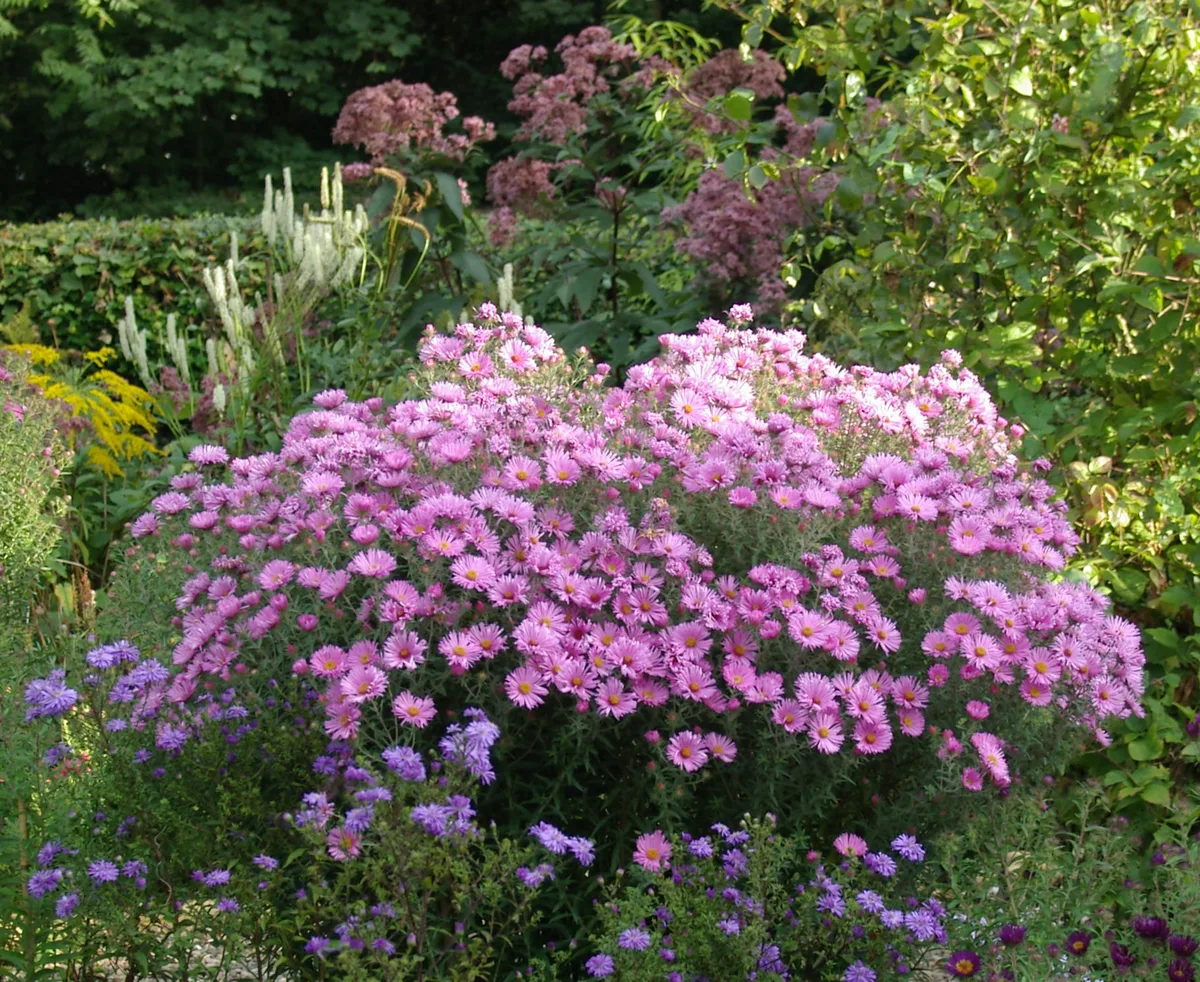
An upright, clump-forming perennial bearing a profusion of orange-centred, pink-petalled flowers in autumn. Easy to grow and long-lived
Scientific classification
- Species
- Symphyotrichum novae-angliae 'Colwall Century' (Symphyotrichum novae-angliae 'Colwall Century')
- Genus
- Symphyotrichum
- Family
- Asteraceae
- Order
- Asterales
- Class
- Magnoliopsida
- Phylum
- Magnoliophyta
- Information to be completed
- Toxicity
- Herbaceous Perennial
- Plant type
- 1-1.5 metres
- Height
- 1-1.5 metres
- Spread
- Deciduous
- Foliage
- Clump forming
- Habit
- Spring · Summer · Autumn
- Season of interest
- Full sun · Partial shade
- Sunlight
- Information to be completed
- Ideal temperature









Symphyotrichum novae-angliae 'Colwall Century' pictures
Distribution of Symphyotrichum novae-angliae 'Colwall Century'
Distribution map
- Native
- Introduced
- Cultivated
Source:WCVP v16 · Royal Botanic Gardens, Kew · CC BY 3.0 · Boundaries:WGSRPD / TDWG
Symphyotrichum novae-angliae 'Colwall Century' care guide
- Moderate regular watering, allow slight drying between waterings
- Watering
- Full sun · Partial shade
- Sunlight

Watering
Moderate regular watering, allow slight drying between waterings
Fertilizing
 Fertilizing
Light balanced feed in spring and during bloom
Pruning
 Pruning
Cut back almost to ground level in late autumn
Propagation
 Propagation
Propagate by division in spring
Growing
 Growing
Grow in fertile soil in sun or partial shade. Plants may require staking. Mulch annually and divide every third year to maintain vigour
Common pests and diseases
Diseases
May be susceptible to fusarium wilt, leaf spot and grey mould (botrytis)
Pests
May be susceptible to eelworm, aphids, slugs and snails
Explore the plant health library →




