
Symphyotrichum novae-angliae 'James'
Also known as: Information to be completed
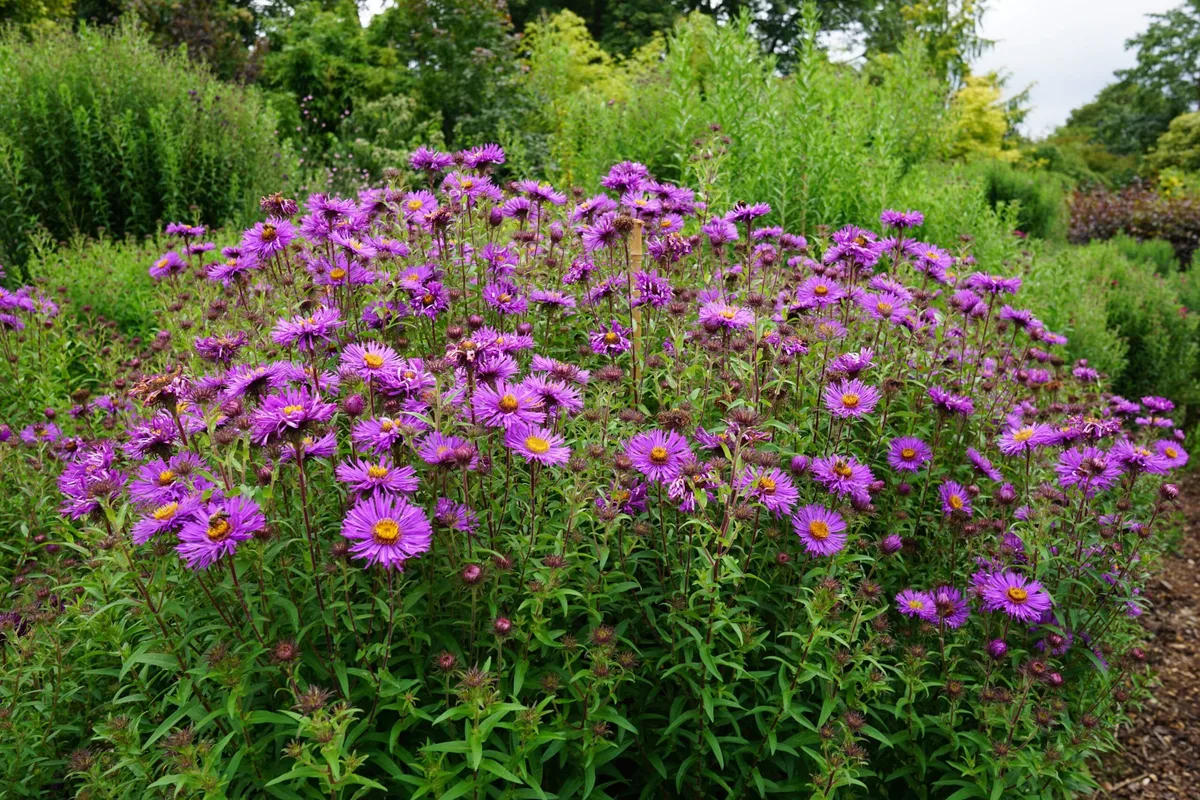
A bushy, clump-forming perennial to around 1.5m tall with lance-shaped leaves arranged around upright stems. Produces clusters of pale violet coloured, daisy-like flowers with yellow centres in autumn
Scientific classification
- Species
- Symphyotrichum novae-angliae 'James' (Symphyotrichum novae-angliae 'James')
- Genus
- Symphyotrichum
- Family
- Asteraceae
- Order
- Asterales
- Class
- Magnoliopsida
- Phylum
- Magnoliophyta
- Information to be completed
- Toxicity
- Herbaceous Perennial
- Plant type
- 1-1.5 metres
- Height
- 0.5-1 metres
- Spread
- Deciduous
- Foliage
- Bushy
- Habit
- Spring · Summer · Autumn
- Season of interest
- Full sun · Partial shade
- Sunlight
- Information to be completed
- Ideal temperature









Symphyotrichum novae-angliae 'James' pictures
Distribution of Symphyotrichum novae-angliae 'James'
Distribution map
- Native
- Introduced
- Cultivated
Source:WCVP v16 · Royal Botanic Gardens, Kew · CC BY 3.0 · Boundaries:WGSRPD / TDWG
Symphyotrichum novae-angliae 'James' care guide
- Consistently moist root zone, increase water during hot dry summer spells
- Watering
- Full sun · Partial shade
- Sunlight

Watering
Consistently moist root zone, increase water during hot dry summer spells
Fertilizing
 Fertilizing
Balanced liquid fertilizer every month from spring through early autumn
Pruning
 Pruning
Cut back close to the ground in late autumn
Propagation
 Propagation
Propagate by division in spring; divide every three years to maintain vigour
Growing
 Growing
Grow in fertile, moisture-retentive soil, in full sun if the soil remains moist throughout the growing season, or in partial shade. Add mulch in late autumn. Support may be required - see staking perennials for advice
Common pests and diseases
Diseases
May be susceptible to Fusarium wilt, leaf spot and grey moulds
Pests
May be susceptible to leaf and bud eelworms, aphids, slugs and snails
Explore the plant health library →




