
Symphyotrichum novi-belgii Bahamas ('Dasone')
Also known as: Information to be completed
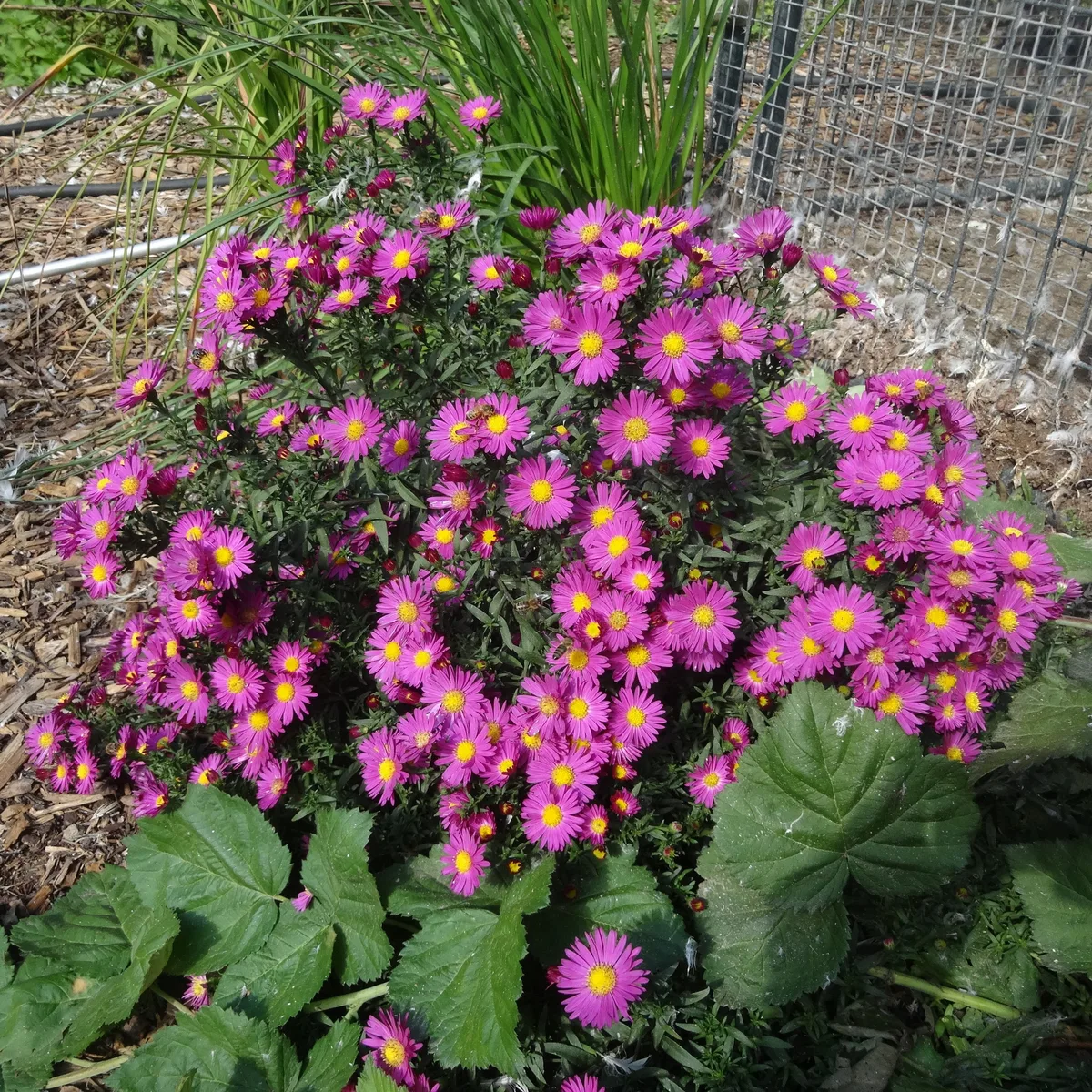
A compact, clump forming deciduous herbaceous perennial with stems that reach 45cm (18in) high and as much across. In late summer to autumn, vibrant, deep pink daisies are produced, with a contrasting yellow centre. The flowers are extremely useful late season food source in the wildlife garden for butterflies and other pollinators. The late blooming season also makes the plant a useful addition to extend the season of interest in the garden border
Scientific classification
- Species
- Symphyotrichum novi-belgii Bahamas ('Dasone') (Symphyotrichum novi-belgii Bahamas ('Dasone'))
- Genus
- Symphyotrichum
- Family
- Asteraceae
- Order
- Asterales
- Class
- Magnoliopsida
- Phylum
- Magnoliophyta
- Information to be completed
- Toxicity
- Herbaceous Perennial
- Plant type
- 0.1-0.5 metres
- Height
- 0.1-0.5 metres
- Spread
- Deciduous
- Foliage
- Bushy · Clump forming
- Habit
- Spring · Summer · Autumn
- Season of interest
- Full sun · Partial shade
- Sunlight
- Information to be completed
- Ideal temperature









Symphyotrichum novi-belgii Bahamas ('Dasone') pictures
Symphyotrichum novi-belgii Bahamas ('Dasone') care guide
- Moderate regular watering, allowing brief slight drying between soakings
- Watering
- Full sun · Partial shade
- Sunlight

Watering
Moderate regular watering, allowing brief slight drying between soakings
Fertilizing
 Fertilizing
Balanced perennial feed every four weeks from spring through summer
Pruning
 Pruning
Cut back old, flowered stems to the ground in late autumn
Propagation
 Propagation
Propagate by division in spring; divide every third year to maintain vigour
Growing
 Growing
Grows well in any well-drained soil in full sun.
Common pests and diseases
Diseases
May be susceptible to verticillium wilt, powdery mildews and grey moulds
Pests
May be susceptible to tarsonemid mite, slugs, snails, aphids, leaf and bud eelworms
Explore the plant health library →




