
dahlia 'Yellow Sunburst'
Also known as: Information to be completed
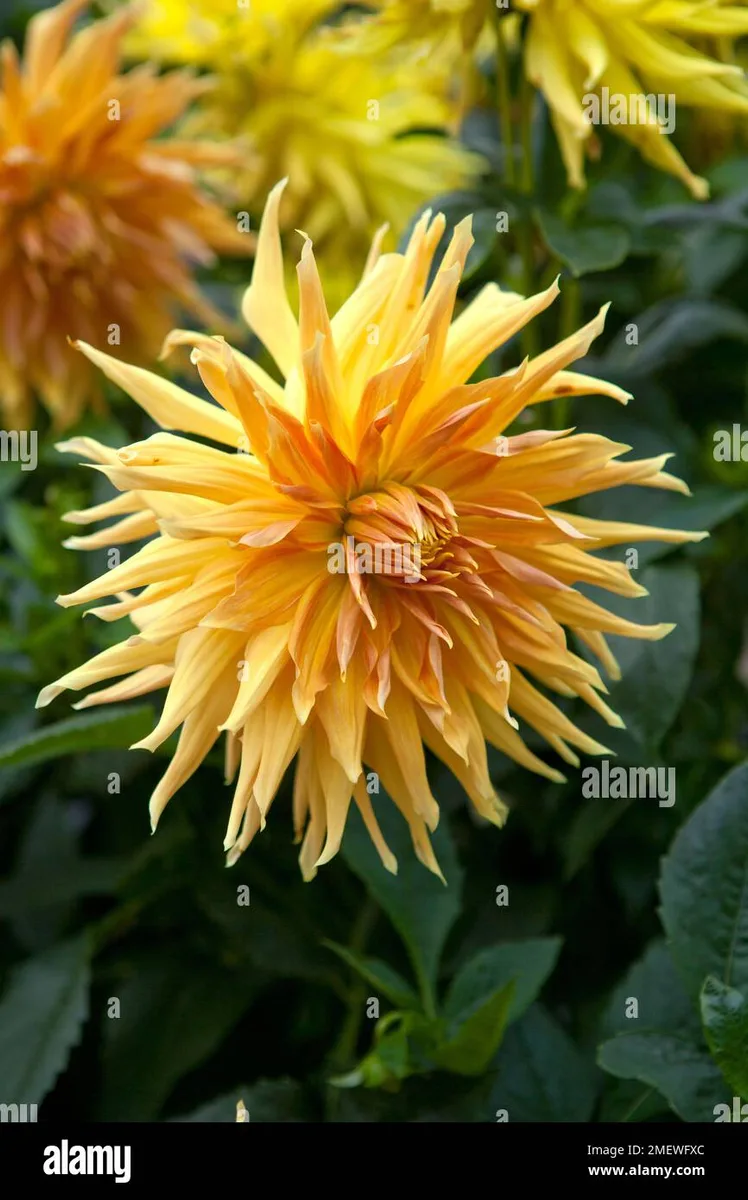
A herbaceous perennial up to 1m high, with divided green leaves, and orange-tinged, golden yellow semi-cactus flowers, 25cm across, in summer
Scientific classification
- Species
- dahlia 'Yellow Sunburst' (Dahlia 'Yellow Sunburst')
- Genus
- Dahlia
- Family
- Asteraceae
- Order
- Asterales
- Class
- Magnoliopsida
- Phylum
- Magnoliophyta
- Information to be completed
- Toxicity
- Herbaceous Perennial
- Plant type
- 0.5-1 metres
- Height
- 0.1-0.5 metres
- Spread
- Deciduous
- Foliage
- Clump forming
- Habit
- Spring · Summer · Autumn
- Season of interest
- Full sun
- Sunlight
- Information to be completed
- Ideal temperature









dahlia 'Yellow Sunburst' pictures
dahlia 'Yellow Sunburst' care guide
- Water deeply and regularly once active growth starts
- Watering
- Full sun
- Sunlight

Watering
Water deeply and regularly once active growth starts
Fertilizing
 Fertilizing
Rich balanced feed from growth until late flowering
Pruning
 Pruning
Deadhead to prolong flowering; cut back to near ground level in the autumn, before lifting and storing for the winter
Propagation
 Propagation
Propagate by softwood cuttings taken in spring from shoots from stored tubers, or divide the tubers, ensuring that each division has a viable bud
Growing
 Growing
Grow in fertile, humus-rich, well-drained soil, enriched with organic matter, in full sun; may require support (see staking perennials). Lift and store tubers in autumn to replant or use as a source of cuttings in spring. Poor flowering may be caused by overfeeding with high nitrogen fertilisers, not enough direct sunshine or not enough moisture at the roots. For more advice, see dahlia cultivation
Common pests and diseases
Diseases
May be affected by powdery mildews, dahlia mosaic virus, cucumber mosaic virus, tomato spotted wilt virus, storage rots, and leafy gall
Pests
May be affected by aphids, capsid bug, earwigs, caterpillars, slugs and glasshouse red spider mite
Explore the plant health library →




