
boat orchid 'Cali Night'
Also known as: Information to be completed
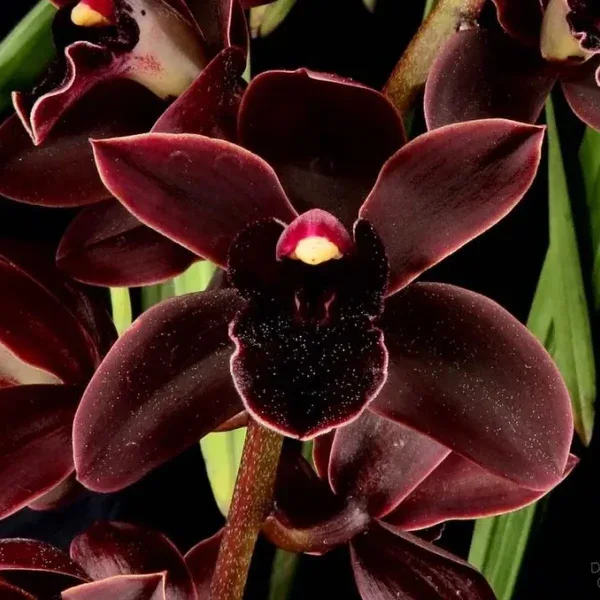
An evergreen, epiphytic orchid with narrowly oval leaves to around 60cm long. From winter into spring, long, erect to arching stems bear flowers of the deepest purple to nearly black edged with a thin white line
Scientific classification
- Species
- boat orchid 'Cali Night' (Cymbidium 'Cali Night')
- Genus
- Cymbidium
- Family
- Orchidaceae
- Order
- Asparagales
- Class
- Liliopsida
- Phylum
- Magnoliophyta
- Skin allergen. Wear gloves and other protective equipment when handling
- Toxicity
- Conservatory Greenhouse
- Plant type
- 0.5-1 metres
- Height
- 0.1-0.5 metres
- Spread
- Evergreen
- Foliage
- Clump forming
- Habit
- Spring · Summer · Autumn · Winter
- Season of interest
- Partial shade
- Sunlight
- Information to be completed
- Ideal temperature









boat orchid 'Cali Night' pictures
Toxicity
Skin allergen. Wear gloves and other protective equipment when handling
boat orchid 'Cali Night' care guide
- Allow pot mix partial drying, minimal water supply during winter dormancy
- Watering
- Partial shade
- Sunlight

Watering
Allow pot mix partial drying, minimal water supply during winter dormancy
Fertilizing
 Fertilizing
Diluted orchid liquid feed every four weeks spring through autumn months
Pruning
 Pruning
No pruning required
Propagation
 Propagation
Propagate by division; remove and replant old pseudobulbs when repotting in spring
Growing
 Growing
Best grown at temperatures of around 16°C in the day and 10°C at night. Ensure adequate light levels, but avoid direct sunlight. Water thoroughly when the growing medium is almost dry and allow to drain; allow to dry out between watering during the winter. Fertilise regularly and re-pot after flowering when pot bound using a suitable orchid compost. If possible, put the plant outside in dappled shade after the last frost and bring back in before the frosts start to aid flower initiation. See indoor orchid cultivation
Common pests and diseases
Diseases
Generally disease-free
Pests
May be susceptible to aphids, glasshouse red spider mite, slugs and mealybugs
Explore the plant health library →




