
southern rata 'Gold Nugget'
Also known as: Information to be completed
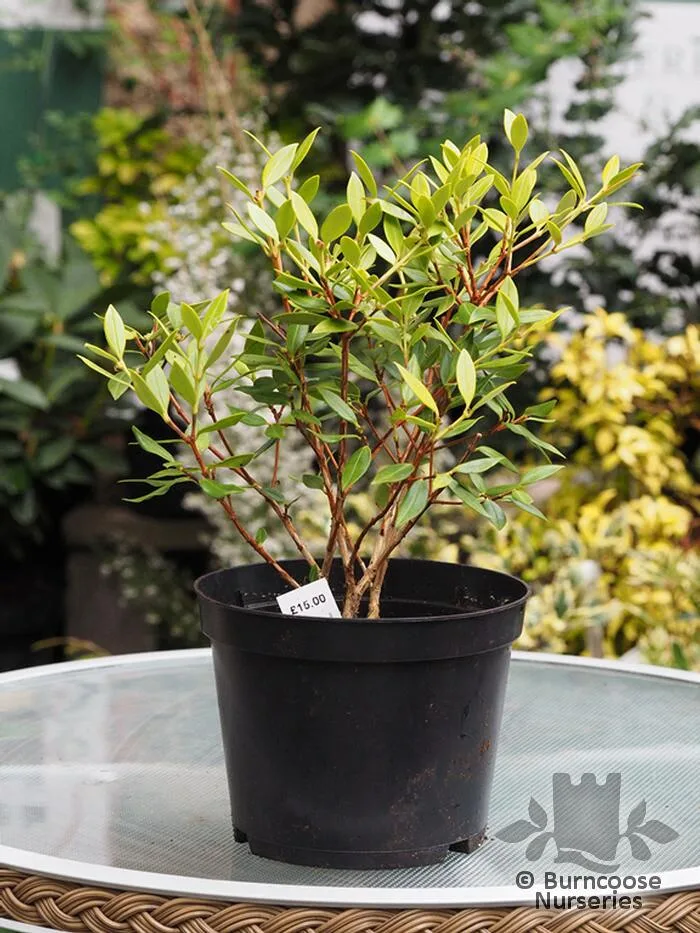
A compact, dense and bushy, rounded evergreen shrub, slowly growing to 2m. The young branches are silky and bear narrowly oval, shiny leaves, golden yellow when they first emerge and retaining this colour for many months. In summer, mature plants produce brush-like, pinkish-red flowers composed of numerous tufts of stamens
Scientific classification
- Species
- southern rata 'Gold Nugget' (Metrosideros umbellata 'Gold Nugget')
- Genus
- Metrosideros
- Family
- Myrtaceae
- Order
- Myrtales
- Class
- Magnoliopsida
- Phylum
- Tracheophyta
- Information to be completed
- Toxicity
- Shrubs
- Plant type
- 1.5-2.5 metres
- Height
- 1-1.5 metres
- Spread
- Evergreen
- Foliage
- Bushy
- Habit
- Autumn · Winter · Spring · Summer
- Season of interest
- Full sun
- Sunlight
- Information to be completed
- Ideal temperature









southern rata 'Gold Nugget' pictures
Distribution of southern rata 'Gold Nugget'
Distribution map
- Native
- Introduced
- Cultivated
Source:WCVP v16 · Royal Botanic Gardens, Kew · CC BY 3.0 · Boundaries:WGSRPD / TDWG
southern rata 'Gold Nugget' care guide
- Moderate regular watering, avoid prolonged drought or waterlogging
- Watering
- Full sun
- Sunlight

Watering
Moderate regular watering, avoid prolonged drought or waterlogging
Fertilizing
 Fertilizing
Balanced feed in spring and light repeat in growth season
Pruning
 Pruning
Little pruning is needed. Remove diseased, damaged, crowded or crossing shoots and unwanted growth. Timing depends on the plant: generally late winter or early spring; plants prone to bleeding and deciduous magnolias need different timing, and deciduous azaleas and lilacs are pruned after flowering.
Propagation
 Propagation
Propagate by semi-ripe cuttings with bottom heat in summer
Growing
 Growing
Under glass, grow in loam-based potting compost in full light, with shade from hot sun. In growth, water freely and apply a balanced liquid fertiliser monthly, water sparingly at other times. Outdoors in mild districts, grow in humus-rich, moderately fertile, moist but well-drained, neutral to acid soil in full sun. Shelter from cold, drying winds
Common pests and diseases
Diseases
Generally disease-free
Pests
May be susceptible to scale insects
Explore the plant health library →




