
Japanese barberry 'Orange Dream'
Also known as: Information to be completed
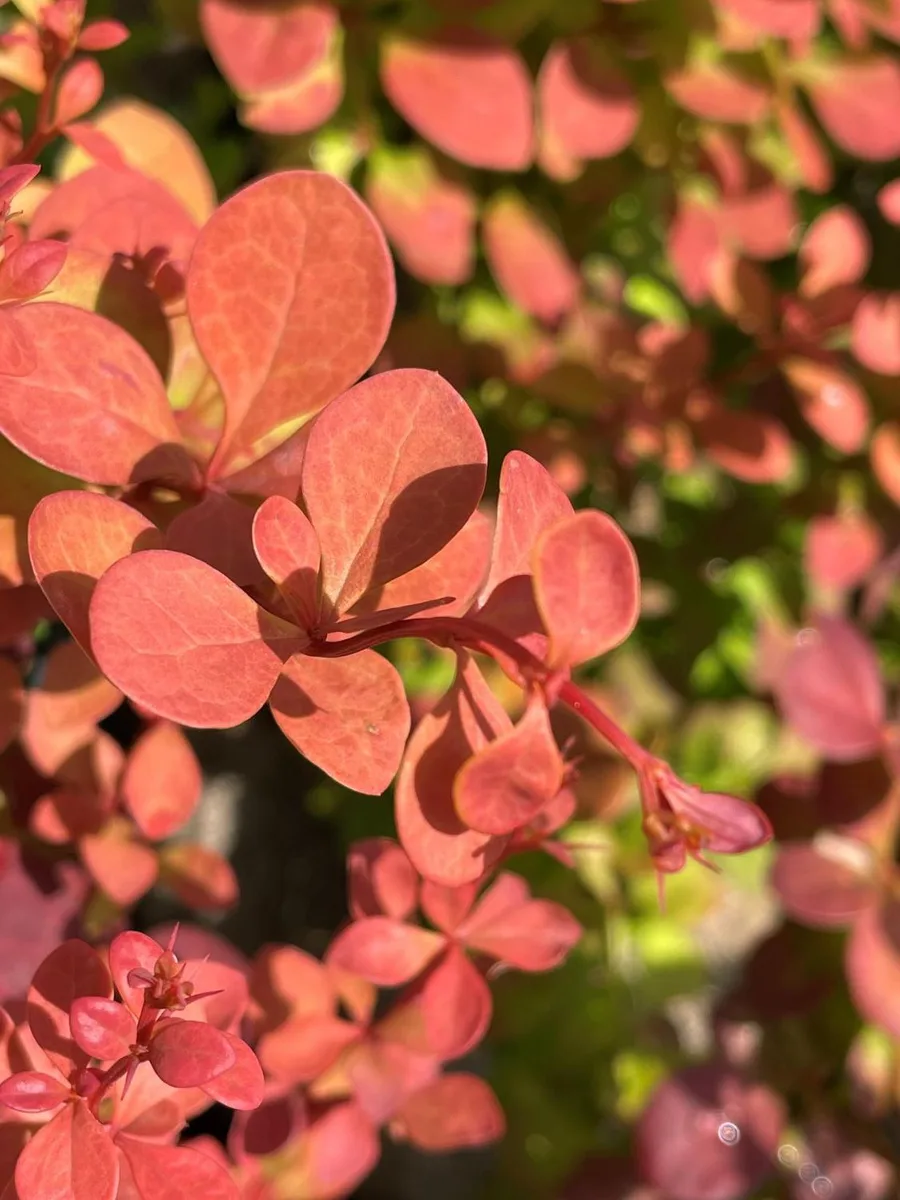
A compact deciduous shrub to 90cm high, with spiny stems and small ovate leaves that are bright orange in spring, maturing to shades of red and purple. Small, golden yellow flowers in spring are followed by red fruits in autumn
Scientific classification
- Species
- Japanese barberry 'Orange Dream' (Berberis thunbergii 'Orange Dream')
- Genus
- Berberis
- Family
- Berberidaceae
- Order
- Ranunculales
- Class
- Magnoliopsida
- Phylum
- Magnoliophyta
- Fruit are ornamental - not to be eaten. Wear gloves and other protective equipment when handling
- Toxicity
- Shrubs
- Plant type
- 0.5-1 metres
- Height
- 0.5-1 metres
- Spread
- Deciduous
- Foliage
- Bushy
- Habit
- Autumn · Spring · Summer
- Season of interest
- Full sun · Partial shade
- Sunlight
- Information to be completed
- Ideal temperature









Japanese barberry 'Orange Dream' pictures
Distribution of Japanese barberry 'Orange Dream'
Distribution map
- Native
- Introduced
- Cultivated
Source:WCVP v16 · Royal Botanic Gardens, Kew · CC BY 3.0 · Boundaries:WGSRPD / TDWG
Toxicity
Fruit are ornamental - not to be eaten. Wear gloves and other protective equipment when handling
Japanese barberry 'Orange Dream' care guide
- Moderate deep watering during dry periods, free drainage preferred
- Watering
- Full sun · Partial shade
- Sunlight

Watering
Moderate deep watering during dry periods, free drainage preferred
Fertilizing
 Fertilizing
Balanced shrub feed once in spring
Pruning
 Pruning
Usually little pruning is needed. Lightly shape if necessary, removing dead, damaged or diseased shoots. Prune after flowering.
Propagation
 Propagation
Propagate by seed in early spring, or by semi-ripe cuttings in summer. As this plant is protected by Plant Breeders' Rights, any propagation should be for personal rather than commercial use
Growing
 Growing
Grows in almost any well drained soil, though foliage colour and flowering are best in full sun. Tolerates some drought once established
Common pests and diseases
Diseases
May be susceptible to powdery mildews
Pests
May be susceptible to aphids and berberis sawfly
Explore the plant health library →




