
Dianella revoluta 'Allyn Citation'
Also known as: Information to be completed
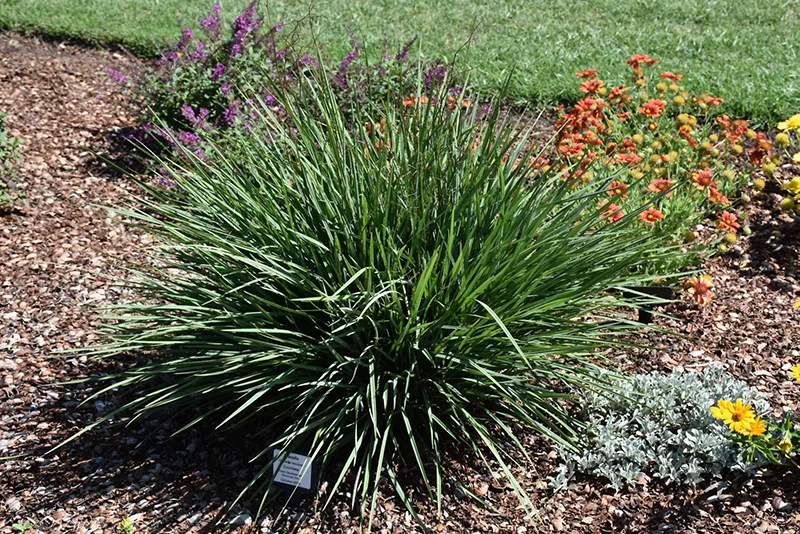
A compact, half-hardy evergreen perennial to around 40cm high, with dense clumps of narrow, stiff blue-green leaves. In early to mid summer, produces a few sprays of nodding light blue flowers held above the foliage, occasionally followed by round blue berries
Scientific classification
- Species
- Dianella revoluta 'Allyn Citation' (Dianella revoluta 'Allyn Citation')
- Genus
- Dianella
- Family
- Asphodelaceae
- Order
- Asparagales
- Class
- Liliopsida
- Phylum
- Magnoliophyta
- Information to be completed
- Toxicity
- Herbaceous Perennial · Grass Like
- Plant type
- 0.1-0.5 metres
- Height
- 0.1-0.5 metres
- Spread
- Evergreen
- Foliage
- Tufted · Clump forming
- Habit
- Spring · Summer · Autumn · Winter
- Season of interest
- Full sun · Partial shade
- Sunlight
- Information to be completed
- Ideal temperature









Dianella revoluta 'Allyn Citation' pictures
Distribution of Dianella revoluta 'Allyn Citation'
Distribution map
- Native
- Introduced
- Cultivated
Source:WCVP v16 · Royal Botanic Gardens, Kew · CC BY 3.0 · Boundaries:WGSRPD / TDWG
Dianella revoluta 'Allyn Citation' care guide
- Moderate regular watering, avoid prolonged drought or waterlogging
- Watering
- Full sun · Partial shade
- Sunlight

Watering
Moderate regular watering, avoid prolonged drought or waterlogging
Fertilizing
 Fertilizing
Balanced feed in spring and light repeat in growth season
Pruning
 Pruning
No pruning required
Propagation
 Propagation
Propagate by division in mid-spring. As this plant is protected by Plant Breeders' Rights, any propagation should be for personal rather than commercial use
Growing
 Growing
In milder areas, grow outdoors in moderately fertile, well-drained, neutral to acid soil in full sun or partial shade. In areas prone to hard frosts, grow under glass in loam-based compost, in full light with shade from hot sun. Water well in growth and keep just moist in winter. Some drought tolerance once established
Common pests and diseases
Diseases
Generally disease-free
Pests
Generally pest-free
Explore the plant health library →




