
arum lily 'Captain Nuria'
Also known as: Information to be completed
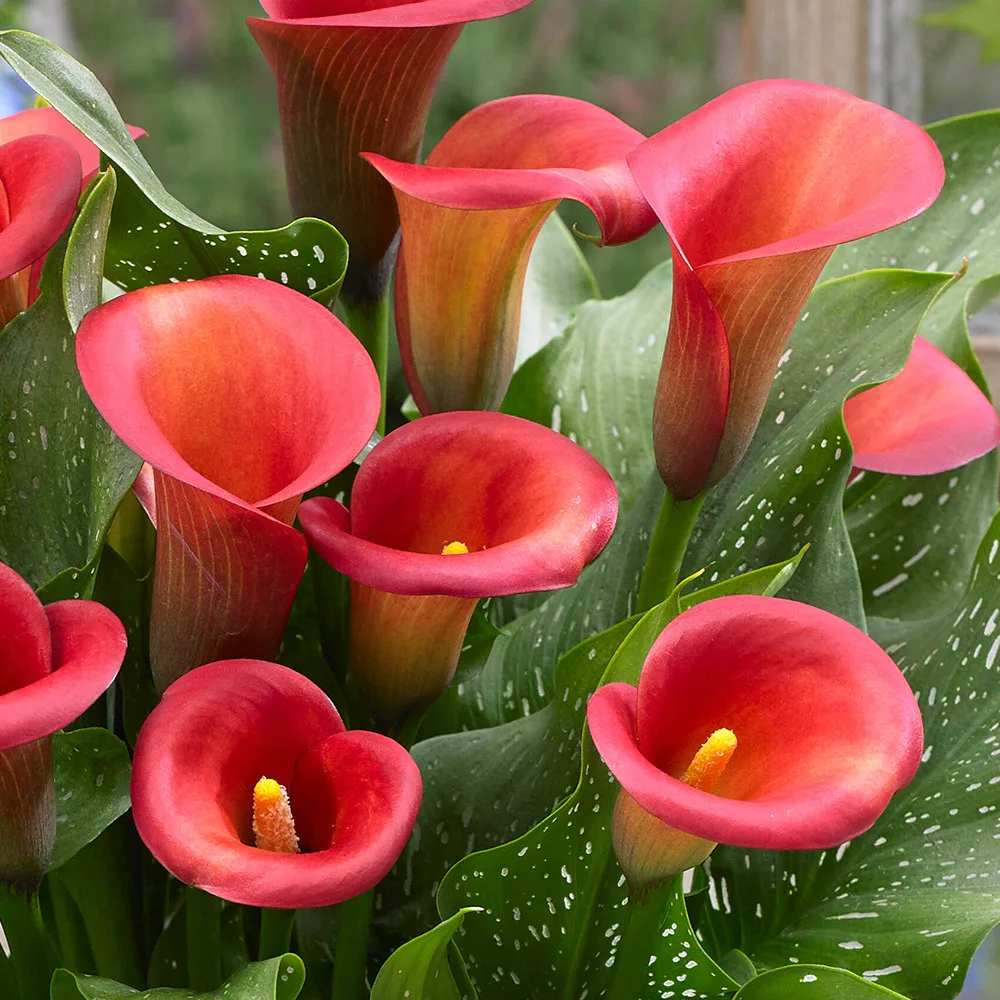
A rhizomatous perennial, to about 60cm tall, forming upright clumps of broadly lance-shaped, dark green leaves flecked with white. Dark purple flowers are produced in summer
Scientific classification
- Species
- arum lily 'Captain Nuria' (Zantedeschia 'Captain Nuria')
- Genus
- Zantedeschia
- Family
- Araceae
- Order
- Alismatales
- Class
- Magnoliopsida
- Phylum
- Tracheophyta
- Harmful if eaten, skin/eye irritant. Wear gloves and other protective equipment when handling]
- Toxicity
- Bedding · Conservatory Greenhouse
- Plant type
- 0.5-1 metres
- Height
- 0.1-0.5 metres
- Spread
- Semi evergreen
- Foliage
- Clump forming
- Habit
- Spring · Summer · Autumn
- Season of interest
- Full sun
- Sunlight
- Information to be completed
- Ideal temperature









arum lily 'Captain Nuria' pictures
Toxicity
Harmful if eaten, skin/eye irritant. Wear gloves and other protective equipment when handling]
arum lily 'Captain Nuria' care guide
- Keep soil lightly moist, reduce watering frequency once foliage fades
- Watering
- Full sun
- Sunlight

Watering
Keep soil lightly moist, reduce watering frequency once foliage fades
Fertilizing
 Fertilizing
Balanced arum liquid feed every three weeks spring until late summer
Pruning
 Pruning
Deadhead flowers and cut down yellowing foliage at the end of the season
Propagation
 Propagation
Propagate by division in spring
Growing
 Growing
Use as summer bedding, planting in a moist, humus-rich, but well-drained soil in full sun. Lift and store overwinter in trays of compost in a cool, frost-free garage or shed and plant out tubers in spring after risk of frost has passed. Alternatively, grow in containers of loam-based JI No2 potting compost and overwinter in a greenhouse or conservatory. See Zantedeschia cultivation
Common pests and diseases
Diseases
May be susceptible to bacterial or fungal rots or a virus
Pests
May be susceptible to aphids or thrips; glasshouse red spider mite and glasshouse whitefly
Explore the plant health library →




