
Symphyotrichum laeve 'Les Moutiers'
Also known as: Information to be completed
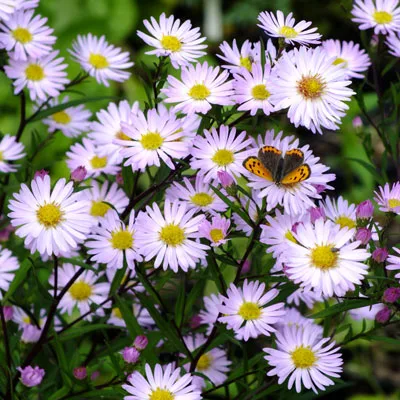
A tall perennial, to around 1.2m high, with dark near-black stems and narrow, dark green leaves. Branching sprays of palest pink daisy-like flowers are produced in autumn
Scientific classification
- Species
- Symphyotrichum laeve 'Les Moutiers' (Symphyotrichum laeve 'Les Moutiers')
- Genus
- Symphyotrichum
- Family
- Asteraceae
- Order
- Asterales
- Class
- Magnoliopsida
- Phylum
- Magnoliophyta
- Information to be completed
- Toxicity
- Herbaceous Perennial
- Plant type
- 1-1.5 metres
- Height
- 0.5-1 metres
- Spread
- Deciduous
- Foliage
- Bushy
- Habit
- Spring · Summer · Autumn
- Season of interest
- Full sun · Partial shade
- Sunlight
- Information to be completed
- Ideal temperature









Symphyotrichum laeve 'Les Moutiers' pictures
Distribution of Symphyotrichum laeve 'Les Moutiers'
Distribution map
- Native
- Introduced
- Cultivated
Source:WCVP v16 · Royal Botanic Gardens, Kew · CC BY 3.0 · Boundaries:WGSRPD / TDWG
Symphyotrichum laeve 'Les Moutiers' care guide
- Moderate regular watering, allowing brief slight drying between soakings
- Watering
- Full sun · Partial shade
- Sunlight

Watering
Moderate regular watering, allowing brief slight drying between soakings
Fertilizing
 Fertilizing
Balanced perennial feed every four weeks from spring through summer
Pruning
 Pruning
Cut stems close to the ground in late autumn
Propagation
 Propagation
Propagate by division in spring, replanting only vigorous young shoots
Growing
 Growing
Grow in well-cultivated, fertile, moist but well drained soil in sun or partial shade. Divide every three to five years to retain vigour and flower quality. May need support - see staking perennials
Common pests and diseases
Diseases
May be susceptible to Fusarium wilt, grey moulds and leaf spots. This cultivar has some resistance to powdery mildews
Pests
May be susceptible to tarsonemid mite, slugs, snails, aphids, leaf and bud eelworms
Explore the plant health library →




