
white cedar [Fire Chief]
Also known as: Information to be completed
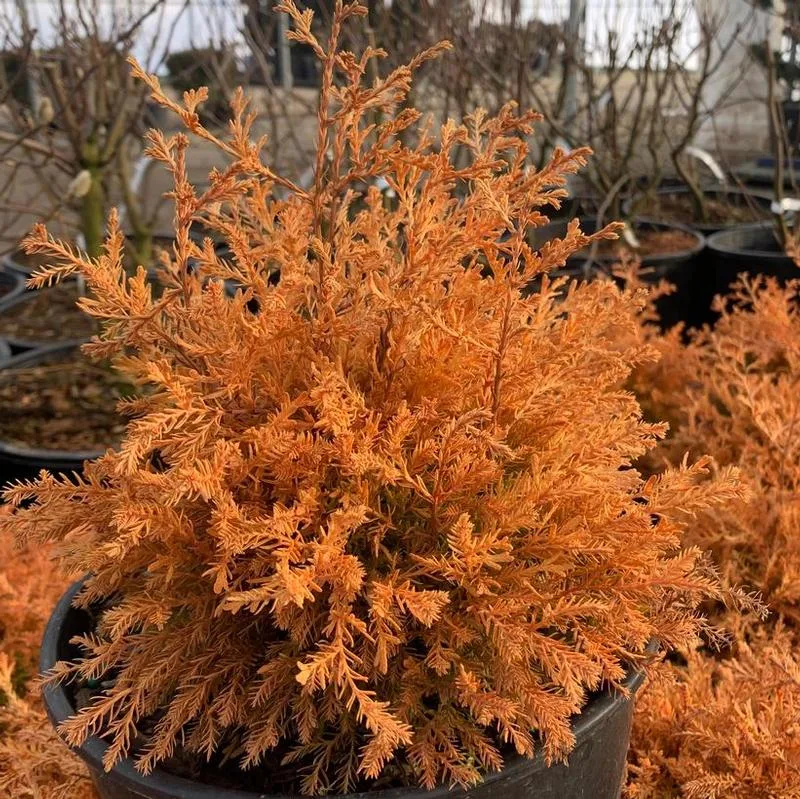
A dwarf, rounded, dome -haped conifer with bright gold foliage in spring turning to sage-green with red tips in Autumn.
Scientific classification
- Species
- white cedar [Fire Chief] (Thuja occidentalis Fire Chief ('Congabe'))
- Genus
- Thuja
- Family
- Cupressaceae
- Order
- Cupressales
- Class
- Pinopsida
- Phylum
- Pinophyta
- Harmful if eaten, skin allergen. Wear gloves and other protective equipment when handling]
- Toxicity
- Conifers
- Plant type
- 1-1.5 metres
- Height
- 0.5-1 metres
- Spread
- Evergreen
- Foliage
- Bushy
- Habit
- Autumn · Winter · Spring · Summer
- Season of interest
- Full sun · Partial shade
- Sunlight
- Information to be completed
- Ideal temperature









white cedar [Fire Chief] pictures
Toxicity
Harmful if eaten, skin allergen. Wear gloves and other protective equipment when handling]
white cedar [Fire Chief] care guide
- Moderate regular watering, avoid extended dry soil conditions
- Watering
- Full sun · Partial shade
- Sunlight

Watering
Moderate regular watering, avoid extended dry soil conditions
Fertilizing
 Fertilizing
Evergreen shrub feed once annually at early spring budding
Pruning
 Pruning
No pruning required
Propagation
 Propagation
Propagate by semi-ripe cuttings in late summer
Growing
 Growing
Grow in moist but well-drained soil in full sun. Shelter from cold winds
Common pests and diseases
Diseases
May be susceptible to honey fungus and other fungal diseases, particularly thuja blight and Coryneum canker (see conifers: brown patches)
Pests
May be susceptible to scale insects and aphids
Explore the plant health library →




