
potato 'Carolus'
Also known as: Information to be completed
A maincrop variety that produces a good yield of attractive, uniformly oval tubers. The skin is yellow with small flushes of red and the flesh is light yellow in colour with a slightly floury texture when cooked and an excellent flavour. These potatoes are good for boiling, mashing, baking and roasting and as they have quite a high dry matter, they are also good for home frying. Excellent Potato blight and Potato rot resistance.
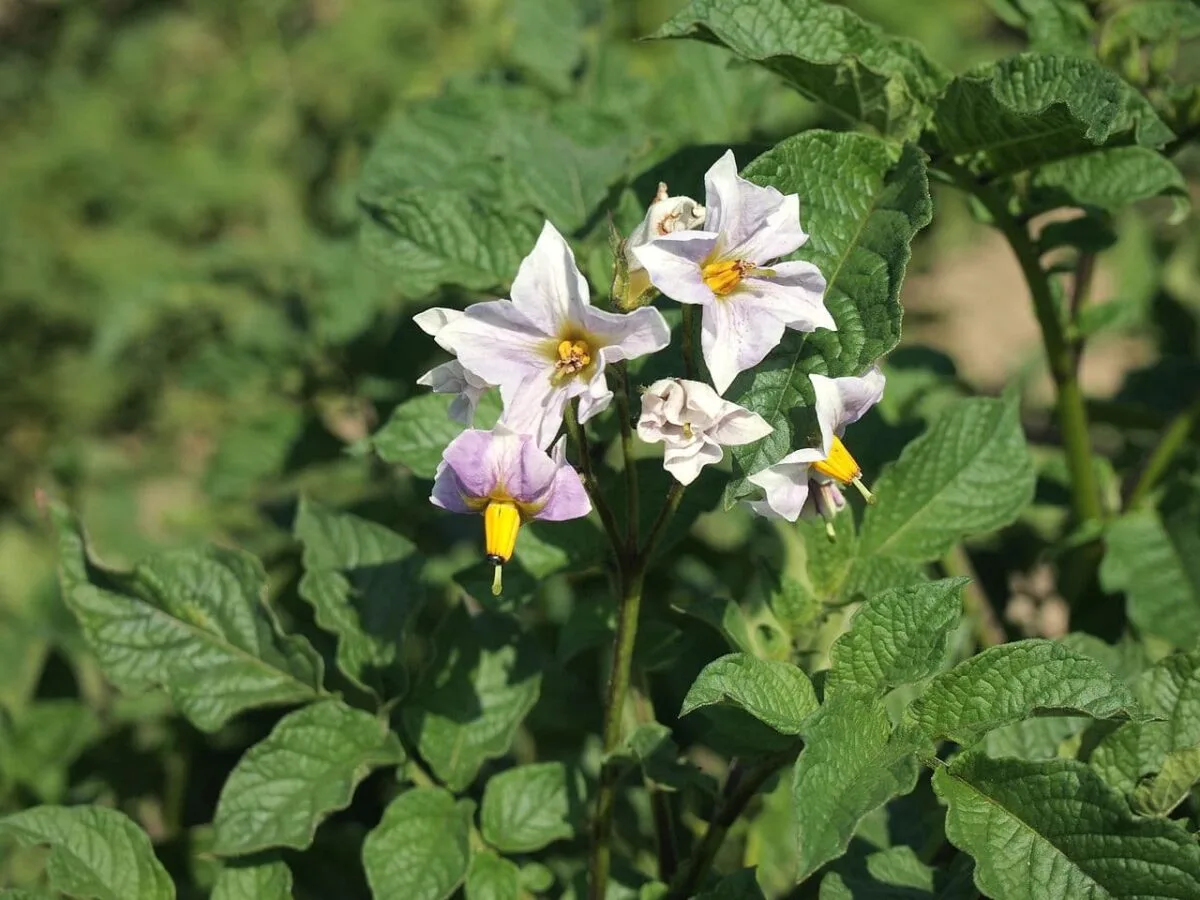
Scientific classification
- Species
- potato 'Carolus' (Solanum tuberosum 'Carolus')
- Genus
- Solanum
- Family
- Solanaceae
- Order
- Solanales
- Class
- Magnoliopsida
- Phylum
- Magnoliophyta
- Harmful if eaten, except potato crop. Wear gloves and other protective equipment when handling]
- Toxicity
- Annual Biennial
- Plant type
- 0.5-1 metres
- Height
- 0.1-0.5 metres
- Spread
- Deciduous
- Foliage
- Bushy · Clump forming
- Habit
- Spring · Summer
- Season of interest
- Full sun · Partial shade
- Sunlight
- Information to be completed
- Ideal temperature









potato 'Carolus' pictures
Distribution of potato 'Carolus'
Distribution map
- Native
- Introduced
- Cultivated
Source:WCVP v16 · Royal Botanic Gardens, Kew · CC BY 3.0 · Boundaries:WGSRPD / TDWG
Toxicity
Harmful if eaten, except potato crop. Wear gloves and other protective equipment when handling]
potato 'Carolus' care guide
- Evenly moist soil tuber development stage, drier in storage
- Watering
- Full sun · Partial shade
- Sunlight

Watering
Evenly moist soil tuber development stage, drier in storage
Fertilizing
 Fertilizing
High-potassium vegetable feed biweekly before tuber swelling
Pruning
 Pruning
No pruning required
Propagation
 Propagation
Propagate by chitting tubers or 'seed potatoes'. This is done by standing the tubers 'rose-end' up (the end with the most eyes) in egg boxes or trays in a cool, light place. After two to three weeks the shoots will begin to sprout. Plant out after frosts have passed, from about mid March to mid April.
Growing
 Growing
Grow in an open, frost-free site with deep, fertile, moisture-retentive soil for high quality and heavy yields. Improve soil by adding\u00A0organic matter, such as well-rotted manure, in the autumn. Draw earth up around the stems as they emerge, to exclude light and prevent the potatoes from becoming green. While this potato can grow on most soil types it does prefer good irrigation so best results will be achieved if you water well in dry periods. Potatoes can also be grown in large\u00A0containers\u00A0or potato gro-bags. See potato cultivation for further advice.
Common pests and diseases
Diseases
May be susceptible to honey fungus (rarely). Good resistance to Potato blight and Potato rot, but may be susceptible to Potato scab, Potato blackleg and stem canker
Pests
May be susceptible to\u00A0cutworms,\u00A0slugs, wireworms,\u00A0leaf and bud eelworm, Potato cyst nematodes
Explore the plant health library →




