
dahlia 'Antique'
Also known as: Information to be completed
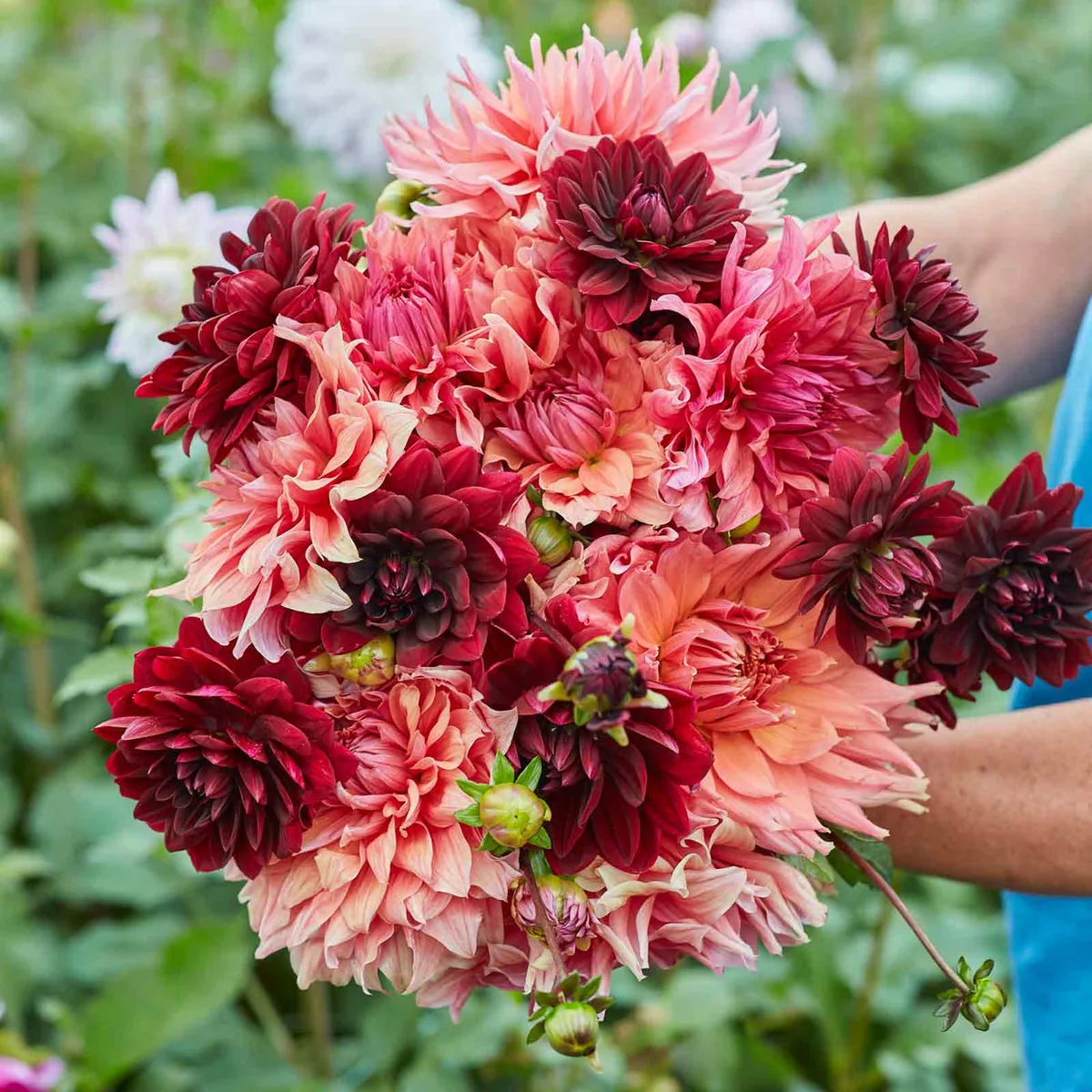
A tuberous-rooted perennial to about 75cm, with very dark bronze, almost black, foliage, blooming from mid-summer until the first frosts. Single flowers have broad, pointed, peachy-pink and yellow petals, each with a red central flare, and a dark brown central disc opening to orange
Scientific classification
- Species
- dahlia 'Antique' (Dahlia 'Antique')
- Genus
- Dahlia
- Family
- Asteraceae
- Order
- Asterales
- Class
- Magnoliopsida
- Phylum
- Magnoliophyta
- Information to be completed
- Toxicity
- Herbaceous Perennial
- Plant type
- 0.5-1 metres
- Height
- 0.5-1 metres
- Spread
- Deciduous
- Foliage
- Clump forming
- Habit
- Spring · Summer · Autumn
- Season of interest
- Full sun
- Sunlight
- Information to be completed
- Ideal temperature









dahlia 'Antique' pictures
dahlia 'Antique' care guide
- Water deeply when surface soil dries, drain standing water quickly
- Watering
- Full sun
- Sunlight

Watering
Water deeply when surface soil dries, drain standing water quickly
Fertilizing
 Fertilizing
Dahlia tuber feed every two weeks from spring through autumn
Pruning
 Pruning
Deadhead to prolong flowering. Cut back to near ground level in autumn, once frost has damaged foliage, before lifting and storing for the winter
Propagation
 Propagation
Propagate by softwood cuttings taken in spring from shoots from stored tubers, or divide the tubers, ensuring each section has at least one viable bud
Growing
 Growing
Grow in full sun, in fertile, humus-rich, well-drained soil enriched with organic matter and general-purpose fertiliser. Pinch out growing tips to encourage bushy plants. Water freely in dry periods. Lift and store tubers in autumn to replant, or use as a source of cuttings, in spring. See dahlia cultivation.Grow in full sun, in fertile, humus-rich, well-drained soil enriched with organic matter and general-purpose fertiliser. Pinch out growing tips to encourage bushy plants. Water freely in dry periods. Lift and store tubers in autumn to replant, or use as a source of cuttings, in spring. See dahlia cultivation
Common pests and diseases
Diseases
May be susceptible to Powdery mildews in dry conditions, fungal rots including grey mould in wet conditions and in storage, and a virus that causes stunting, leaf markings and distortion
Pests
May be susceptible to aphids, capsid bugs, caterpillars, earwigs nibbling flowers, glasshouse red spider mite and slugs
Explore the plant health library →




