
stapelia rosary vine
Also known as: Information to be completed
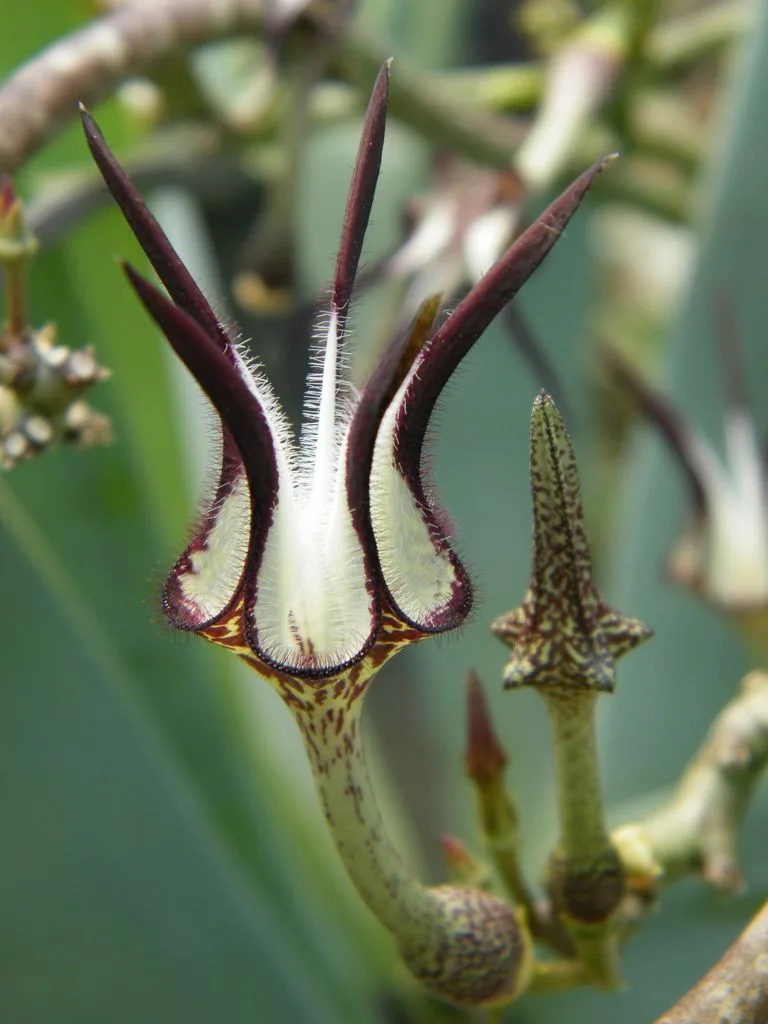
A trailing or climbing, evergreen, succulent perennial to 1.5m tall, with fibrous roots, thick arching stems and rudimentary, tiny, triangular scale-like leaves. Tubular, hairy, light green flowers about 5cm long on twining flower stems, are marked, spotted and striped dark red-purple, and borne in summer
Scientific classification
- Species
- stapelia rosary vine (Ceropegia stapeliiformis)
- Genus
- Ceropegia
- Family
- Apocynaceae
- Order
- Gentianales
- Class
- Magnoliopsida
- Phylum
- Magnoliophyta
- Information to be completed
- Toxicity
- Cactus Succulent
- Plant type
- 1-1.5 metres
- Height
- 1-1.5 metres
- Spread
- Evergreen
- Foliage
- Trailing
- Habit
- Spring · Summer · Autumn · Winter
- Season of interest
- Full sun · Partial shade
- Sunlight
- Information to be completed
- Ideal temperature









stapelia rosary vine pictures
Distribution of stapelia rosary vine
Distribution map
- Native
- Introduced
- Cultivated
Source:WCVP v16 · Royal Botanic Gardens, Kew · CC BY 3.0 · Boundaries:WGSRPD / TDWG
stapelia rosary vine care guide
- Sparse watering when substrate fully dry, halt irrigation in cold winter
- Watering
- Full sun · Partial shade
- Sunlight

Watering
Sparse watering when substrate fully dry, halt irrigation in cold winter
Fertilizing
 Fertilizing
Highly diluted succulent vine feed once per warm growing month
Pruning
 Pruning
No pruning required
Propagation
 Propagation
Propagate by seed at 19-24°C (66-75°F) in early spring; alternatively take stem cuttings, 10-15cm (4-6in) long in early summer, root in a cactus compost at 22-25°C (72-77°F), and keep moist
Growing
 Growing
Grow in cactus compost in bright filtered light, water moderately and apply a low nitrogen liquid fertiliser 2 or 3 times during the growing season. Keep plants dry at other times
Common pests and diseases
Diseases
May be susceptible to basal rot if too wet in winter
Pests
May be susceptible to mealybugs, aphids and scale insects
Explore the plant health library →




