
Bougainvillea (Vera Series)
Also known as: Information to be completed
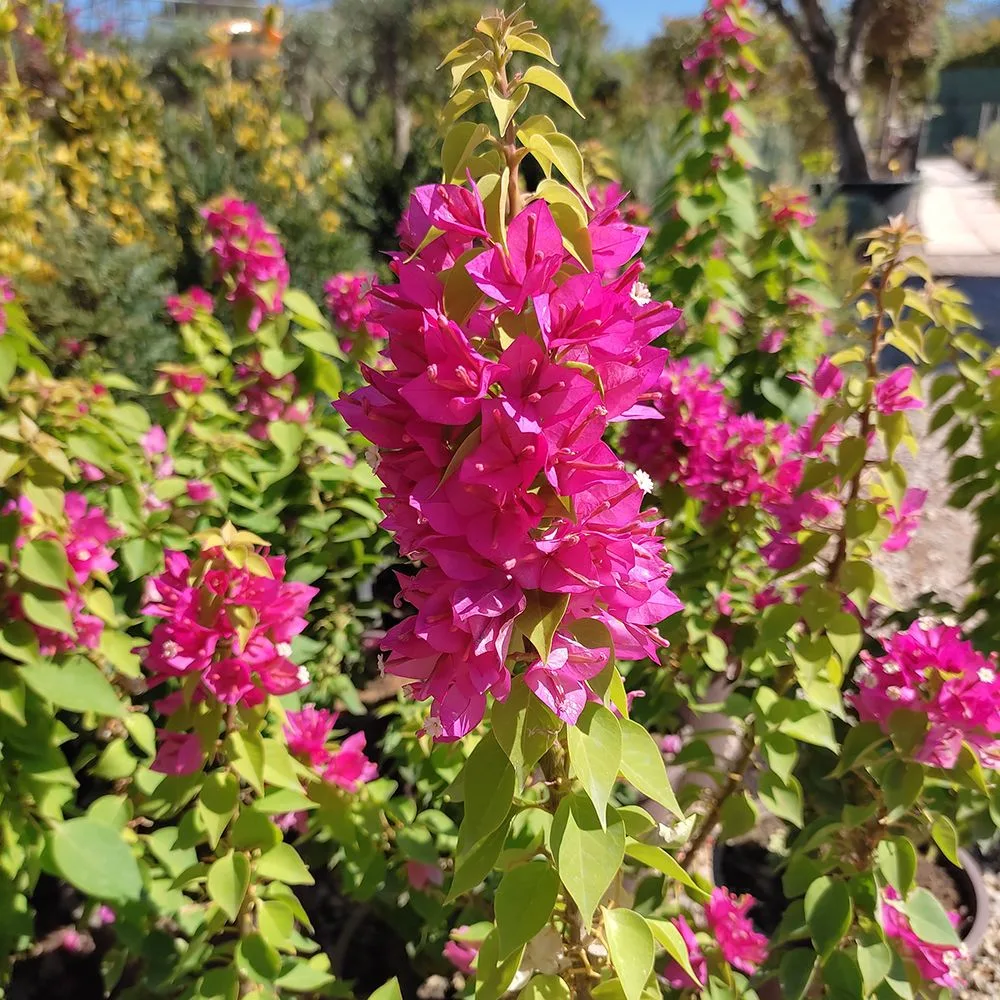
A series of compact and bushy shrubs to 60cm tall. In summer they bear flowers formed of papery, petal-like bracts in shades of pink and purple. They require the protection of a temperate glasshouse or conservatory, although potted plants can be moved outside in the summer months
Scientific classification
- Species
- Bougainvillea (Vera Series) (Bougainvillea (Vera Series))
- Genus
- Bougainvillea
- Family
- Nyctaginaceae
- Order
- Caryophyllales
- Class
- Magnoliopsida
- Phylum
- Tracheophyta
- Information to be completed
- Toxicity
- Shrubs
- Plant type
- 1-1.5 metres
- Height
- 0.1-0.5 metres
- Spread
- Semi evergreen
- Foliage
- Bushy
- Habit
- Spring · Summer · Autumn
- Season of interest
- Full sun
- Sunlight
- Information to be completed
- Ideal temperature









Bougainvillea (Vera Series) pictures
Bougainvillea (Vera Series) care guide
- Moderate regular watering, allowing brief slight drying between soakings
- Watering
- Full sun
- Sunlight

Watering
Moderate regular watering, allowing brief slight drying between soakings
Fertilizing
 Fertilizing
Balanced perennial feed every four weeks from spring through summer
Pruning
 Pruning
On established plants, shorten sideshoots to three or four buds from the permanent framework; remove crowded or damaged shoots. Prune annually after flowering on last-year growth, or in late winter or early spring on current-year growth.
Propagation
 Propagation
Propagate by layering in early spring, or by semi-ripe cuttings in summer or hardwood cuttings with bottom heat in winter
Growing
 Growing
Grow in pots of loam-based compost such as John Innes No.3. Bougainvilleas need a bright position but protect them from direct summer sun. Plants can be moved outside for summer. Increase watering from spring as the plants start back into active growth and apply a balanced liquid feed until the bracts show colour, then switch to a high potassium feed. Decrease watering and cease feeding in autumn. Maintain a minimum night temperature of 10°C. See bougainvillea cultivation for further information
Common pests and diseases
Diseases
Generally disease-free
Pests
May be susceptible to glasshouse red spider mite, mealybugs, aphids and glasshouse whitefly
Explore the plant health library →




