
heather 'Golden Angie'
Also known as: Information to be completed
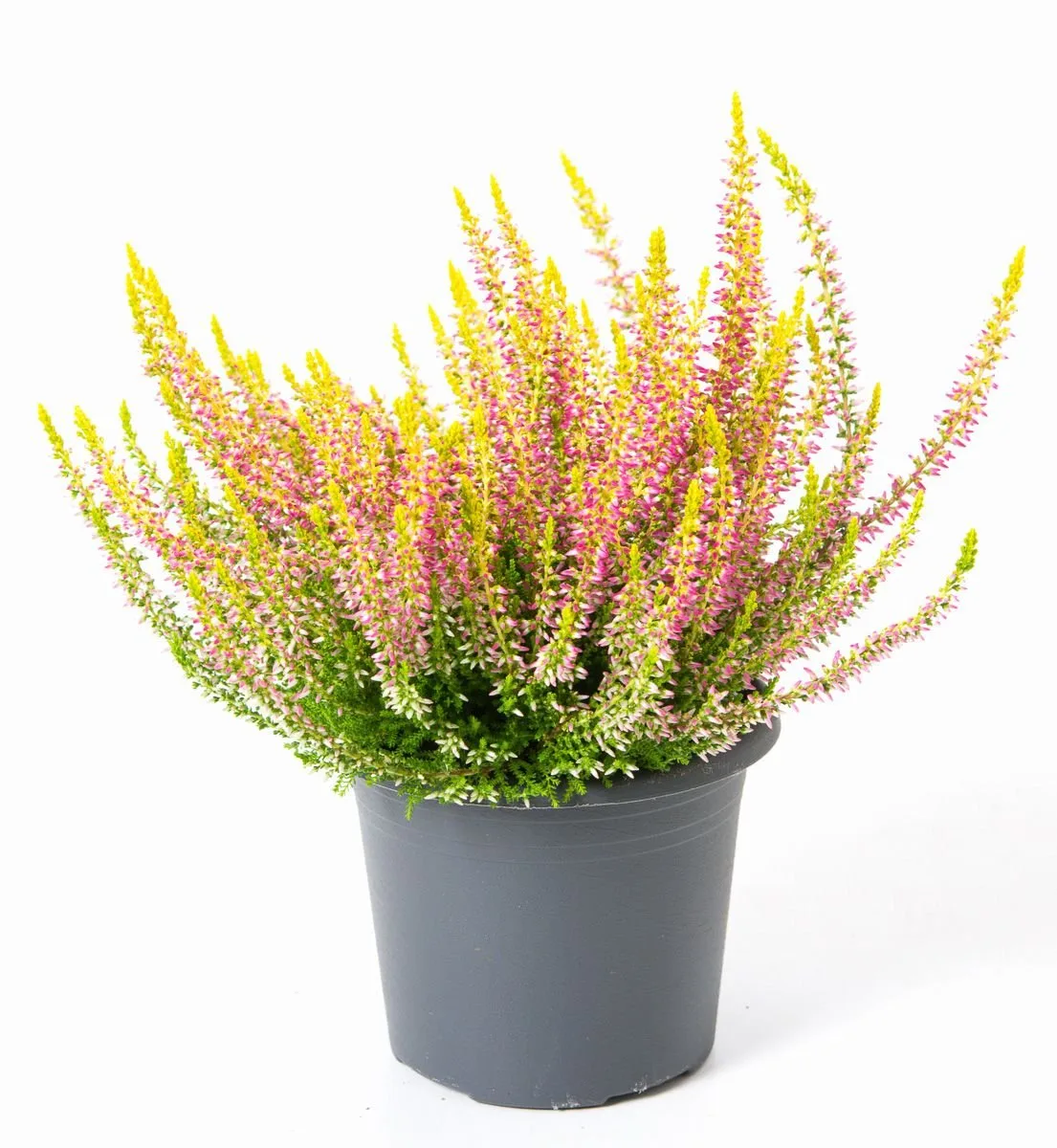
An evergreen shrub to 50cm high, with a compact, upright habit and small, scale-like, dark green leaves. New growth begins golden yellow, and long, dense spikes of small, crimson red flowerbuds are produced from late summer well into autumn
Scientific classification
- Species
- heather 'Golden Angie' (Calluna vulgaris 'Golden Angie')
- Genus
- Calluna
- Family
- Ericaceae
- Order
- Ericales
- Class
- Magnoliopsida
- Phylum
- Magnoliophyta
- Information to be completed
- Toxicity
- Shrubs
- Plant type
- 0.1-0.5 metres
- Height
- 0.5-1 metres
- Spread
- Evergreen
- Foliage
- Bushy
- Habit
- Autumn · Winter · Spring · Summer
- Season of interest
- Full sun
- Sunlight
- Information to be completed
- Ideal temperature









heather 'Golden Angie' pictures
Distribution of heather 'Golden Angie'
Distribution map
- Native
- Introduced
- Cultivated
Source:WCVP v16 · Royal Botanic Gardens, Kew · CC BY 3.0 · Boundaries:WGSRPD / TDWG
heather 'Golden Angie' care guide
- Light frequent watering cycles, slight surface soil dryness allowed between
- Watering
- Full sun
- Sunlight

Watering
Light frequent watering cycles, slight surface soil dryness allowed between
Fertilizing
 Fertilizing
Weak acid-loving heather feed monthly mild spring through autumn weather
Pruning
 Pruning
Shorten flowered shoots to about 1.5–2.5 cm from the previous year's growth. Prune in spring.
Propagation
 Propagation
Propagate by semi-hardwood cuttings in midsummer, or by layering in spring
Growing
 Growing
Grow in well-drained, acidic soil in full sun. This is a bud-blooming cultivar (the flower buds do not open), and so does not provide pollen or nectar for pollinators. See Hardy heathers for more detailed growing advice
Common pests and diseases
Diseases
May be susceptible to honey fungus (rarely) and other fungal diseases
Pests
Generally pest-free
Explore the plant health library →




