
sneezeweed 'Siesta'
Also known as: Information to be completed
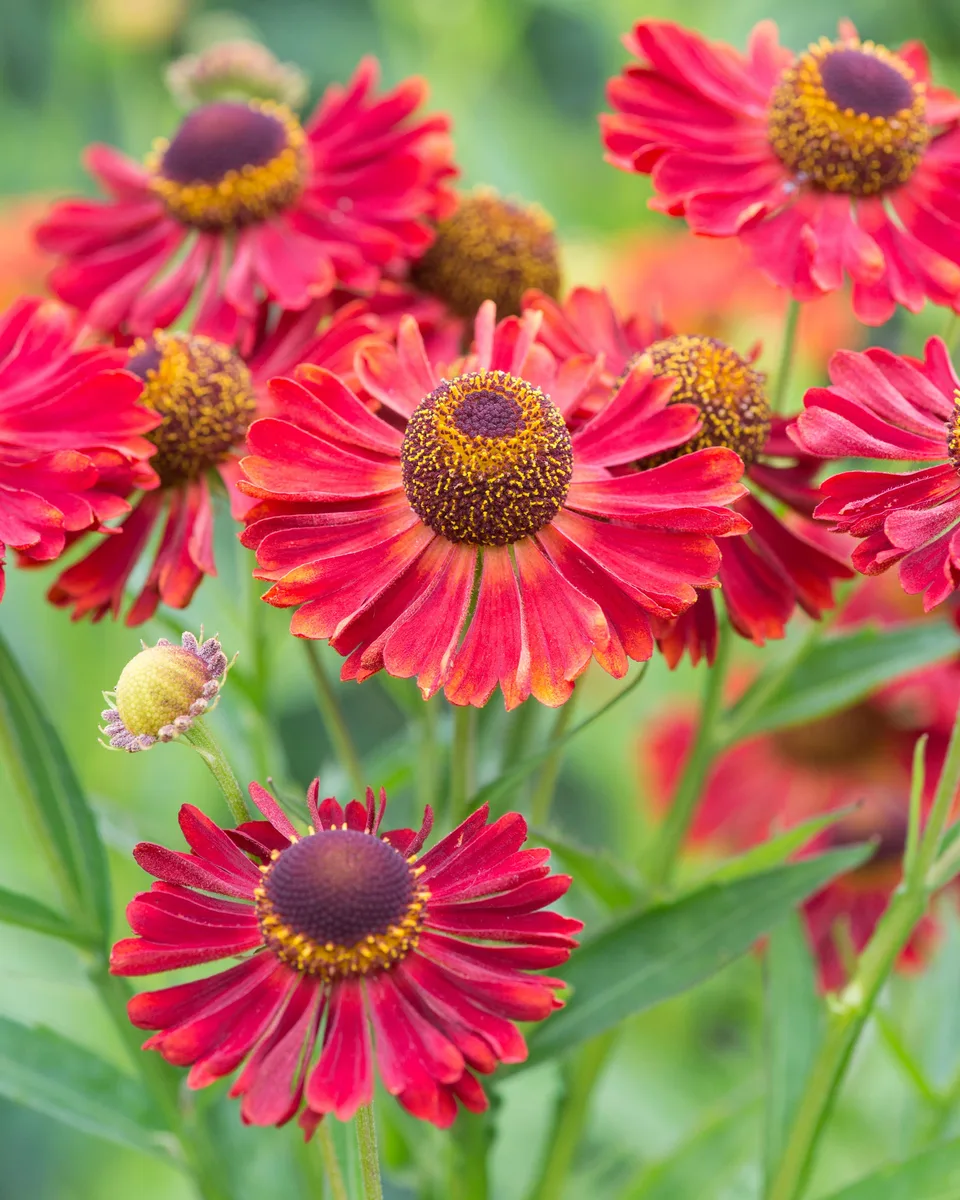
Siesta' is a clump-forming herbaceous perennial 45-55cm high with branched stems, lance-shaped green leaves, and flowerheads with deep russet-red ray-florets, chocolate-brown disc-florets, and golden anthers, from late summer to early autumn; the flowers provide pollen for bees and nectar for bees and other insects
Scientific classification
- Species
- sneezeweed 'Siesta' (Helenium autumnale 'Siesta')
- Genus
- Helenium
- Family
- Asteraceae
- Information to be completed
- Toxicity
- Herbaceous Perennial
- Plant type
- 0.5-1 metres
- Height
- 0.5-1 metres
- Spread
- Deciduous
- Foliage
- Clump forming
- Habit
- Spring · Summer · Autumn
- Season of interest
- Full sun
- Sunlight
- Information to be completed
- Ideal temperature









sneezeweed 'Siesta' pictures
Distribution of sneezeweed 'Siesta'
Distribution map
Information to be completed
Information to be completed
Culture
Information to be completed
Toxicity
Information to be completed
Quick identification of sneezeweed 'Siesta'
Information to be completed
sneezeweed 'Siesta' care guide
- Moderate regular watering, allowing brief slight drying between soakings
- Watering
- Full sun
- Sunlight
- Information to be completed
- Ideal temperature

Watering
Moderate regular watering, allowing brief slight drying between soakings
Fertilizing
 Fertilizing
Balanced perennial feed every four weeks from spring through summer
Pruning
 Pruning
No pruning required, but deadheading will prolong flowering
Propagation
 Propagation
Propagate by division in autumn or spring, or by basal softwood cuttings in containers in a cold frame in spring; propagation for resale is prohibited without a licence
Growing
 Growing
Grow in full sun in fertile, moisture-retentive, humus-rich, well-drained soil; divide every two to three years to maintain vigour
People also ask
Information to be completed
Common pests and diseases
Diseases
Generally disease-free, but may be affected by leaf spot
Pests
Generally pest-free
Explore the plant health library →




