
sunflower 'Red Sun'
Also known as: Information to be completed
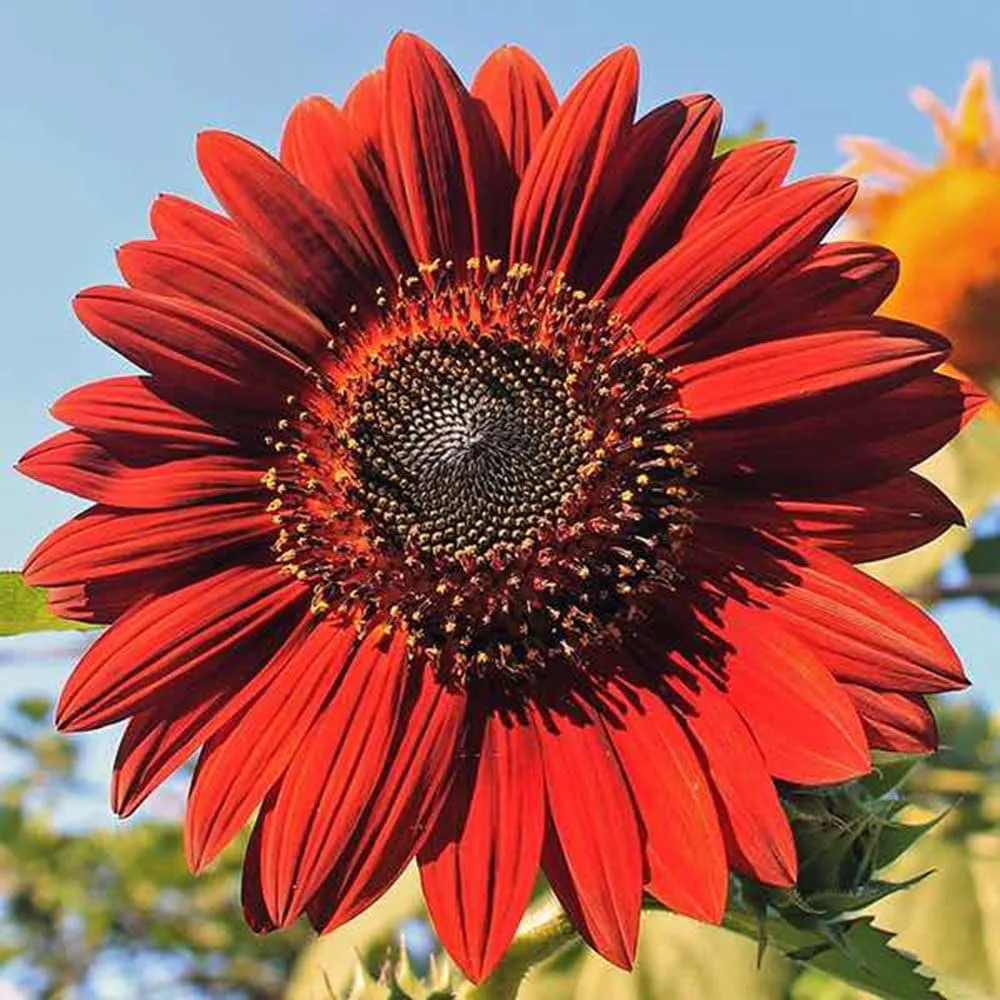
A fast-growing annual with broad, oval to heart-shaped, roughly hairy leaves. In summer, it bears huge singular flowers with velvety petals of dark bronze and deep dark centres. The flowers attract bees and the seeds that follow provide food for finches
Scientific classification
- Species
- sunflower 'Red Sun' (Helianthus annuus 'Red Sun')
- Genus
- Helianthus
- Family
- Asteraceae
- Order
- Asterales
- Class
- Magnoliopsida
- Phylum
- Magnoliophyta
- Information to be completed
- Toxicity
- Annual Biennial
- Plant type
- 1.5-2.5 metres
- Height
- 0.1-0.5 metres
- Spread
- Deciduous
- Foliage
- Columnar upright
- Habit
- Spring · Summer · Autumn
- Season of interest
- Full sun
- Sunlight
- Information to be completed
- Ideal temperature









sunflower 'Red Sun' pictures
Distribution of sunflower 'Red Sun'
Distribution map
- Native
- Introduced
- Cultivated
Source:WCVP v16 · Royal Botanic Gardens, Kew · CC BY 3.0 · Boundaries:WGSRPD / TDWG
sunflower 'Red Sun' care guide
- Moderate regular watering, avoid prolonged drought and stagnant waterlogging
- Watering
- Full sun
- Sunlight

Watering
Moderate regular watering, avoid prolonged drought and stagnant waterlogging
Fertilizing
 Fertilizing
Balanced perennial feed every four weeks spring through summer growth
Pruning
 Pruning
Cut back old stems after flowering as they die down for the winter
Propagation
 Propagation
Propagate by seed or division. Divide established clumps every 2-4 years to both increase plants and retain vigour. See sowing seeds indoors for further advice
Growing
 Growing
Grow in a moderately fertile, humus-rich, moist but well-drained, neutral to alkaline soil in full sun. Will flower best in a long, hot summer. May need a cane to support the weight of the bloom and grow tall
Common pests and diseases
Diseases
May be susceptible to Powdery mildews and sclerotinia diseases
Pests
May be susceptible to slugs and snails
Explore the plant health library →




