
sunflower 'Solar Power'
Also known as: Information to be completed
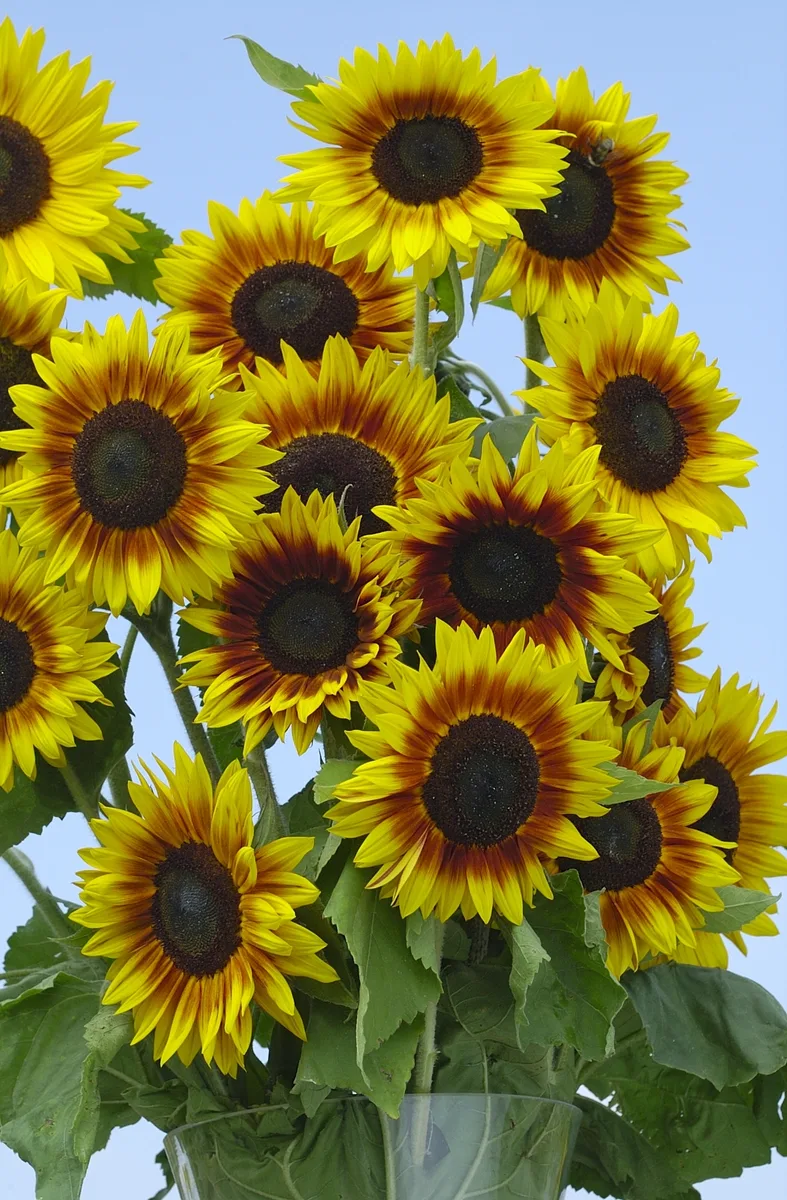
A tall and branching, fast-growing annual with oval to heart-shaped, green leaves. In summer, they create a wonderful display of flowers, they have a striking halo of orange marroon around the dark brown centre and orangey yellow tips to the petals, like. These blooms are pollen free and ideal for using as cut flowers, attracting butterflies and bees but not producing seed
Scientific classification
- Species
- sunflower 'Solar Power' (Helianthus annuus 'Solar Power')
- Genus
- Helianthus
- Family
- Asteraceae
- Order
- Asterales
- Class
- Magnoliopsida
- Phylum
- Magnoliophyta
- Information to be completed
- Toxicity
- Annual Biennial
- Plant type
- 1.5-2.5 metres
- Height
- 0.5-1 metres
- Spread
- Deciduous
- Foliage
- Information to be completed
- Habit
- Spring · Summer · Autumn
- Season of interest
- Full sun
- Sunlight
- Information to be completed
- Ideal temperature









sunflower 'Solar Power' pictures
Distribution of sunflower 'Solar Power'
Distribution map
- Native
- Introduced
- Cultivated
Source:WCVP v16 · Royal Botanic Gardens, Kew · CC BY 3.0 · Boundaries:WGSRPD / TDWG
sunflower 'Solar Power' care guide
- Frequent light watering, never allow sunflower soil to dry fully
- Watering
- Full sun
- Sunlight

Watering
Frequent light watering, never allow sunflower soil to dry fully
Fertilizing
 Fertilizing
Balanced sunflower feed every two weeks leaf bloom growth phase
Pruning
 Pruning
Cut back old stems after flowering as they die down for the winter
Propagation
 Propagation
Propagate by seed or division. Divide established clumps every 2-4 years to both increase plants and retain vigour. See sowing seeds indoors for further advice
Growing
 Growing
Grow in a moderately fertile, humus-rich, moist but well-drained, neutral to alkaline soil in full sun. Will flower best in a long, hot summer. May need a cane to support the weight of the bloom and grow tall
Common pests and diseases
Diseases
May be susceptible to Powdery mildews and sclerotinia diseases
Pests
May be susceptible to slugs and snails
Explore the plant health library →




