
Malotigena frantiskae-niederlovae
Also known as: Information to be completed
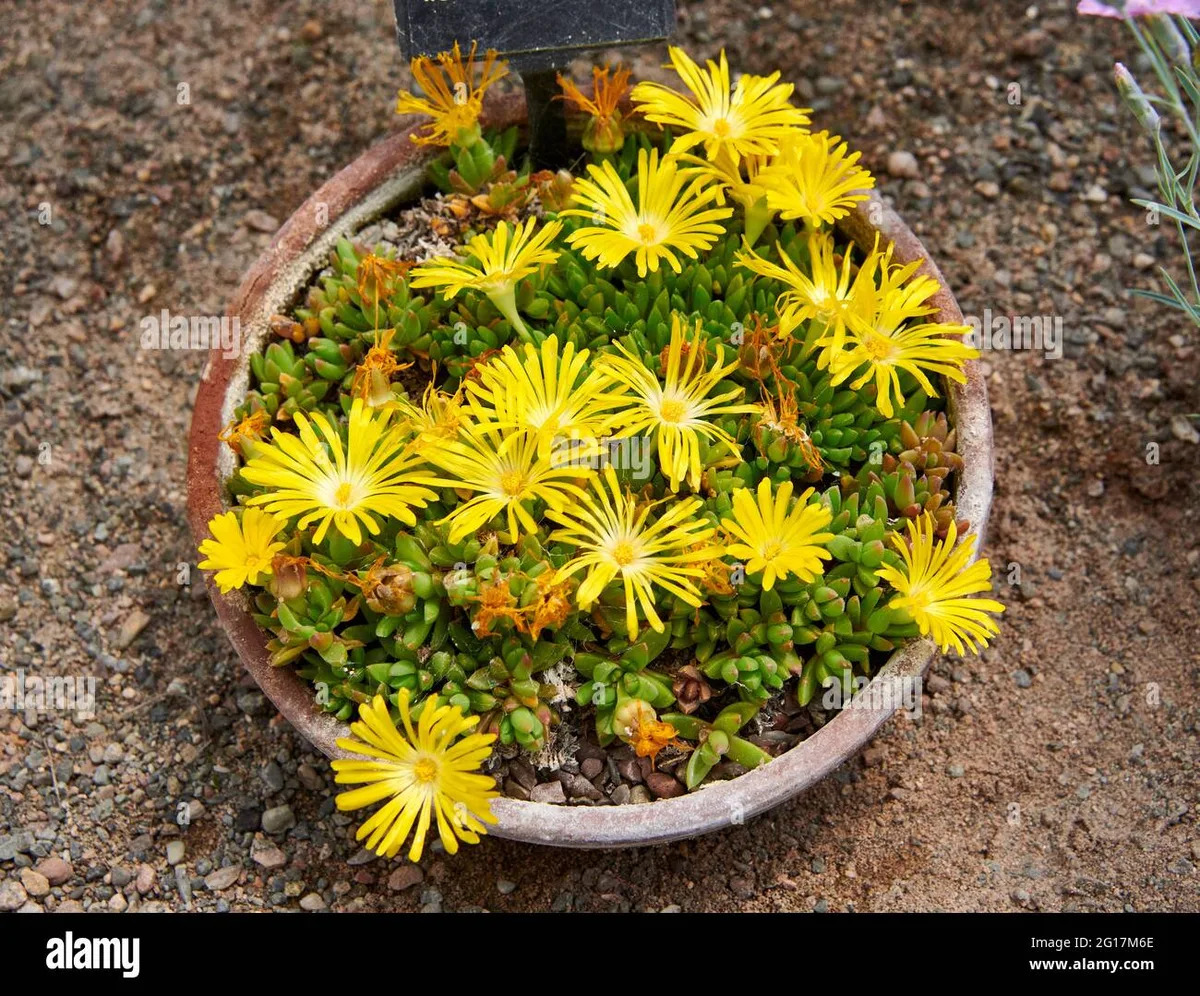
A compact, rosette-forming evergreen succulent, forming a dense mat of fleshy, wedge-shaped green leaves to 2cm long. Solitary, daisy-like yellow or white flowers are produced in summer, which only open fully in bright sunshine
Scientific classification
- Species
- Malotigena frantiskae-niederlovae (Malotigena frantiskae-niederlovae)
- Genus
- Malotigena
- Family
- Apocynaceae
- Order
- Gentianales
- Class
- Magnoliopsida
- Phylum
- Magnoliophyta
- Information to be completed
- Toxicity
- Cactus Succulent · Alpine Rockery
- Plant type
- Up to 10 cm
- Height
- 0.1-0.5 metres
- Spread
- Evergreen
- Foliage
- Matforming
- Habit
- Spring · Summer · Autumn · Winter
- Season of interest
- Full sun
- Sunlight
- Information to be completed
- Ideal temperature









Malotigena frantiskae-niederlovae pictures
Distribution of Malotigena frantiskae-niederlovae
Distribution map
- Native
- Introduced
- Cultivated
Source:WCVP v16 · Royal Botanic Gardens, Kew · CC BY 3.0 · Boundaries:WGSRPD / TDWG
Malotigena frantiskae-niederlovae care guide
- Water deeply only after top compost layer fully dries out dry
- Watering
- Full sun
- Sunlight

Watering
Water deeply only after top compost layer fully dries out dry
Fertilizing
 Fertilizing
Low-nitrogen diluted balanced feed monthly growing season months
Pruning
 Pruning
No pruning required
Propagation
 Propagation
Propagate by seed, sown at 21°C, or by softwood cuttings in spring or early summer
Growing
 Growing
Grow under glass in an unheated alpine or greenhouse, in a sharply drained cactus compost mix, in full light with good ventilation. Also does well outdoors in troughs, on a scree/crevice bed or in a rock garden, as long as there is adequate drainage. May need protection from hard frosts. See hardy cacti and succulent cultivation
Common pests and diseases
Diseases
Generally disease-free, but may rot in poorly drained soil
Pests
May be susceptible to mealybugs
Explore the plant health library →




