
lily 'Twyford'
Also known as: Information to be completed
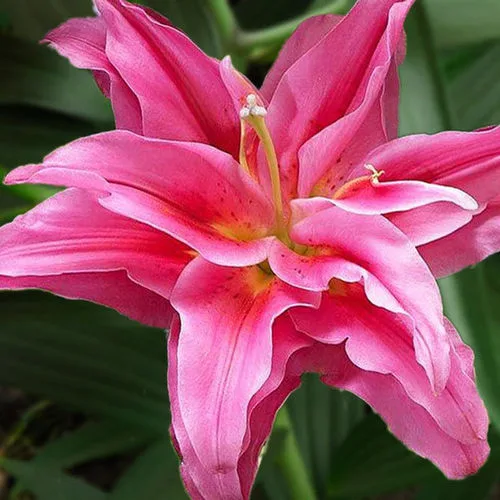
A vigorous, double-flowered Oriental lily cultivar with bright pink pollen-free flowers marked white at the throat
Scientific classification
- Species
- lily 'Twyford' (Lilium 'Twyford')
- Genus
- Lilium
- Family
- Liliaceae
- Order
- Liliales
- Class
- Liliopsida
- Phylum
- Magnoliophyta
- Ornamental bulbs - not to be eaten. Wear gloves and other protective equipment when handling
- Toxicity
- Bulbs
- Plant type
- 1-1.5 metres
- Height
- 0.1-0.5 metres
- Spread
- Deciduous
- Foliage
- Columnar upright
- Habit
- Spring · Summer
- Season of interest
- Full sun · Partial shade
- Sunlight
- Information to be completed
- Ideal temperature









lily 'Twyford' pictures
Toxicity
Ornamental bulbs - not to be eaten. Wear gloves and other protective equipment when handling
lily 'Twyford' care guide
- Keep soil lightly and evenly moist during active stem and bud growth
- Watering
- Full sun · Partial shade
- Sunlight

Watering
Keep soil lightly and evenly moist during active stem and bud growth
Fertilizing
 Fertilizing
Lily bulb feed every three weeks during spring and summer growth
Pruning
 Pruning
No pruning required. Tidy by deadheading flowers after they have faded
Propagation
 Propagation
Propagate by offsets after the foliage dies down
Growing
 Growing
Plant bulbs in autumn at a depth of 2-3 times the height of the bulb. Grow in well-drained soil enriched with leaf mould or well-rotted organic matter in full sun or light shade. Grow in containers in loam-based potting compost (John Innes No2) with added grit, for conservatory or greenhouse cultivation grow in full light with shade from hot sun
Common pests and diseases
Diseases
May be susceptible to grey moulds and a virus; see lily diseases
Pests
May be susceptible to lily beetle, aphids, slugs, snails, Thrips, leatherjackets, and wireworms, and to damage by rabbits and voles; plants in containers may be affected by vine weevil
Explore the plant health library →




