
pinkcurrant [Rosa Sport]
Also known as: Information to be completed
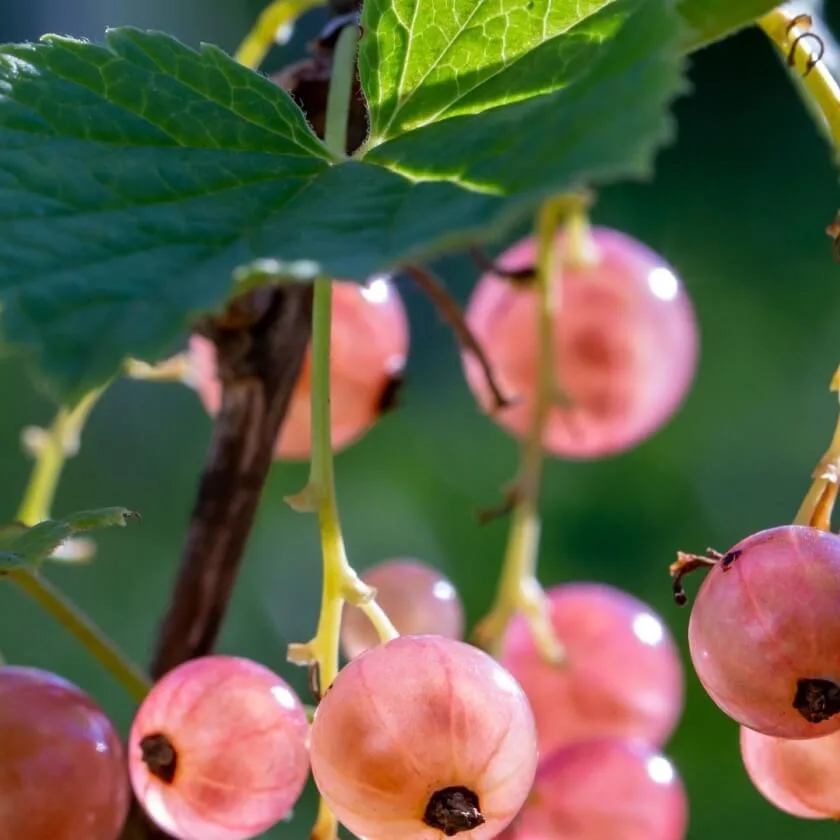
An upright deciduous pink currant bush, small greenish white flowers in spring are followed by long strings of attractive transulcent pink currants. Fruits can be eaten straight from the bush or used in desserts and preserves.
Scientific classification
- Species
- pinkcurrant [Rosa Sport] (Ribes rubrum Rosa Sport)
- Genus
- Ribes
- Family
- Grossulariaceae
- Order
- Saxifragales
- Class
- Magnoliopsida
- Phylum
- Magnoliophyta
- Information to be completed
- Toxicity
- Fruit Edible
- Plant type
- 1-1.5 metres
- Height
- 1-1.5 metres
- Spread
- Deciduous
- Foliage
- Bushy
- Habit
- Autumn · Spring · Summer
- Season of interest
- Full sun · Partial shade
- Sunlight
- Information to be completed
- Ideal temperature









pinkcurrant [Rosa Sport] pictures
pinkcurrant [Rosa Sport] care guide
- Deep root watering, allow slight surface drying before watering again
- Watering
- Full sun · Partial shade
- Sunlight

Watering
Deep root watering, allow slight surface drying before watering again
Fertilizing
 Fertilizing
Rose fertilizer every two to four weeks from spring through late summer
Pruning
 Pruning
Main pruning is carried out in dormant season, along with summer pruning of vigorous laterals
Propagation
 Propagation
Propagate by hardwood cuttings in autumn
Growing
 Growing
Grow in a well-drained, fertile soil with a neutral to slightly acid pH. Full sun is preferred, but partial shade is tolerated and plants can be trained against a north wall. Grow as a permanent framework as a bush, standard, cordon or fan. Keep the around the bushes free of other plants. Mulch with well rotted compost, manure or bark Grow in a well-drained, fertile soil with a neutral to slightly acid pH. Full sun is preferred, but partial shade is tolerated and plants can be trained against a north wall. Grow as a permanent framework as a bush, standard, cordon or fan. Keep the area around the bushes free of other plants. Mulch with well-rotted compost, manure or bark particularly on dry soils. Further redcurrant cultivation advice
Common pests and diseases
Diseases
May be susceptible to a leaf spot, powdery mildews, coral spot and sometimes honey fungus
Pests
May be susceptible to gall mites, gall midge and aphids
Explore the plant health library →




