
African daisy 3D Series
Also known as: Information to be completed
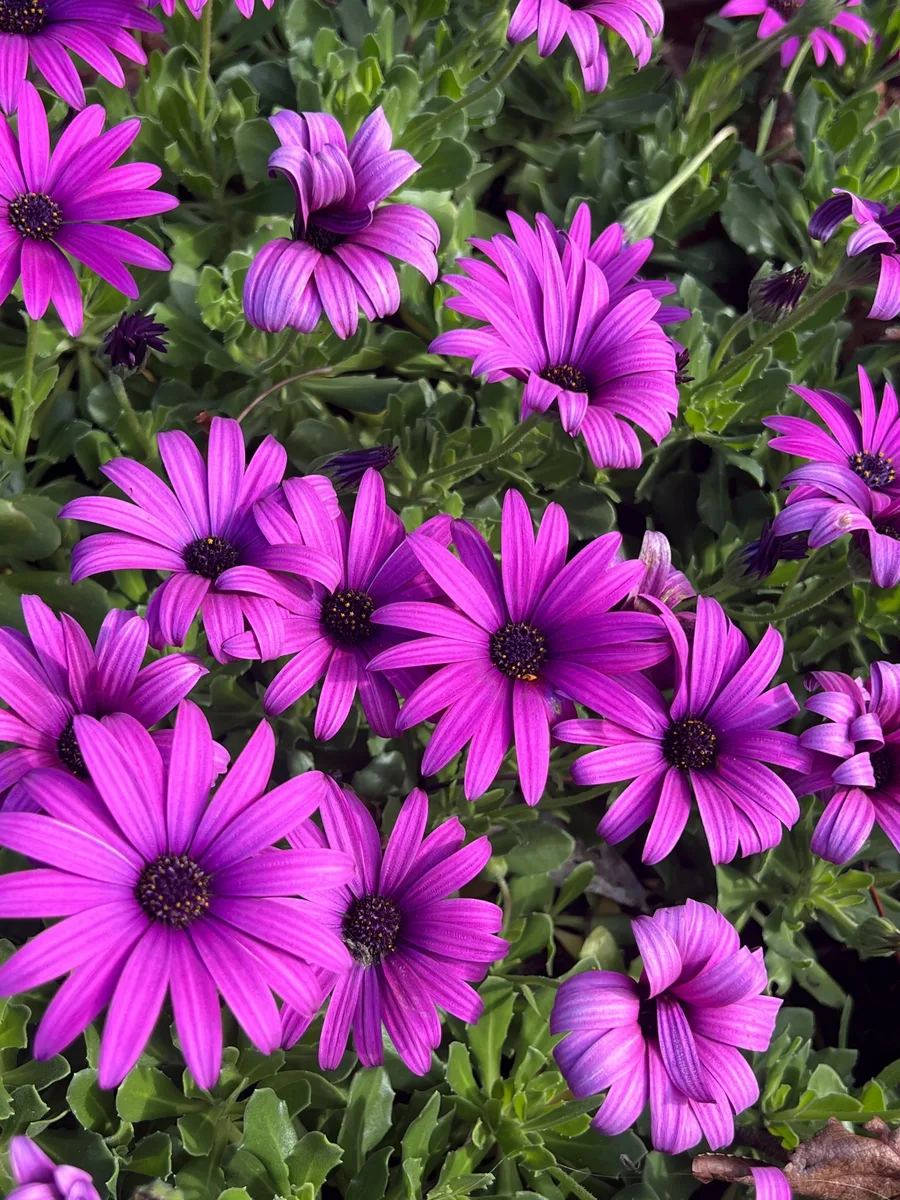
A compact, mound-forming, half-hardy annuals to 25cm in height with sparsely toothed, spoon-shaped, glossy, mid green leaves and large daisy-like, flowers with an extra layer of petals, which do not close up; bi-coloured in a range of colours, reddish purple and white, pinkish purple and pink, bluish purple and purple, purple and white, lemon yellow, and white, from midsummer into autumn
Scientific classification
- Species
- African daisy 3D Series (Osteospermum [3D Series])
- Genus
- Osteospermum
- Family
- Asteraceae
- Information to be completed
- Toxicity
- Annual Biennial
- Plant type
- 0.1-0.5 metres
- Height
- 0.1-0.5 metres
- Spread
- Semi evergreen
- Foliage
- Bushy
- Habit
- Spring · Summer · Autumn
- Season of interest
- Full sun
- Sunlight
- Information to be completed
- Ideal temperature









African daisy 3D Series pictures
Distribution of African daisy 3D Series
Distribution map
Information to be completed
Information to be completed
Culture
Information to be completed
Toxicity
Information to be completed
Quick identification of African daisy 3D Series
Information to be completed
African daisy 3D Series care guide
- Moderate regular watering, avoid prolonged drought and stagnant waterlogging
- Watering
- Full sun
- Sunlight
- Information to be completed
- Ideal temperature

Watering
Moderate regular watering, avoid prolonged drought and stagnant waterlogging
Fertilizing
 Fertilizing
Balanced perennial feed every four weeks spring through summer growth
Pruning
 Pruning
Deadhead regularly and tidy in spring. No pruning required
Propagation
 Propagation
Propagate by softwood cuttings in late spring or semi-hardwood cuttings in late summer from non-flowering shoots, protect from frost over winter and plant out after all chance of frosts is past
Growing
 Growing
Grow in light, moderately fertile, well-drained soil in a warm, sunny position. Tolerate poor soil, salt or drought. In frosty areas overwinter cuttings under glass
People also ask
Information to be completed
Common pests and diseases
Diseases
May be susceptible to a downy mildews and Verticillium wilt
Pests
May be susceptible to aphids
Explore the plant health library →




