
leek 'Porbella'
Also known as: Information to be completed
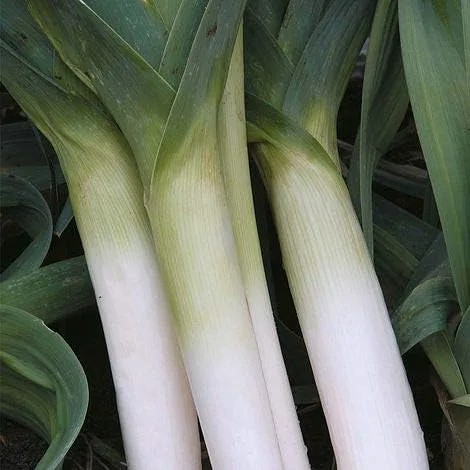
A perennial usually grown as an annual, with long, lance-shaped, dark green leaves arching over as they grow. The leaf-bases are wrapped around each other to form the edible 'stem', usually blanched white. If not harvested, plants will go on to flower in summer, producing strong, upright stems to 1.5m topped with a rounded flowerhead of small, star-shaped, white flowers. This is a well-flavoured leek cultivar, with thick stems, standing well for several months, to allow cropping from mid-autumn to late winter
Scientific classification
- Species
- leek 'Porbella' (Allium porrum 'Porbella')
- Genus
- Allium
- Family
- Amaryllidaceae
- Order
- Asparagales
- Class
- Liliopsida
- Phylum
- Magnoliophyta
- Information to be completed
- Toxicity
- Herbaceous Perennial · Herbs - Culinary
- Plant type
- 0.5-1 metres
- Height
- 0.1-0.5 metres
- Spread
- Evergreen
- Foliage
- Clump forming
- Habit
- Spring · Summer · Autumn · Winter
- Season of interest
- Full sun · Partial shade
- Sunlight
- Information to be completed
- Ideal temperature









leek 'Porbella' pictures
leek 'Porbella' care guide
- Moist soil during active growth, then reduce watering after foliage yellows
- Watering
- Full sun · Partial shade
- Sunlight

Watering
Moist soil during active growth, then reduce watering after foliage yellows
Fertilizing
 Fertilizing
Light bulb fertilizer at emergence and again after flowering
Pruning
 Pruning
No pruning required
Propagation
 Propagation
Propagate by seed. See sowing vegetable seeds
Growing
 Growing
Grow in well-drained soil, rich in organic matter, ideally in sun though will tolerate shade. Start seed in containers or a seed bed in spring, then transplant seedlings when pencil thickness into holes 15cm deep, so the lower part of the stem will be blanched. Earthing-up the stems as they grow will increase the length of white stem. See leek cultivation
Common pests and diseases
Diseases
May be susceptible to leek rust, onion white rot, downy mildews, foot and root rots, fungal leaf spots and smuts
Pests
May be susceptible to slugs and snails, leek moth, onion fly and onion thrips
Explore the plant health library →




