
auricula 'All Gold'
Also known as: Information to be completed
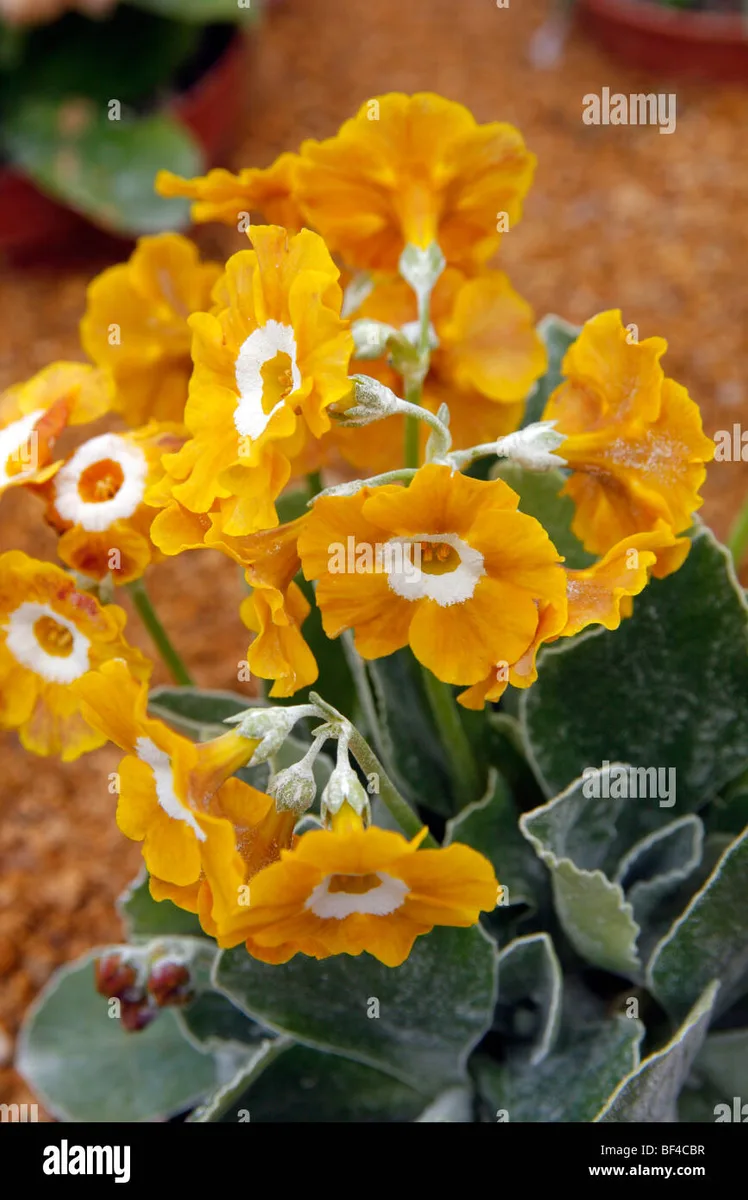
An evergreen perennial, to 20cm tall, with spreading rosettes of light green leaves. In spring, short stems, held above the foliage, are topped with clusters of double, old gold flowers
Scientific classification
- Species
- auricula 'All Gold' (Primula auricula 'All Gold')
- Genus
- Primula
- Family
- Primulaceae
- Order
- Ericales
- Class
- Magnoliopsida
- Phylum
- Magnoliophyta
- Skin allergen. Wear gloves and other protective equipment when handling
- Toxicity
- Alpine Rockery
- Plant type
- 0.1-0.5 metres
- Height
- 0.1-0.5 metres
- Spread
- Evergreen
- Foliage
- Clump forming
- Habit
- Spring · Summer · Autumn · Winter
- Season of interest
- Full sun · Partial shade
- Sunlight
- Information to be completed
- Ideal temperature









auricula 'All Gold' pictures
Distribution of auricula 'All Gold'
Distribution map
- Native
- Introduced
- Cultivated
Source:WCVP v16 · Royal Botanic Gardens, Kew · CC BY 3.0 · Boundaries:WGSRPD / TDWG
Toxicity
Skin allergen. Wear gloves and other protective equipment when handling
auricula 'All Gold' care guide
- Moderate regular watering, allowing brief slight drying between soakings
- Watering
- Full sun · Partial shade
- Sunlight

Watering
Moderate regular watering, allowing brief slight drying between soakings
Fertilizing
 Fertilizing
Balanced perennial feed every four weeks from spring through summer
Pruning
 Pruning
No pruning required but deadhead after flowering, and remove dead or damaged leaves as necessary
Propagation
 Propagation
Propagate by division or by detaching offsets in autumn or early spring
Growing
 Growing
Grow in moderately fertile, moist but well-drained, humus-rich soil in full sun or partial shade. Can also be grown in pots in an alpine houseShow auriculas are best grown in pots in an alpine house or cold frame, in a mix of equal parts loam-based potting compost, leaf mould, peat or peat-substitute, and grit. Alternatively, grow in moderately fertile, moist but well-drained, humus-rich soil in full sun or partial shade
Common pests and diseases
Diseases
May be susceptible to a virus, primula brown core and grey moulds
Pests
May be susceptible to aphids, glasshouse red spider mite, slugs, leafhoppers and vine weevils
Explore the plant health library →




