
Lupinus arboreus 'Lavender Spires'
Also known as: Information to be completed
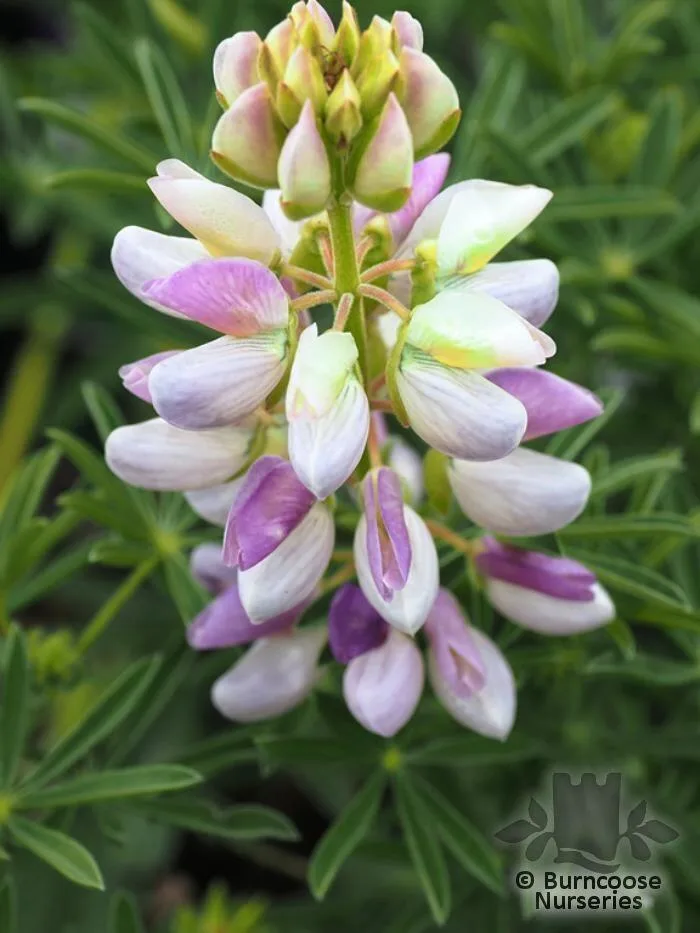
A fast-growing, semi-evergreen shrub to around 2m high, with palmate grey-green leaves divided into 6-9 leaflets and silky-hairy beneath. Tall clusters of fragrant, pea-like flowers, in shades of pale lavender and violet, are borne at the tips of the stems in late spring and summer
Scientific classification
- Species
- Lupinus arboreus 'Lavender Spires' (Lupinus arboreus 'Lavender Spires')
- Genus
- Lupinus
- Family
- Fabaceae
- Order
- Fabales
- Class
- Magnoliopsida
- Phylum
- Magnoliophyta
- Harmful if eaten. Wear gloves and other protective equipment when handling
- Toxicity
- Shrubs
- Plant type
- 1.5-2.5 metres
- Height
- 1.5-2.5 metres
- Spread
- Semi evergreen
- Foliage
- Bushy
- Habit
- Spring · Summer · Autumn · Winter
- Season of interest
- Full sun
- Sunlight
- Information to be completed
- Ideal temperature









Lupinus arboreus 'Lavender Spires' pictures
Distribution of Lupinus arboreus 'Lavender Spires'
Distribution map
- Native
- Introduced
- Cultivated
Source:WCVP v16 · Royal Botanic Gardens, Kew · CC BY 3.0 · Boundaries:WGSRPD / TDWG
Toxicity
Harmful if eaten. Wear gloves and other protective equipment when handling
Lupinus arboreus 'Lavender Spires' care guide
- Moderate watering, keeping soil lightly moist during active growth
- Watering
- Full sun
- Sunlight

Watering
Moderate watering, keeping soil lightly moist during active growth
Fertilizing
 Fertilizing
Light low-nitrogen feed once in spring and again before flowering
Pruning
 Pruning
Minimal pruning required; can be trimmed to shape after flowering but avoid cutting into old wood
Propagation
 Propagation
Propagate by basal or softwood cuttings in mid-spring
Growing
 Growing
Grow in light, ideally slightly acidic, well-drained soil in full sun. Ideal for coastal situations in southern or mild counties, but will need protection in colder areas with heavy frosts. May be short-lived for a shrub
Common pests and diseases
Diseases
May be susceptible to powdery mildews, lupin anthracnose and virus diseases
Pests
May be susceptible to lupin aphid, slugs and snails
Explore the plant health library →




