
Brugmansia × candida 'Angels Sunbeam'
Also known as: Information to be completed
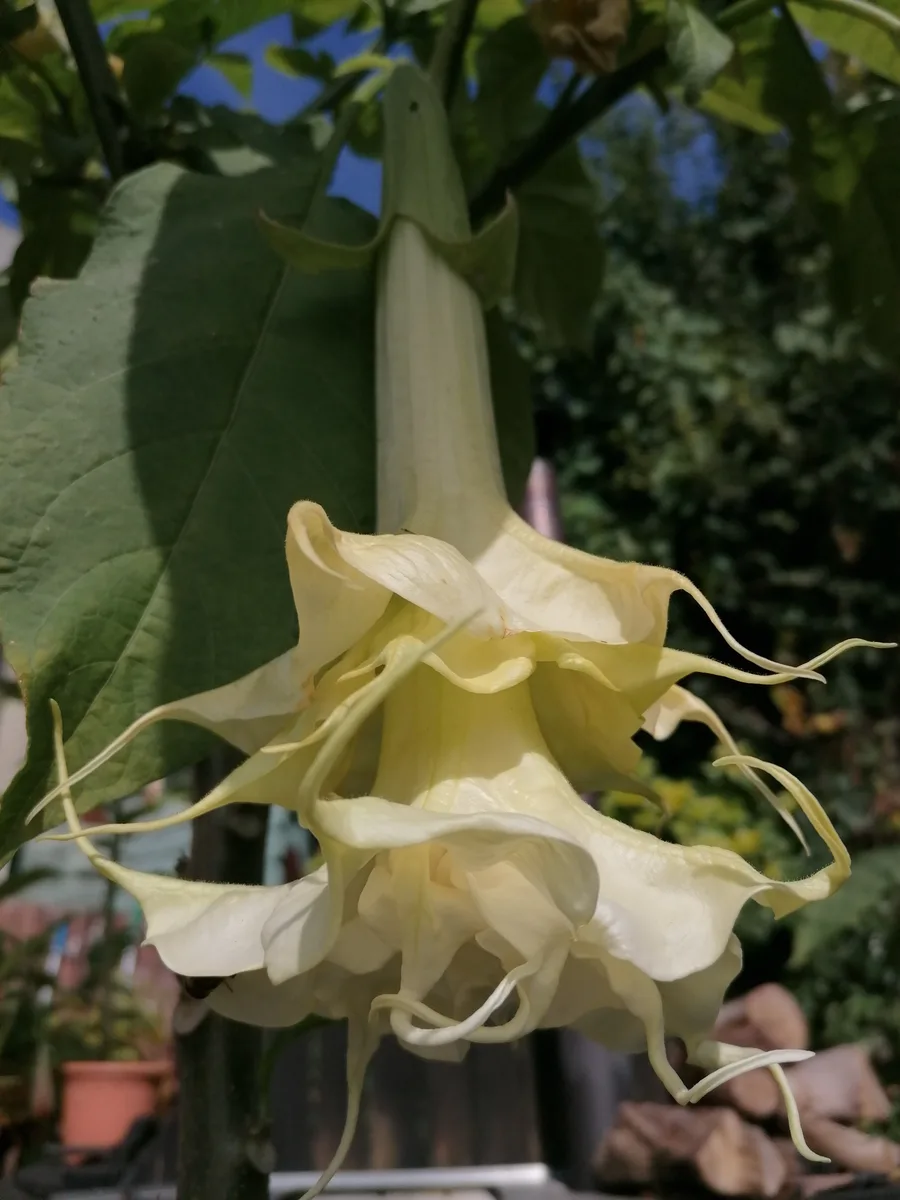
A vigorous, open shrub best suited to cultivation in a conservatory or greenhouse. From June to October it produces double or triple trumpet-shaped flowers to 30cm long. The flowers are white or cream in colour and are highly fragrant
Scientific classification
- Species
- Brugmansia × candida 'Angels Sunbeam' (Brugmansia × candida 'Angels Sunbeam')
- Genus
- Brugmansia
- Family
- Solanaceae
- Order
- Solanales
- Class
- Magnoliopsida
- Phylum
- Magnoliophyta
- TOXIC if eaten, skin irritant, avoid eye contact. Wear gloves and other protective equipment when handling
- Toxicity
- Conservatory Greenhouse · Shrubs
- Plant type
- 1.5-2.5 metres
- Height
- 1-1.5 metres
- Spread
- Semi evergreen
- Foliage
- Bushy
- Habit
- Spring · Summer · Autumn
- Season of interest
- Full sun · Partial shade
- Sunlight
- Information to be completed
- Ideal temperature









Brugmansia × candida 'Angels Sunbeam' pictures
Distribution of Brugmansia × candida 'Angels Sunbeam'
Distribution map
- Native
- Introduced
- Cultivated
Source:WCVP v16 · Royal Botanic Gardens, Kew · CC BY 3.0 · Boundaries:WGSRPD / TDWG
Toxicity
TOXIC if eaten, skin irritant, avoid eye contact. Wear gloves and other protective equipment when handling
Brugmansia × candida 'Angels Sunbeam' care guide
- Moderate regular watering, allowing brief slight drying between soakings
- Watering
- Full sun · Partial shade
- Sunlight

Watering
Moderate regular watering, allowing brief slight drying between soakings
Fertilizing
 Fertilizing
Balanced perennial feed every four weeks from spring through summer
Pruning
 Pruning
Prune lightly as needed to remove unwanted shoots and keep the shrub in shape. Prune in mid- to late spring.
Propagation
 Propagation
Propagate by semi-ripe cuttings
Growing
 Growing
Under glass, grow in loam-based potting compost in full light. Water freely while in active growth and apply a balanced liquid fertiliser every 2 weeks. Keep barely moist in winter. Maintain a minimum winter temperature of about 5°C; the plants will lose their leaves but these will regrow in spring. Plants may be moved outdoors to a position in light, dappled shade in summer. See brugmansia cultivation for further information
Common pests and diseases
Diseases
Generally disease-free
Pests
May be susceptible to glasshouse red spider mite, glasshouse whitefly, mealybugs, slugs, snails and thrips
Explore the plant health library →




