
Salvia nemorosa 'Little Friesland'
Also known as: Information to be completed
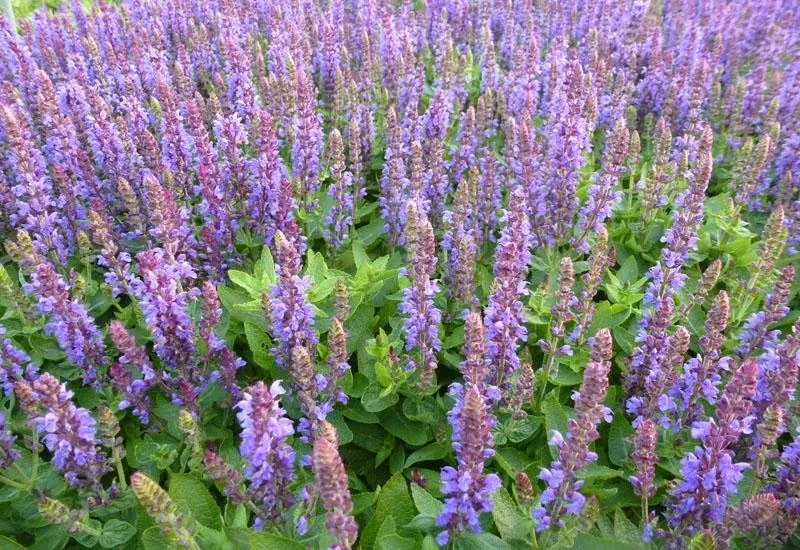
A very compact and bushy perennial with dark green foliage and short racemes of small violet-blue lipped flowers highlighted by reddish-pink bracts in summer.
Scientific classification
- Species
- Salvia nemorosa 'Little Friesland' (Salvia nemorosa 'Little Friesland')
- Genus
- Salvia
- Family
- Lamiaceae
- Order
- Lamiales
- Class
- Magnoliopsida
- Phylum
- Tracheophyta
- Information to be completed
- Toxicity
- Herbaceous Perennial
- Plant type
- 0.1-0.5 metres
- Height
- 0.1-0.5 metres
- Spread
- Deciduous
- Foliage
- Columnar upright
- Habit
- Spring · Summer · Autumn
- Season of interest
- Full sun · Partial shade
- Sunlight
- Information to be completed
- Ideal temperature









Salvia nemorosa 'Little Friesland' pictures
Distribution of Salvia nemorosa 'Little Friesland'
Distribution map
- Native
- Introduced
- Cultivated
Source:WCVP v16 · Royal Botanic Gardens, Kew · CC BY 3.0 · Boundaries:WGSRPD / TDWG
Salvia nemorosa 'Little Friesland' care guide
- Deep root watering, allow slight surface drying before watering again
- Watering
- Full sun · Partial shade
- Sunlight

Watering
Deep root watering, allow slight surface drying before watering again
Fertilizing
 Fertilizing
Rose fertilizer every two to four weeks from spring through late summer
Pruning
 Pruning
Cut back flower spikes to prolong flowering
Propagation
 Propagation
Propagate by division in spring and by semi-ripe cuttings in summer
Growing
 Growing
Will grow well in soils that are moderately fertile and moist but well-drained preferably in full sun but will tolerate some shade. Once the plant is established it will require less watering.
Common pests and diseases
Diseases
May be susceptible to honey fungus (rarely), powdery mildews, verticillium wilt and foot and root rots
Pests
Generally pest-free
Explore the plant health library →




