
Iris 'Benton Duff'
Also known as: Information to be completed
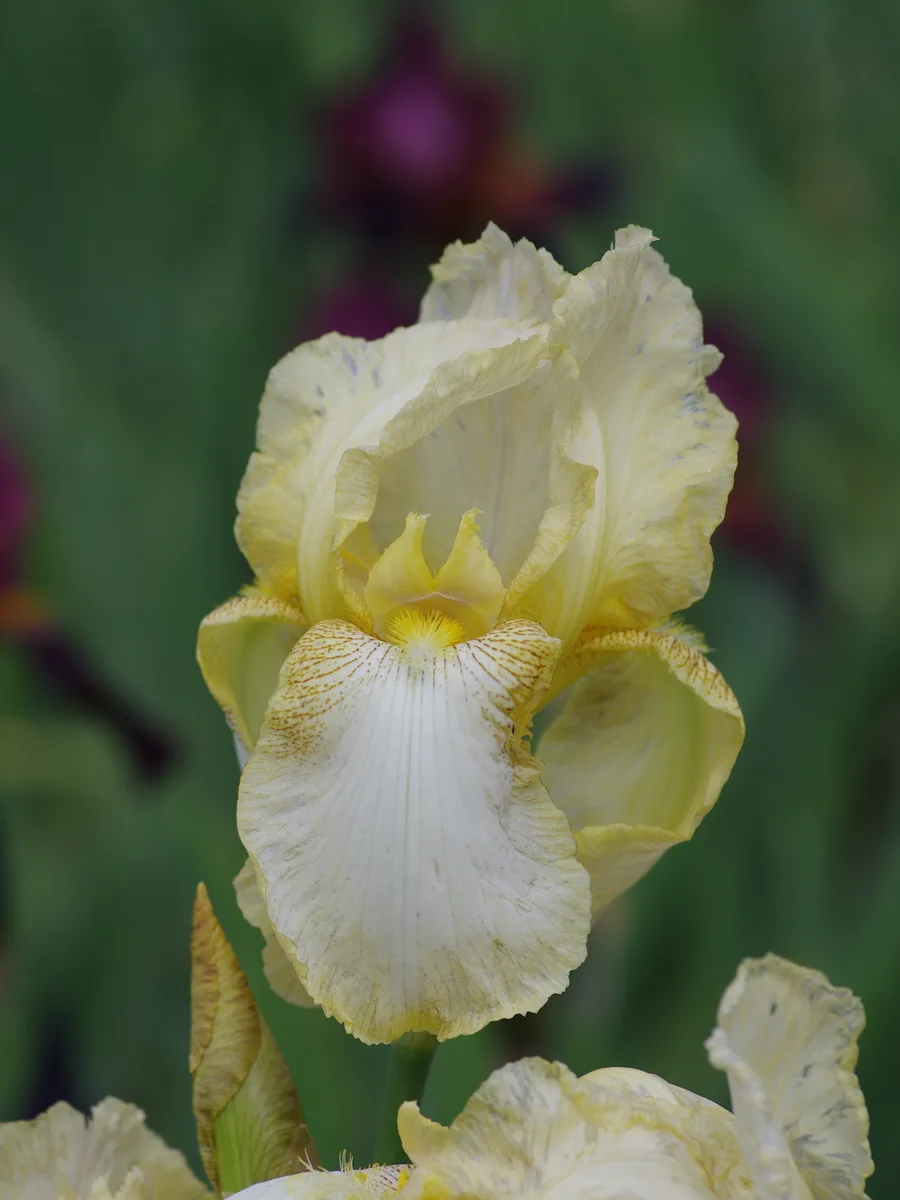
A highly attractive, clump forming, rhizomatous, herbaceous perennial bred by Sir Cedric Morris. It has tall, upright, strap-like grey-green leaves and erect stems bearing large, fragrant flowers in late spring-early summer with pale yellow upper petals, known as standards, and yellow-flushed cream-white lower petals, known as falls, with brown veins and yellow beards
Scientific classification
- Species
- Iris 'Benton Duff' (Iris 'Benton Duff')
- Genus
- Iris
- Family
- Iridaceae
- Harmful if eaten. Wear gloves and other protective equipment when handling
- Toxicity
- Herbaceous Perennial
- Plant type
- 0.5-1 metres
- Height
- 0.1-0.5 metres
- Spread
- Deciduous
- Foliage
- Clump forming · Columnar upright
- Habit
- Spring · Summer · Autumn
- Season of interest
- Full sun
- Sunlight
- Information to be completed
- Ideal temperature









Iris 'Benton Duff' pictures
Distribution of Iris 'Benton Duff'
Distribution map
Information to be completed
Information to be completed
Culture
Information to be completed
Toxicity
Harmful if eaten. Wear gloves and other protective equipment when handling
Quick identification of Iris 'Benton Duff'
Information to be completed
Iris 'Benton Duff' care guide
- Water moderately, let surface dry slightly between irrigations
- Watering
- Full sun
- Sunlight
- Information to be completed
- Ideal temperature

Watering
Water moderately, let surface dry slightly between irrigations
Fertilizing
 Fertilizing
Low nitrogen feed in spring before and after bloom
Pruning
 Pruning
Cut back old flower stems after flowering and remove dying foliage in autumn
Propagation
 Propagation
Propagate by division of the rhizome shortly from mid-summer to early autumn. See dividing irises
Growing
 Growing
Plant rhizomes just above soil level. Thrives in a sunny position, in ideally neutral soil with good drainage. See bearded iris cultivation
People also ask
Information to be completed
Common pests and diseases
Diseases
May be susceptible to aphid-borne viruses, bacterial soft rot and grey moulds; see Iris diseases
Pests
May be susceptible to slugs and snails
Explore the plant health library →




