
spider plant
Also known as: St Bernard's lily
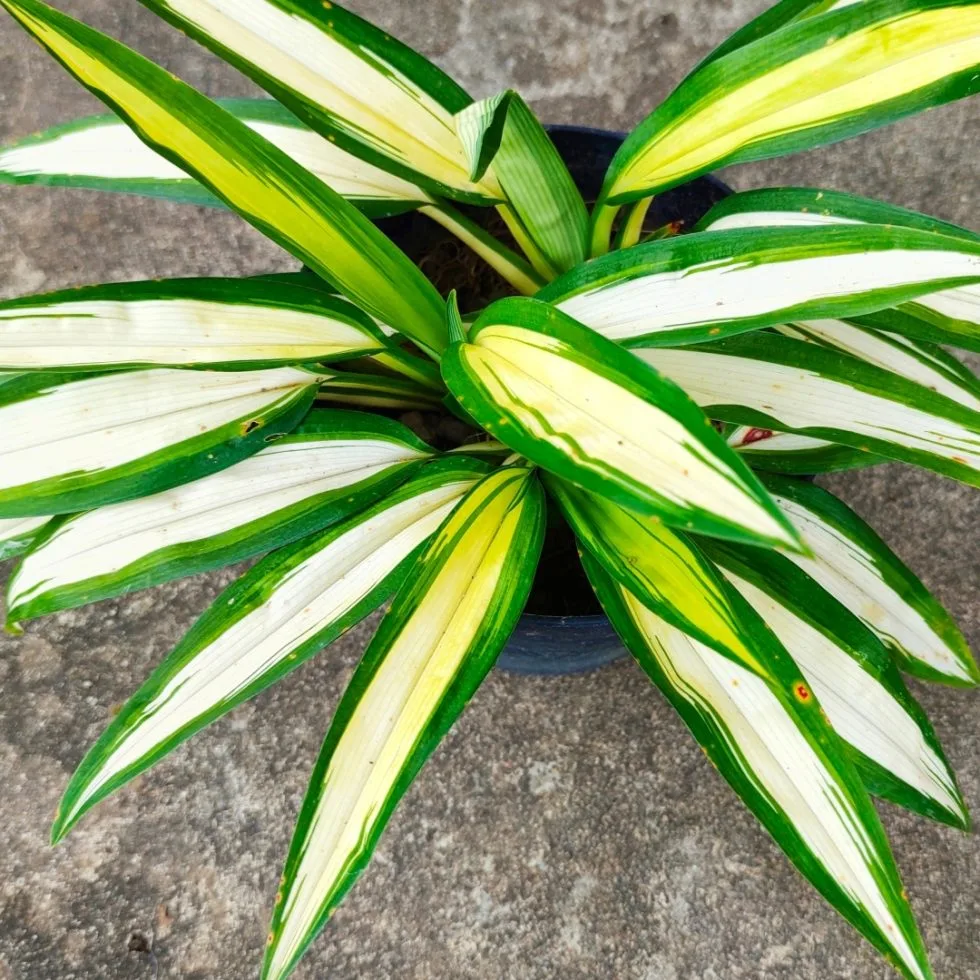
A clump-forming evergreen perennial with lance or strap shaped leaves, the leaves are variegated with a thick central strip of creamy white and dark green margins. Racemes of tiny white flowers are held on stem that can be up to 60cm long, with no plantlets on the flower stems, and this is a distinguishing feature of this species
Scientific classification
- Species
- spider plant (Chlorophytum capense 'Variegatum')
- Genus
- Chlorophytum
- Family
- Asparagaceae
- Order
- Asparagales
- Class
- Liliopsida
- Phylum
- Magnoliophyta
- Information to be completed
- Toxicity
- Conservatory Greenhouse · Houseplants
- Plant type
- 0.1-0.5 metres
- Height
- 0.1-0.5 metres
- Spread
- Evergreen
- Foliage
- Clump forming · Columnar upright
- Habit
- Spring · Summer · Autumn · Winter
- Season of interest
- Partial shade
- Sunlight
- Information to be completed
- Ideal temperature









spider plant pictures
Distribution of spider plant
Distribution map
- Native
- Introduced
- Cultivated
Source:WCVP v16 · Royal Botanic Gardens, Kew · CC BY 3.0 · Boundaries:WGSRPD / TDWG
spider plant care guide
- Moderate regular watering, avoid prolonged drought or waterlogging
- Watering
- Partial shade
- Sunlight

Watering
Moderate regular watering, avoid prolonged drought or waterlogging
Fertilizing
 Fertilizing
Balanced feed in spring and light repeat in growth season
Pruning
 Pruning
Trim back flowering spikes once they have finished
Propagation
 Propagation
Propagate by seed or by division
Growing
 Growing
Grow as a houseplant, under glass or in frost-free environment. A very tough houseplant, tolerant of a wide range of conditions. Keep the plant looking healthy and fresh by re-potting and dividing every 2-3 years. See houseplant cultivation
Common pests and diseases
Diseases
Generally disease-free
Pests
Maybe susceptible to scale insects
Explore the plant health library →




