
Hibiscus syriacus Magenta Chiffon ('Rwoods5')
Also known as: Information to be completed
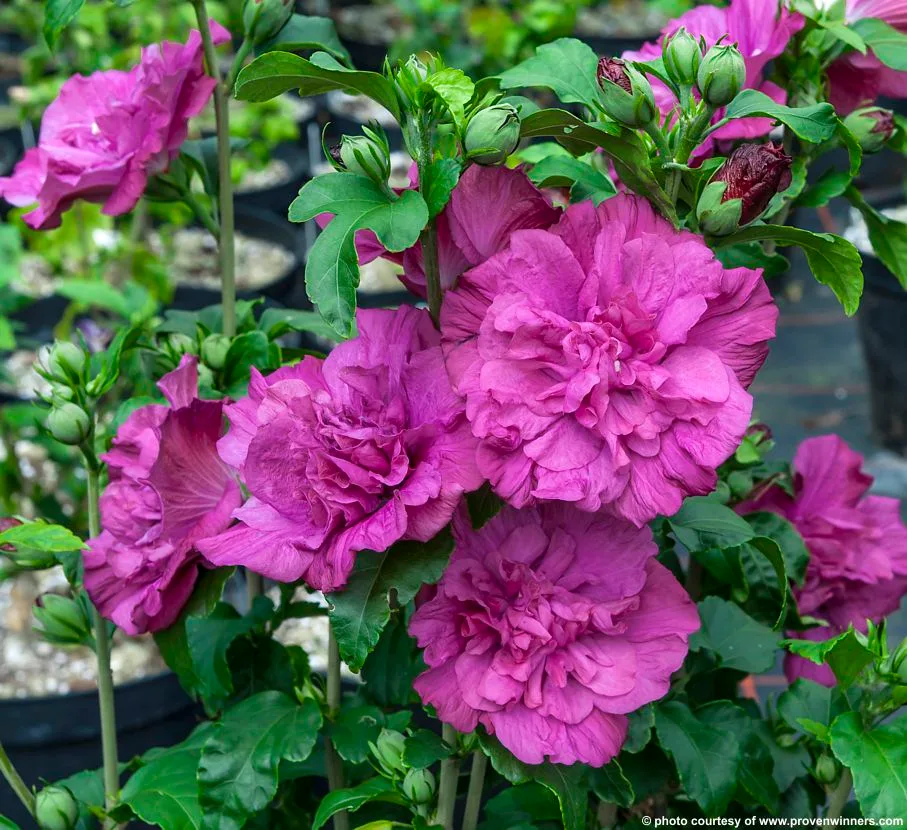
The latest of the new 'Chiffon' hibiscus, this has been bred by Roderick Woods in Norfolk, and it has wonderful fully double, reddish pink flowers, each packed with lots of slightly ruffled petals that create a slightly frilly effect. The flowers appear late in the season, which makes this resilient deciduous shrub perfect for continuing the display in the shrub border well into autumn.
Scientific classification
- Species
- Hibiscus syriacus Magenta Chiffon ('Rwoods5') (Hibiscus syriacus Magenta Chiffon ('Rwoods5'))
- Genus
- Hibiscus
- Family
- Malvaceae
- Order
- Malvales
- Class
- Magnoliopsida
- Phylum
- Magnoliophyta
- Information to be completed
- Toxicity
- Shrubs
- Plant type
- 2.5-4 metres
- Height
- 1.5-2.5 metres
- Spread
- Deciduous
- Foliage
- Bushy
- Habit
- Spring · Summer · Autumn
- Season of interest
- Full sun
- Sunlight
- Information to be completed
- Ideal temperature









Hibiscus syriacus Magenta Chiffon ('Rwoods5') pictures
Hibiscus syriacus Magenta Chiffon ('Rwoods5') care guide
- Deep watering weekly, mature shrub survives short dry summer spells
- Watering
- Full sun
- Sunlight

Watering
Deep watering weekly, mature shrub survives short dry summer spells
Fertilizing
 Fertilizing
Flowering shrub liquid feed monthly from spring until mid-summer heat
Pruning
 Pruning
Little pruning is needed. Remove diseased, damaged, crowded or crossing shoots and unwanted growth. Timing depends on the plant: generally late winter or early spring; plants prone to bleeding and deciduous magnolias need different timing, and deciduous azaleas and lilacs are pruned after flowering.
Propagation
 Propagation
Propagate by softwood cuttings in late spring, by semi-ripe cuttings in summer, or by layering in spring or autumn
Growing
 Growing
Grows best in neutral to slightly acidic or slightly alkaline, humus-rich, moist but well-drained soil. Plant in a warm sheltered position in full sun to encourage flowering. Can also be grown in pots. Feed in spring, with a slow-release, high potash formula, such as rose food, and mulch in autumn to help maintain soil moisture levels and suppress weeds.
Common pests and diseases
Diseases
May be susceptible to honey fungus (rarely) and powdery mildews
Pests
May be susceptible to aphids, scale insects, mealybugs and glasshouse whitefly when grown under glass
Explore the plant health library →




