
orpine 'Karfunkelstein'
Also known as: Information to be completed
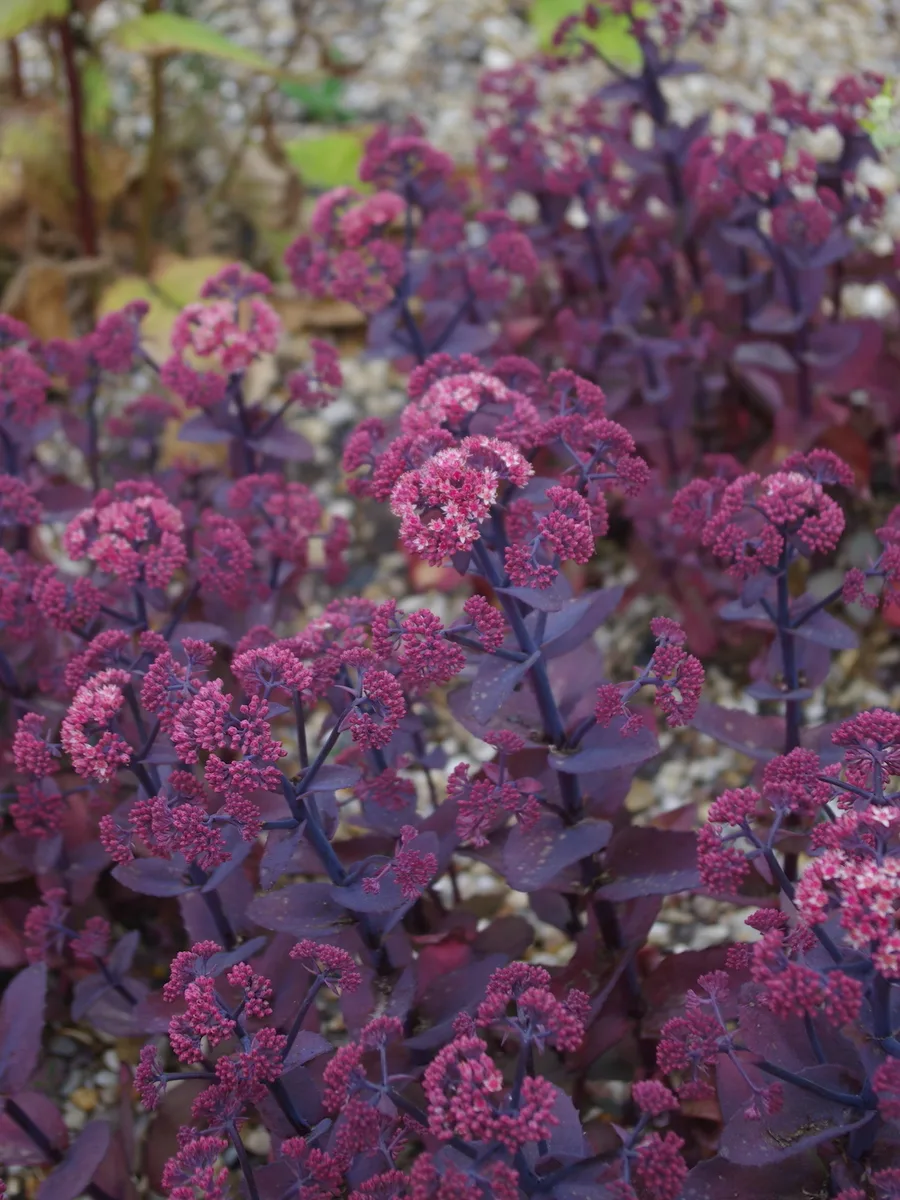
A suuculent perennial with fleshy, green-blue leaves with a purple tint in spring. This becomes more pronounced as they mature until they turn almost beetroot-purple. The bright pink flowers emerge in tight clusters late in the summer. Flower heads stay on the plant for many months, although their colour will fade, providing structure in the winter garden
Scientific classification
- Species
- orpine 'Karfunkelstein' (Hylotelephium telephium 'Karfunkelstein')
- Genus
- Hylotelephium
- Family
- Crassulaceae
- Order
- Saxifragales
- Class
- Magnoliopsida
- Phylum
- Magnoliophyta
- Information to be completed
- Toxicity
- Herbaceous Perennial
- Plant type
- 0.1-0.5 metres
- Height
- 0.1-0.5 metres
- Spread
- Deciduous
- Foliage
- Bushy
- Habit
- Spring · Summer · Autumn
- Season of interest
- Full sun · Partial shade
- Sunlight
- Information to be completed
- Ideal temperature









orpine 'Karfunkelstein' pictures
Distribution of orpine 'Karfunkelstein'
Distribution map
- Native
- Introduced
- Cultivated
Source:WCVP v16 · Royal Botanic Gardens, Kew · CC BY 3.0 · Boundaries:WGSRPD / TDWG
orpine 'Karfunkelstein' care guide
- Let gritty soil dry fully before each thorough watering cycle
- Watering
- Full sun · Partial shade
- Sunlight

Watering
Let gritty soil dry fully before each thorough watering cycle
Fertilizing
 Fertilizing
Very dilute low-nitrogen succulent feed monthly in warm growth
Pruning
 Pruning
If later flowering is required, cut one in every three stems back to the ground around the last week in May, a technique known as the Chelsea Chop. Cut back during border tidy ups in late winter before new growth emerges
Propagation
 Propagation
Propagate by division in spring. Propagate by softwood cuttings of non-flowering shoots in early summer
Growing
 Growing
Grow in moderately fertile, well-drained, neutral to slightly alkaline soil. Best in full sun. A drought-tolerant plant but will benefit from mulching. A good nectar source for pollinating insects
Common pests and diseases
Diseases
May be subject to root rot in poor-draining conditions
Pests
May be damaged by slugs, snails and vine weevil
Explore the plant health library →




