
pin-stripe calathea
Also known as: Information to be completed
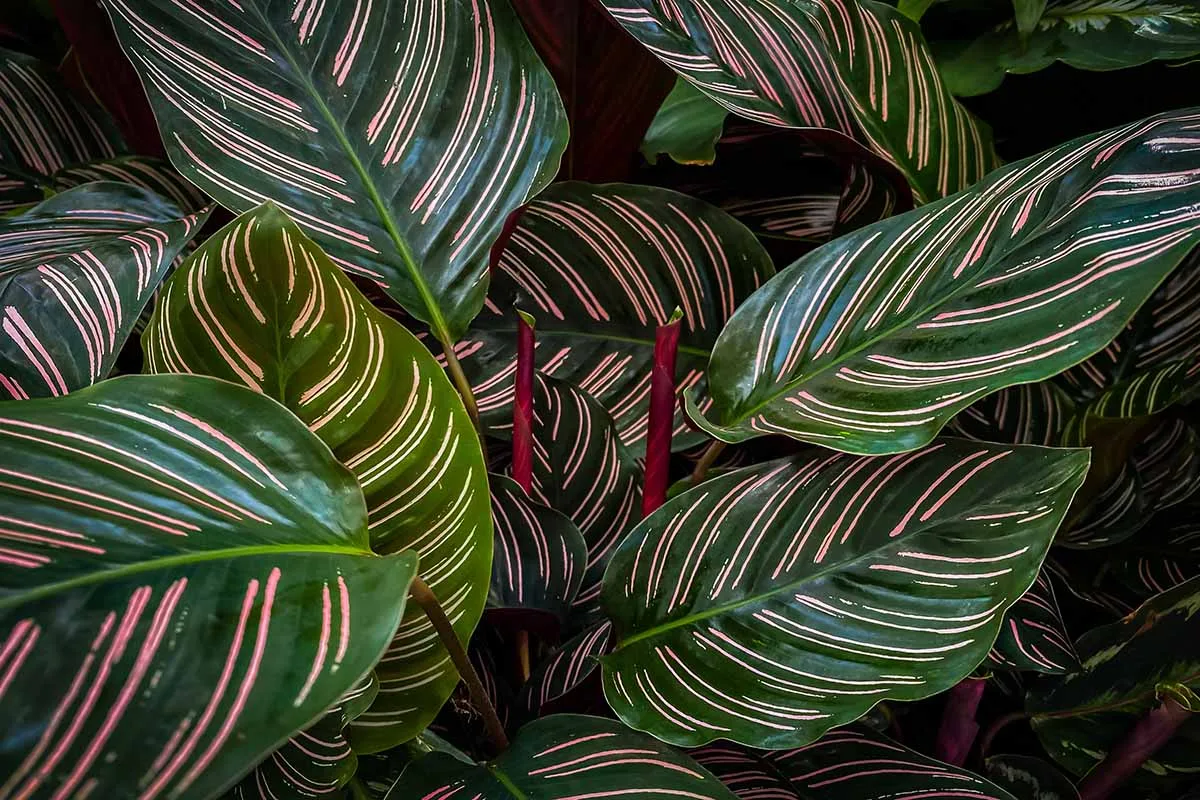
A clump-forming, evergreen perennial to 90cm tall with leaf stalks bearing broad oval leaves, bright-green when young with pairs of pale pinkish-white bands radiating from the leaf midribs, the leaves maturing to dark green and flushed purple beneath. White flowers in spikes occasionally appear in summer.
Scientific classification
- Species
- pin-stripe calathea (Goeppertia ornata)
- Genus
- Goeppertia
- Family
- Marantaceae
- Information to be completed
- Toxicity
- Houseplants
- Plant type
- 0.5-1 metres
- Height
- 0.1-0.5 metres
- Spread
- Evergreen
- Foliage
- Clump forming
- Habit
- Spring · Summer · Autumn · Winter
- Season of interest
- Partial shade
- Sunlight
- 18 – 27 °C
- Ideal temperature









pin-stripe calathea pictures
Distribution of pin-stripe calathea
Distribution map
- Native
- Introduced
- Cultivated
Source:WCVP v16 · Royal Botanic Gardens, Kew · CC BY 3.0 · Boundaries:WGSRPD / TDWG
Culture
Information to be completed
Toxicity
Information to be completed
Quick identification of pin-stripe calathea
Information to be completed
pin-stripe calathea care guide
- Moderate regular watering, allowing brief slight drying between soakings
- Watering
- Partial shade
- Sunlight
- 18 – 27 °C
- Ideal temperature

Watering
Moderate regular watering, allowing brief slight drying between soakings
Fertilizing
 Fertilizing
Balanced perennial feed every four weeks from spring through summer
Pruning
 Pruning
Cut down flower spikes after flowering is finished
Propagation
 Propagation
Propagate by division in late spring, keep plants in warm, humid conditions until re-established
Growing
 Growing
Under glass grow in peat-free or loam-based (JI No.2) potting compost in bright indirect or filtered light. Provide high humidity, draught-free conditions and a constant temperature of at least 16°C. Water freely in the growing season and apply a general houseplant fertiliser monthly, reduce watering in winter
People also ask
Information to be completed
Common pests and diseases
Diseases
Generally disease-free
Pests
May be susceptible to glasshouse whitefly and glasshouse red spider mite
Explore the plant health library →




