
Pyracantha coccinea 'Red Star'
Also known as: Information to be completed
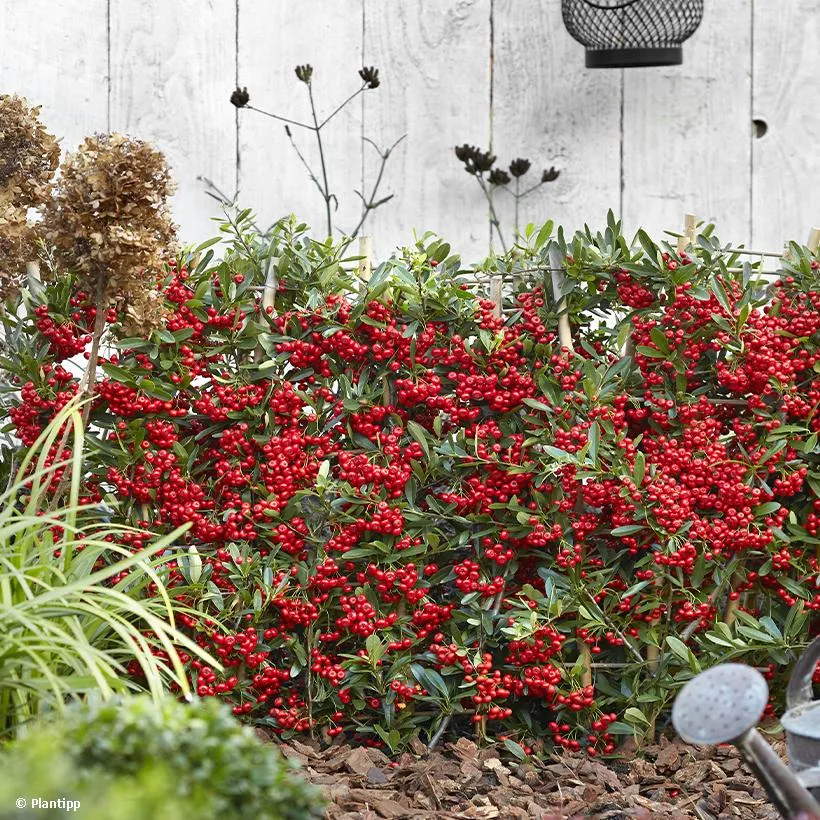
An upright to spreading, evergreen shrub to 3m (10ft) high, with dark green leaves, and branches with less thorns than many of the other types. Dense clusters of small white flowers appear in late spring on the previous year's growth. These are followed by a profusion of bright red berries in autumn.
Scientific classification
- Species
- Pyracantha coccinea 'Red Star' (Pyracantha coccinea 'Red Star')
- Genus
- Pyracantha
- Family
- Rosaceae
- Order
- Rosales
- Class
- Magnoliopsida
- Phylum
- Magnoliophyta
- Fruits are ornamental - not to be eaten. Wear gloves and other protective equipment when handling
- Toxicity
- Shrubs
- Plant type
- 2.5-4 metres
- Height
- 2.5-4 metres
- Spread
- Evergreen
- Foliage
- Bushy
- Habit
- Spring · Summer · Autumn · Winter
- Season of interest
- Full sun · Partial shade
- Sunlight
- Information to be completed
- Ideal temperature









Pyracantha coccinea 'Red Star' pictures
Distribution of Pyracantha coccinea 'Red Star'
Distribution map
- Native
- Introduced
- Cultivated
Source:WCVP v16 · Royal Botanic Gardens, Kew · CC BY 3.0 · Boundaries:WGSRPD / TDWG
Toxicity
Fruits are ornamental - not to be eaten. Wear gloves and other protective equipment when handling
Pyracantha coccinea 'Red Star' care guide
- Deep watering during dry spells, allowing slight surface drying between soakings
- Watering
- Full sun · Partial shade
- Sunlight

Watering
Deep watering during dry spells, allowing slight surface drying between soakings
Fertilizing
 Fertilizing
Balanced shrub or tree feed once each early spring
Pruning
 Pruning
Flowers are produced mainly on stems produced the previous year, so pruning should aim to retain as much two year old growth as possible. Prune out unwanted growth and on mature shrubs, twenty percent of older wood, after flowering has finished each year.
Propagation
 Propagation
Propagate by semi-ripe or hardwood cuttings, or by seed sown in spring, after three months of cold stratification, bearing in mind that cultivars won't usually come true from seed and seed raised plants can be of variable quality.
Growing
 Growing
Suitable for growing in any moderately fertile garden soil, in sun or partial shade, including very dry, free-draining soils, and heavy clays, as long as they are not prone to waterlogging. See pyracantha cultivation
Common pests and diseases
Diseases
May be susceptible to pyracantha scab, honey fungus and fireblight
Pests
May be susceptible to aphids, woolly aphid, caterpillars, brown scale and leaf-mining moths
Explore the plant health library →




