
lupin Russell Group
Also known as: Information to be completed
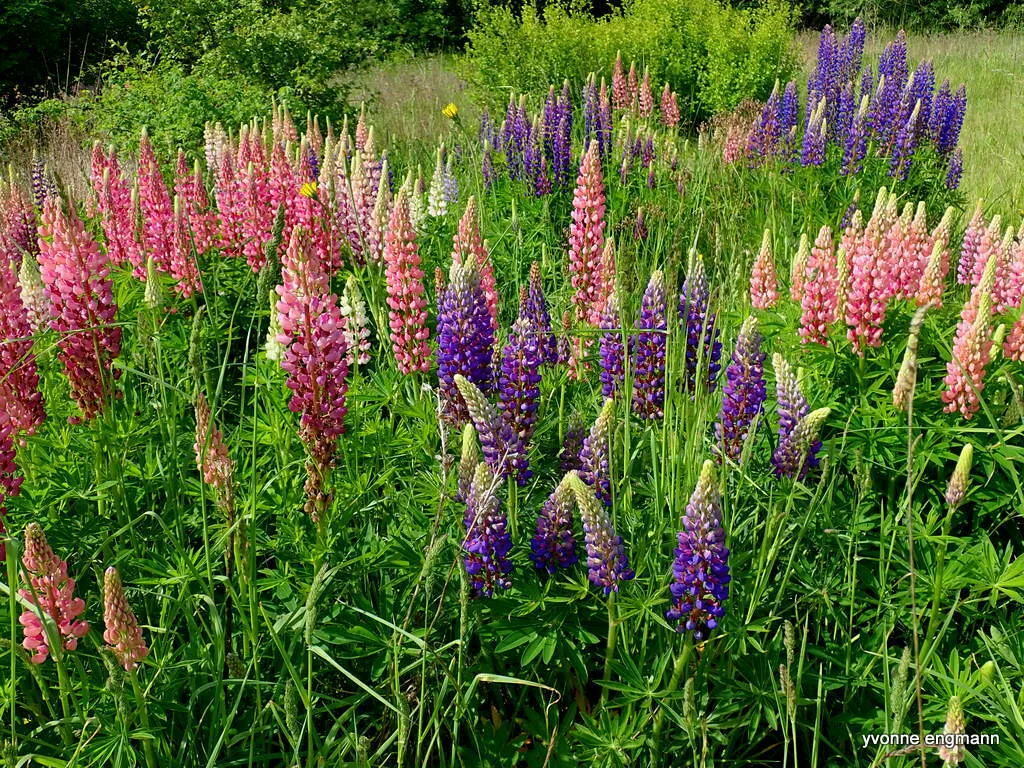
Russell Group are clump-forming, upright herbaceous perennials, to 1.2m tall, with palmately-divided, green leaves and, in summer, tall spikes of flowers in a range of shades of blue, white, red, pink or yellow; flowers may be a single colour or bicoloured
Scientific classification
- Species
- lupin Russell Group (Lupinus × regalis (Russell Group))
- Genus
- Lupinus
- Family
- Fabaceae
- Order
- Fabales
- Class
- Magnoliopsida
- Phylum
- Magnoliophyta
- Harmful if eaten. Wear gloves and other protective equipment when handling
- Toxicity
- Herbaceous Perennial
- Plant type
- 1-1.5 metres
- Height
- 0.5-1 metres
- Spread
- Deciduous
- Foliage
- Bushy
- Habit
- Spring · Summer
- Season of interest
- Full sun · Partial shade
- Sunlight
- Information to be completed
- Ideal temperature









lupin Russell Group pictures
Toxicity
Harmful if eaten. Wear gloves and other protective equipment when handling
lupin Russell Group care guide
- Moderate watering, keeping soil lightly moist during active growth
- Watering
- Full sun · Partial shade
- Sunlight

Watering
Moderate watering, keeping soil lightly moist during active growth
Fertilizing
 Fertilizing
Light low-nitrogen feed once in spring and again before flowering
Pruning
 Pruning
Deadhead to encourage a second flush of flowers
Propagation
 Propagation
Propagate by seed sown in situ in late spring or in seedbeds and transplanted to final flowering site in autumn, or propagate from basal cuttings
Growing
 Growing
Grow in moderately fertile, humus-rich, light, moist but well-drained soil in full sun or light, dappled shade. May require support (see staking perennials)
Common pests and diseases
Diseases
May be susceptible to powdery mildews, rots, a leaf spot and a virus
Pests
May be susceptible to slugs and lupin aphid
Explore the plant health library →




