
chrysanthemum 'Prelude Apricot'
Also known as: Information to be completed
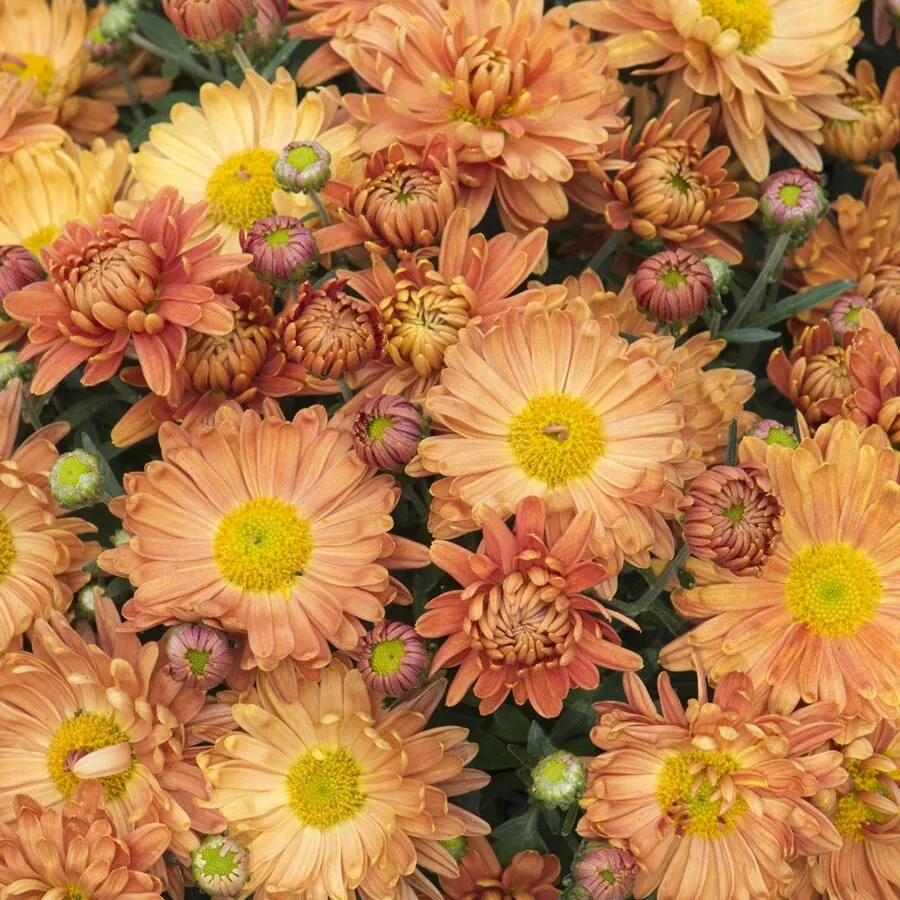
Prelude Apricot' is a bushy herbaceous perennial about 30cm high with a branching habit, aromatic green leaves, and many semi-double flowerheads with pale bronze ray florets and golden disc florets from early autumn to the first frosts
Scientific classification
- Species
- chrysanthemum 'Prelude Apricot' (Chrysanthemum 'Prelude Apricot')
- Genus
- Chrysanthemum
- Family
- Asteraceae
- Order
- Asterales
- Class
- Magnoliopsida
- Phylum
- Tracheophyta
- Skin allergen. Wear gloves and other protective equipment when handling
- Toxicity
- Conservatory Greenhouse · Herbaceous Perennial
- Plant type
- 0.1-0.5 metres
- Height
- 0.1-0.5 metres
- Spread
- Deciduous
- Foliage
- Bushy
- Habit
- Spring · Summer · Autumn
- Season of interest
- Full sun
- Sunlight
- Information to be completed
- Ideal temperature









chrysanthemum 'Prelude Apricot' pictures
Toxicity
Skin allergen. Wear gloves and other protective equipment when handling
chrysanthemum 'Prelude Apricot' care guide
- Moderate regular watering, allowing brief slight drying between soakings
- Watering
- Full sun
- Sunlight

Watering
Moderate regular watering, allowing brief slight drying between soakings
Fertilizing
 Fertilizing
Balanced perennial feed every four weeks from spring through summer
Pruning
 Pruning
No pruning required: Poppins Series chrysanthemums are naturally branching and do not need pinching out
Propagation
 Propagation
Propagate by division in spring or by basal softwood cuttings in spring
Growing
 Growing
In milder areas grow all year round in moist but well-drained soil in full sun in a sheltered position, and overwinter with a coarse organic mulch such as bark chips or bracken; in colder areas, overwinter in containers in a frost-free place such as a cool conservatory; for more advice see chrysanthemum cultivation
Common pests and diseases
Diseases
May be susceptible to glasshouse grey mould, powdery mildews and chrysanthemum white rust
Pests
May be affected by aphids, chrysanthemum leaf miner, leaf and bud eelworms, earwigs, capsid bug and glasshouse red spider mite
Explore the plant health library →




