
laburnum 'Yellow Rocket'
Also known as: Information to be completed
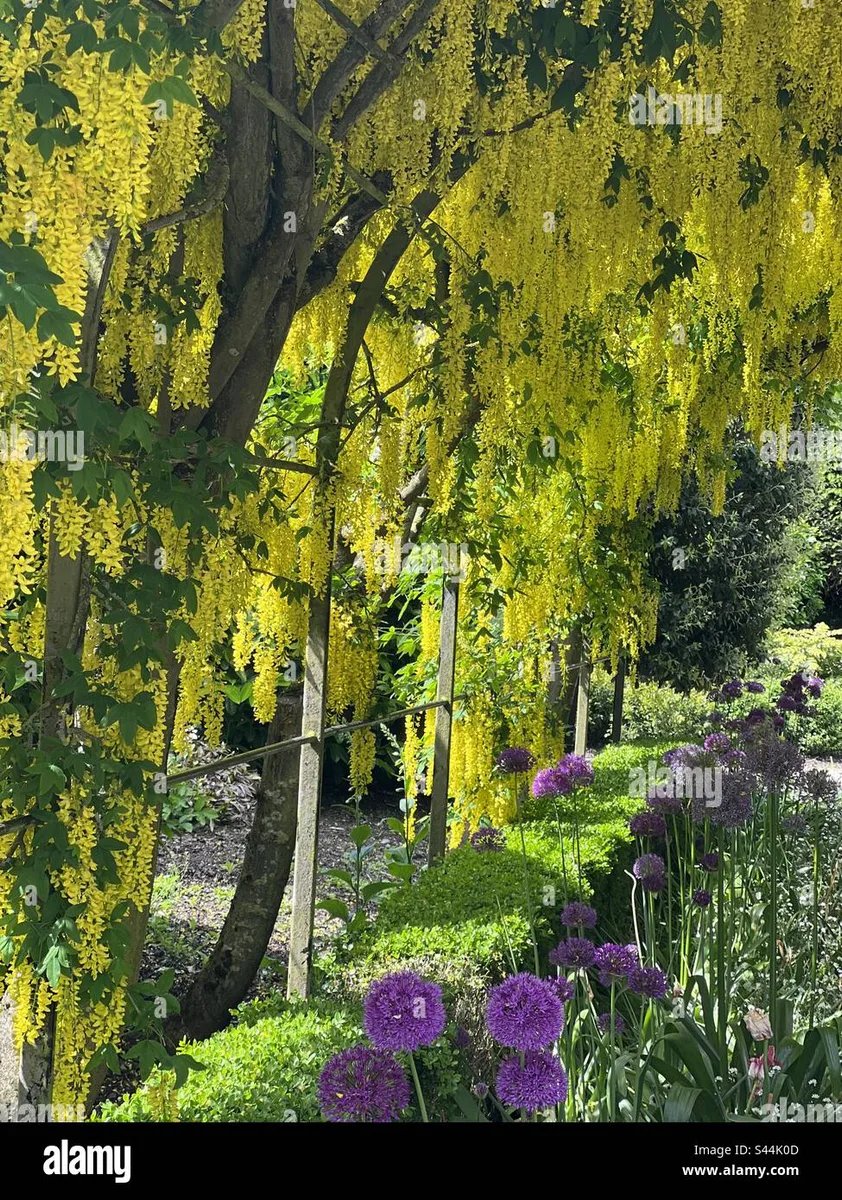
A slender, upright, deciduous tree to 4m tall, with dark green leaves formed of 3 leaflets. In early summer it produces dense, pendulous clusters of bright yellow flowers. Use this compact variety to add vertical interest to a smaller garden, or train the stems on a pergola or archway
Scientific classification
- Species
- laburnum 'Yellow Rocket' (Laburnum anagyroides 'Yellow Rocket')
- Genus
- Laburnum
- Family
- Fabaceae
- Order
- Fabales
- Class
- Magnoliopsida
- Phylum
- Magnoliophyta
- Harmful if eaten. Wear gloves and other protective equipment when handling
- Toxicity
- Trees
- Plant type
- 2.5-4 metres
- Height
- 1-1.5 metres
- Spread
- Deciduous
- Foliage
- Columnar upright
- Habit
- Spring · Summer · Autumn
- Season of interest
- Full sun
- Sunlight
- Information to be completed
- Ideal temperature









laburnum 'Yellow Rocket' pictures
Distribution of laburnum 'Yellow Rocket'
Distribution map
- Native
- Introduced
- Cultivated
Source:WCVP v16 · Royal Botanic Gardens, Kew · CC BY 3.0 · Boundaries:WGSRPD / TDWG
Toxicity
Harmful if eaten. Wear gloves and other protective equipment when handling
laburnum 'Yellow Rocket' care guide
- Deep irrigation during dry heat, natural rain sufficient after tree establishes well
- Watering
- Full sun
- Sunlight

Watering
Deep irrigation during dry heat, natural rain sufficient after tree establishes well
Fertilizing
 Fertilizing
Balanced slow release feed top dressed once per early spring every year
Pruning
 Pruning
Little pruning is needed. Remove diseased, damaged, crowded or crossing shoots and unwanted growth. Timing depends on the plant: generally late winter or early spring; plants prone to bleeding and deciduous magnolias need different timing, and deciduous azaleas and lilacs are pruned after flowering.
Propagation
 Propagation
Propagate by grafting
Growing
 Growing
Grow in moderately fertile, well-drained soil in full sun
Common pests and diseases
Diseases
May be susceptible to powdery mildews, silver leaf and honey fungus
Pests
May be susceptible to aphids, leaf-mining moths, leaf-mining flies and snails
Explore the plant health library →




