
bergamot [Bee-Free]
Also known as: Information to be completed
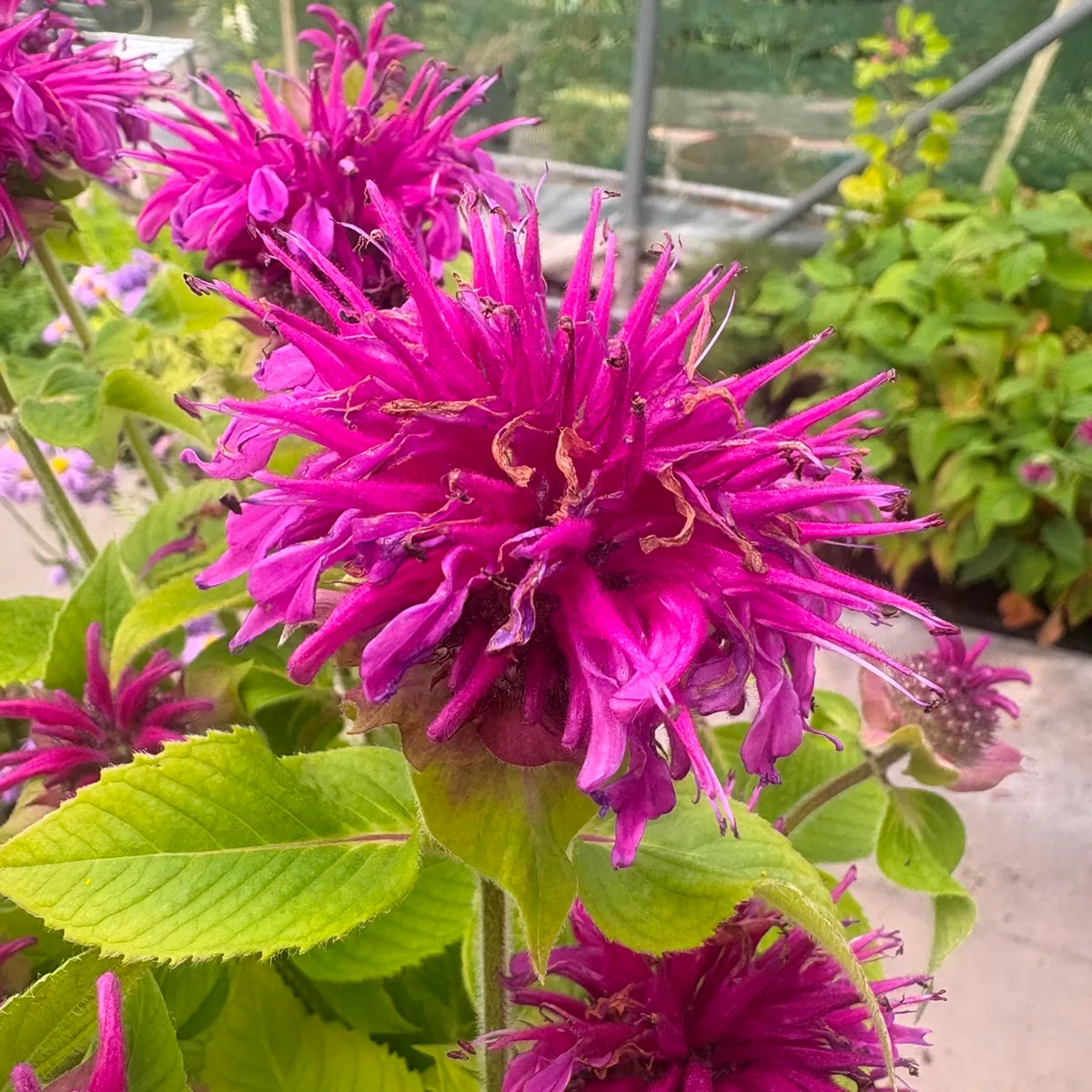
A clump-forming perennial with green, aromatic foliage and fragranced bright purple daisy-like flowers with a 'shaggy' appearance around the edges and dark purple centres
Scientific classification
- Species
- bergamot [Bee-Free] (Monarda didyma Bee-Free ('Mon0012bfr'))
- Genus
- Monarda
- Family
- Lamiaceae
- Order
- Lamiales
- Class
- Magnoliopsida
- Phylum
- Magnoliophyta
- Information to be completed
- Toxicity
- Herbaceous Perennial
- Plant type
- 0.1-0.5 metres
- Height
- 0.1-0.5 metres
- Spread
- Deciduous
- Foliage
- Clump forming
- Habit
- Spring · Summer · Autumn
- Season of interest
- Full sun
- Sunlight
- Information to be completed
- Ideal temperature









bergamot [Bee-Free] pictures
bergamot [Bee-Free] care guide
- Even mild soil moisture, avoid waterlogging aromatic foliage roots
- Watering
- Full sun
- Sunlight

Watering
Even mild soil moisture, avoid waterlogging aromatic foliage roots
Fertilizing
 Fertilizing
Low-nitrogen mint family feed every three weeks growing season
Pruning
 Pruning
Deadheading regularly may prolong flowering; cut back to ground level in autumn
Propagation
 Propagation
Propagate in spring by division before new growth begins or from basal softwood cuttings
Growing
 Growing
Grow in a fertile, humus-rich, moisture-retentive but well drained soil in full sun
Common pests and diseases
Diseases
This cultivar is said to show good resistance to powdery mildews that often affect Monardas
Pests
Generally pest-free
Explore the plant health library →




